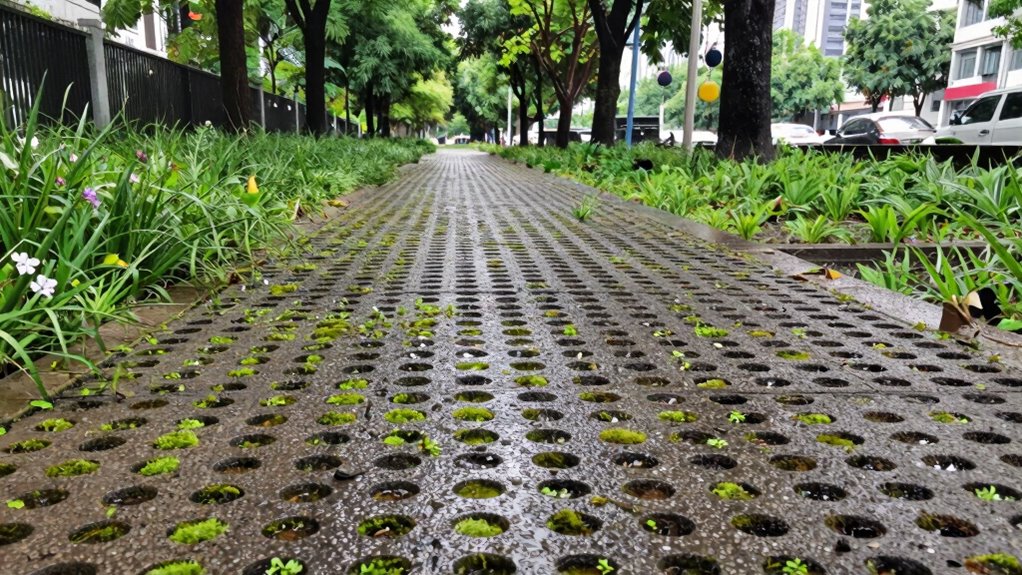

Permeable surfaces matter more than you might think because they help manage stormwater, reduce flooding, and lower urban heat. By allowing water to seep into the ground, you reduce strain on drainage systems and improve water quality. They also support local wildlife, cut down on maintenance, and make cities more resilient to climate change. If you want to discover how these simple changes can make your city healthier and more sustainable, there’s more to explore.
Key Takeaways
- They reduce urban flooding by allowing stormwater to infiltrate and be naturally absorbed into the ground.
- Permeable surfaces improve water quality by filtering pollutants from runoff before reaching waterways.
- They help lower urban heat island effects, cooling city environments and enhancing comfort.
- Permeable materials support urban biodiversity by creating habitats and green spaces within city landscapes.
- Incorporating permeable surfaces enhances climate resilience and promotes sustainable, eco-friendly urban development.
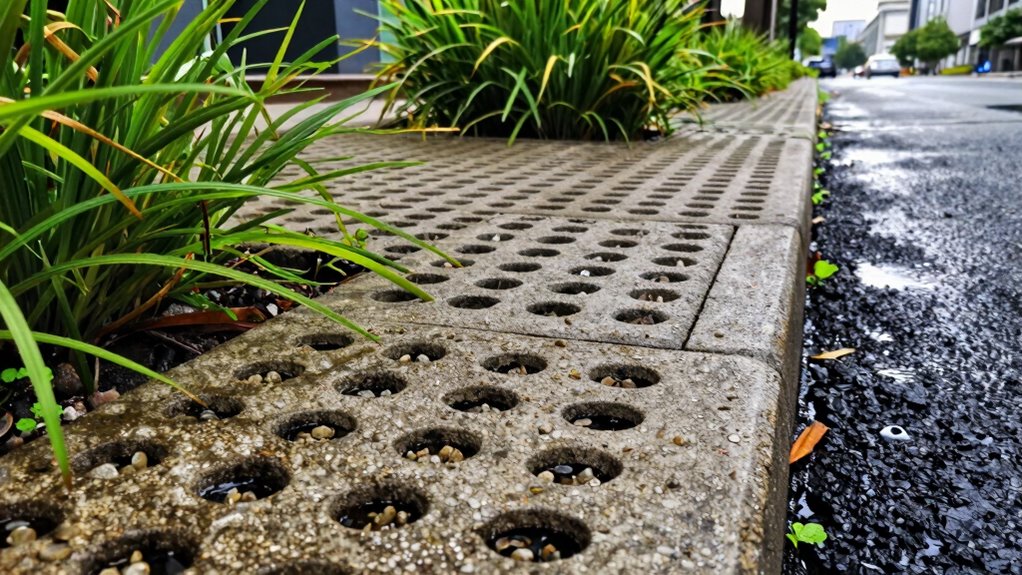
Permeable surfaces play an essential role in sustainable urban planning by allowing water to naturally seep into the ground instead of overwhelming drainage systems. When you incorporate permeable materials like porous pavements, gravel, or permeable concrete into your environment, you help manage stormwater more effectively. This approach reduces runoff, minimizes flooding, and lessens the strain on city drainage infrastructure. You might not realize it, but permeable surfaces are crucial for maintaining healthy urban ecosystems and promoting overall urban sustainability.
Stormwater management is one of the main benefits of permeable surfaces, and it’s a fundamental component of resilient cities. During heavy rains, traditional impervious surfaces like asphalt and concrete prevent water from infiltrating the ground, causing excess runoff. This runoff can carry pollutants into rivers and lakes, harming aquatic life and contaminating drinking water sources. By replacing some of these impervious surfaces with permeable options, you allow water to filter through the ground naturally, which helps remove pollutants and recharge groundwater supplies. This process not only reduces the risk of urban flooding but also supports cleaner waterways, contributing to a healthier environment.
You might also notice that permeable surfaces support urban sustainability in many ways. They help regulate temperature by reducing heat island effects common in cities filled with concrete and asphalt. When water permeates through these surfaces, it cools the surroundings, making urban areas more comfortable during hot weather. Additionally, permeable materials often require less maintenance and have a longer lifespan compared to traditional paving, which means fewer resources are needed for repairs and replacements. This translates into lower costs and less environmental impact over time. The ability of permeable surfaces to naturally manage water and temperature demonstrates their significance in urban resilience.
Your efforts to include permeable surfaces in your community can also encourage biodiversity. Green spaces and permeable pavements create habitats for insects, birds, and other wildlife, fostering a more balanced urban ecosystem. Plus, permeable surfaces can be integrated into parking lots, walkways, and playgrounds, seamlessly blending functionality with environmental benefits. By choosing these options, you’re actively contributing to a more sustainable, resilient city that can better withstand the challenges posed by climate change and urbanization. Incorporating green infrastructure into urban design further amplifies these benefits and supports ecological health. As awareness grows, many cities are adopting innovative permeable design solutions to enhance their resilience and environmental quality.
In the end, permeable surfaces matter more than many people realize because they address multiple issues at once—stormwater management, urban sustainability, ecological health, and climate resilience. You have the power to make smarter choices in urban design and development that promote a healthier environment for everyone. Small changes like using permeable paving or promoting green infrastructure can have a lasting impact, making your city a better place to live now and in the future.

Vodaland Permeable HexPave System – Grass & Gravel Pavers – 100% Recycled PPE Plastic, Handles 27,000 lbs, 1" Depth, 65 s.f / 22 Units
DURABLE AND ECO-FRIENDLY: Crafted from 100% recycled PPE plastic, our gravel paver system delivers exceptional strength and longevity;…
As an affiliate, we earn on qualifying purchases.
As an affiliate, we earn on qualifying purchases.
Frequently Asked Questions
How Do Permeable Surfaces Compare Cost-Wise to Traditional Paving?
Permeable surfaces often have a higher initial cost comparison due to installation expenses, but they can save you money long-term. They reduce runoff and drainage issues, cutting maintenance and infrastructure costs. While traditional paving might seem cheaper upfront, permeable options help avoid costly water management problems later. Overall, investing in permeable surfaces can be more cost-effective over time by preventing environmental and structural issues.
Are Permeable Surfaces Suitable for Heavy Industrial Use?
You’ll find that permeable surfaces can be suitable for heavy industrial use if they’re designed with industrial durability in mind; they can handle up to 8 tons per square foot. An interesting statistic shows that properly installed permeable pavements reduce runoff by 80%. While surface aesthetics might be slightly less traditional, modern permeable materials offer a sleek look. With proper engineering, they can meet the demands of industrial environments effectively.
What Maintenance Is Required for Permeable Pavement?
You should regularly inspect and clean permeable pavement to prevent clogging, which can hinder water flow. Keep an eye on soil stabilization, as erosion can degrade the surface. Additionally, promote vegetation growth in surrounding areas to assist with water absorption and soil stability. Occasionally, you may need to add more aggregate or perform resealing to maintain permeability. Proper maintenance guarantees your permeable pavement functions effectively and lasts longer.
Can Permeable Surfaces Be Installed on Slopes or Uneven Ground?
Yes, permeable surfaces can be installed on slopes or uneven terrain, but you need to prioritize slope stability and proper installation techniques. Ensuring the ground is well-prepared and reinforced helps prevent erosion or shifting over time. You might need to incorporate retaining walls or geotextiles to stabilize uneven terrain. Proper planning and professional installation make sure your permeable surface functions effectively, even on challenging slopes or uneven ground.
Do Permeable Surfaces Affect Groundwater Quality?
Permeable surfaces positively affect groundwater quality by supporting natural groundwater filtration, which helps remove pollutants before they reach aquifers. When you install permeable materials, they reduce pollution runoff and promote cleaner water entering the ground. This process considerably contributes to pollution reduction, safeguarding groundwater from contamination. So, by choosing permeable surfaces, you’re actively protecting water resources and promoting a healthier environment for everyone.
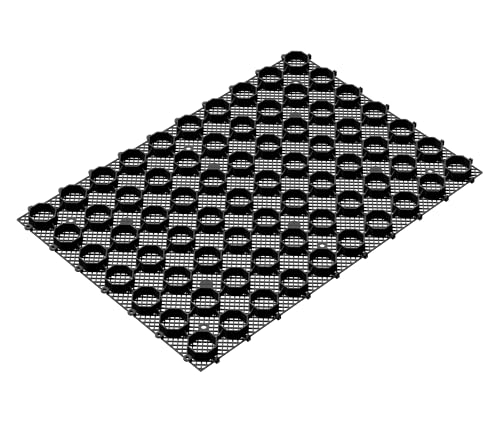
PebbleLock Interlocking Permeable Paver Grid, Heavy-Duty Recycled Plastic Pavers for Driveways, Walkways, Outdoor Flooring, Parking Pads & Landscape Edging, 12-Pack Gravel Stabilizer Panels (64 sq ft)
HEAVY-DUTY INTERLOCKING PAVER SYSTEM – Designed with a reinforced honeycomb cell structure, these pavers lock gravel securely in…
As an affiliate, we earn on qualifying purchases.
As an affiliate, we earn on qualifying purchases.
Conclusion
So, surface choices greatly shape your surroundings. By embracing permeable surfaces, you protect properties, prevent flooding, and promote greener growth. Don’t dismiss the depth of your decisions—deliberately design, develop, and defend your domain with durable, drainage-friendly surfaces. When you prioritize permeability, you pave the way for a healthier, happier habitat. Remember, small surface shifts can skyrocket sustainability, safeguarding your space for generations to come. Make mindful modifications—your environment truly awaits your impactful intervention.

Pavement Striping Paint Bulk Parking Lot Blue
Pavement Striping Paint Bulk Parking Lot Blue
As an affiliate, we earn on qualifying purchases.
As an affiliate, we earn on qualifying purchases.
Vodaland Permeable HexPave System – Grass & Gravel Pavers – 100% Recycled PPE Plastic, Handles 27,000 lbs, 1" Depth, 65 s.f / 22 Units
DURABLE AND ECO-FRIENDLY: Crafted from 100% recycled PPE plastic, our gravel paver system delivers exceptional strength and longevity;…
As an affiliate, we earn on qualifying purchases.
As an affiliate, we earn on qualifying purchases.