TL;DR
A Livingetc advice article by Kyoto-raised designer Yoko Kloeden describes how Japanese tea-house principles can guide everyday hosting. Its central idea, ichigo ichie, treats each gathering as a one-time meeting and encourages hosts to tailor sight, scent, sound, touch and taste to their guests.
Kyoto-raised designer Yoko Kloeden has outlined how hosts can adapt Japanese tea-house practices to a Western home, focusing on choices shaped around particular guests rather than elaborate decoration. In an advice article for Livingetc, she connects the approach to ichigo ichie—“one time, one meeting”—the idea that each gathering is singular and will not happen again in quite the same way.

Get home appliances delivered free with Prime
- Fast, free delivery on millions of items
- Prime Video, Amazon Music and more included
- Member-only deals all year
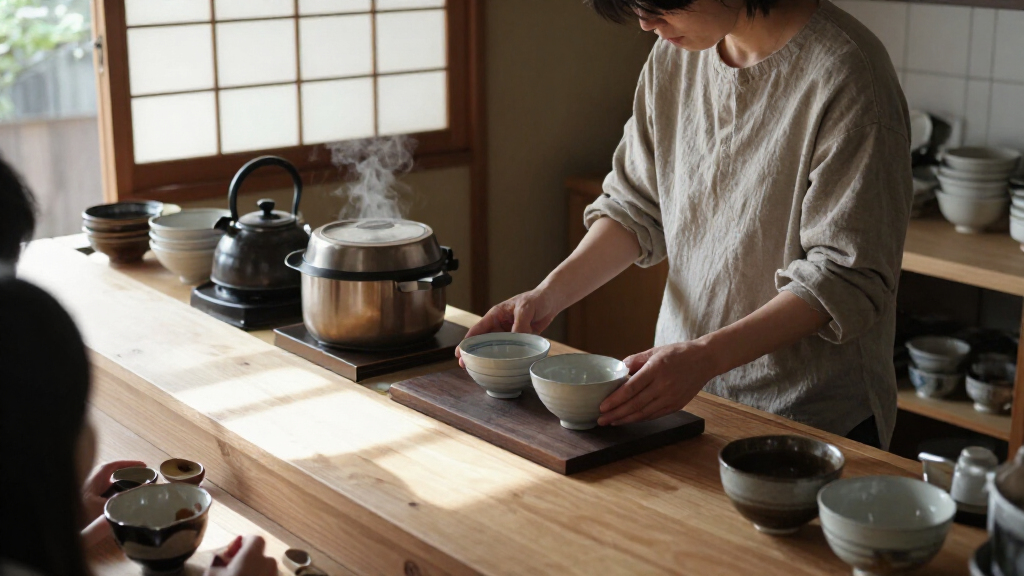
Kloeden, who grew up in Kyoto and now designs houses in London, says omotenashi is often translated as Japanese hospitality, but the phrase does not fully convey the attention behind it. Her account presents hosting as preparation for specific people: a host might select a bowl a guest would enjoy holding or flowers associated with where that person grew up. The article’s practical focus is how to bring that attentiveness to an ordinary meal without a tea room or a formal tea ceremony.
For sight, Kloeden points to the tea room’s restrained arrangement: a hanging scroll and a single flower, selected for the day. Applied to a Western table, the lesson is to remove competing objects and decide what guests should notice. For scent, she describes incense that changes with the season, while noting that a home’s smell is also shaped well before guests arrive by cooking and cleaning products.
The remaining ideas concern sound, touch and taste. A tea gathering leaves room for the kettle and other small sounds rather than background music; at dinner, Kloeden recommends choosing music for the guests and lowering it once people are seated. Tea bowls change with the weather—a deep vessel retains heat in winter, while a shallow one lets tea cool in summer. A seasonal sweet, made or selected for the gathering, offers a similarly personal finish.
Small Choices Make Hosting Personal
The advice recasts hospitality as attention to the people present, rather than spending more or staging a room. Its relevance is practical: a host can apply the ideas by editing a table, choosing a suitable cup, or serving one item selected for the occasion. None requires adopting a formal tea ceremony.
Kloeden’s examples also make the principle tangible. A bowl’s weight and temperature can shape how a guest experiences a drink, while the room’s scent and sound affect the gathering before anyone speaks. The point, as presented in the article, is not to copy every Japanese custom but to direct effort toward the particular guests and moment.
Products Worth Considering

Dyson Ball Allergy Upright Vacuum

Sonos One SL (3-Pack) – Microphone-Free Speaker, Black

Sonos Era 300 Wireless Smart Speaker with Dolby Atmos, Black
As an affiliate, we earn on qualifying purchases.
The Tea-Room Idea Behind the Advice
The article begins with ichigo ichie, translated in the source as “one time, one meeting.” Kloeden describes it as a way of understanding a tea gathering: these people, meeting in this moment, will not come together in exactly the same way again. That outlook informs the host’s preparation, including choices that might otherwise seem incidental.
Seasonality is a recurring element in the examples. Kloeden describes different incense for the colder and warmer parts of the year, bowls suited to holding heat or cooling tea, and sweets that may anticipate the next season. She uses those details to explain how tea-room practices can inform everyday hosting beyond Japan, not to prescribe a single set of rules for Western homes.
““one time, one meeting.””
— Yoko Kloeden, quoted in Livingetc
What the Article Does Not Establish
This is a design and hosting advice article, not a report of a new study, formal hospitality standard or measured outcome. The source does not provide evidence that these practices produce particular effects on guests, nor does it establish that all tea gatherings follow the customs described. Kloeden presents them as examples drawn from tea-room culture and her own perspective.
The source also does not give a publication date or report reactions from readers, guests or other designers. It is not clear which suggestions Kloeden uses in her own hosting beyond the examples she describes, or whether the article’s recommendations have been tested in a specific home.
Applying the Ideas at Home
There is no announced follow-up event or next milestone in the source. The immediate next step is left to readers: choose one aspect of an upcoming gathering—such as table objects, background scent, music, cups or a seasonal sweet—and tailor it to the people expected.
Kloeden’s closing point is that effort need not be elaborate. A considered choice can mark the gathering as its own occasion; the article does not suggest that hosts need specialist equipment, a tea room or formal training.
Key Questions
What does ichigo ichie mean?
In the Livingetc article, it is translated as “one time, one meeting.” Kloeden uses the phrase for the idea that a gathering with particular people will not happen in exactly the same way again.
Do these ideas require a Japanese tea room?
No. Kloeden says the principles can be used without a tea room, tea service or changes to how a host cooks. Her examples include editing a dinner table and choosing music for guests.
How can hosts use the seasonal tea-bowl idea?
The article describes a deep, narrow bowl for winter tea that retains heat and a shallow bowl for summer tea that cools more quickly. The broader suggestion is to consider a cup or dish’s temperature, weight and feel.
What does the article suggest about music?
Kloeden does not recommend silent meals. She suggests selecting music with the guests in mind, then lowering it once people sit so conversation and the sounds of the gathering remain audible.
Source: livingetc.com