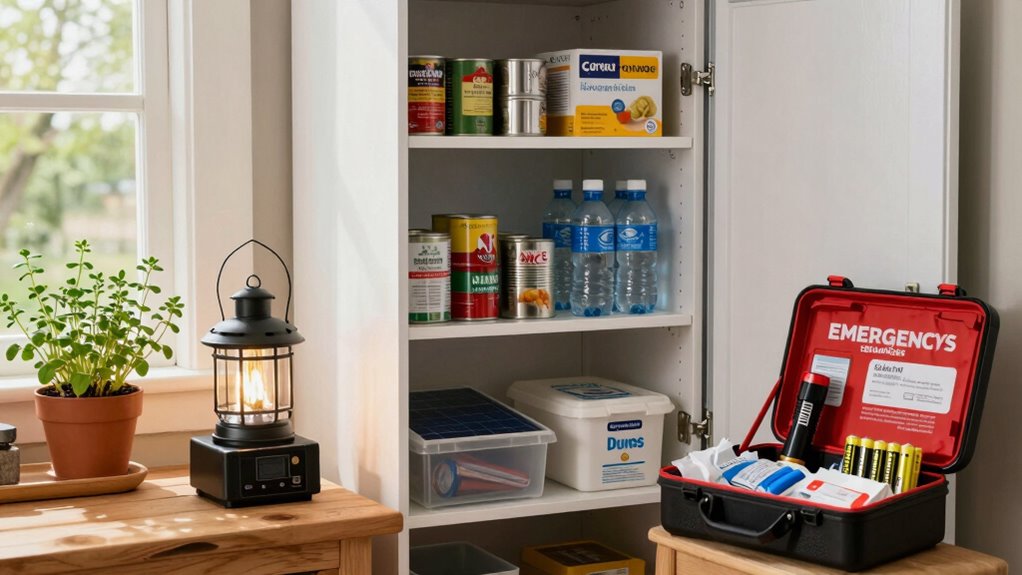
To make your household more prepared for power and water disruptions, you should establish reliable communication plans, like family meetup points and printed contacts. Invest in alternative energy sources such as portable generators and solar-powered devices, and manage your water supply carefully by stockpiling and conserving water. Fix leaks promptly to prevent waste. Building resilience involves combining these steps, giving you peace of mind during emergencies. Keep going to discover how you can strengthen your household even further.
Key Takeaways
- Maintain alternative energy sources like generators and solar devices for reliable power during outages.
- Stockpile sufficient bottled water and implement water storage solutions to ensure supply continuity.
- Establish emergency communication plans using battery-powered radios and satellite phones.
- Develop a comprehensive household emergency plan addressing power, water, and communication needs.
- Educate household members on water purification techniques and energy conservation practices.
Power and water disruptions can strike unexpectedly, leaving your household vulnerable and unprepared. When these events happen, your first priority is staying informed and maintaining essential needs. To do that effectively, you need a solid plan for emergency communication. Relying solely on cell phones or internet services isn’t enough because they can go down during a major outage. Instead, consider investing in battery-powered radios or satellite phones that can keep you connected to emergency alerts and updates even when traditional networks fail. Establish a communication plan with your family, including designated meeting points and ways to check in if usual methods are unavailable. Having a few printed copies of important contacts and emergency procedures can be a lifesaver when digital options are compromised.
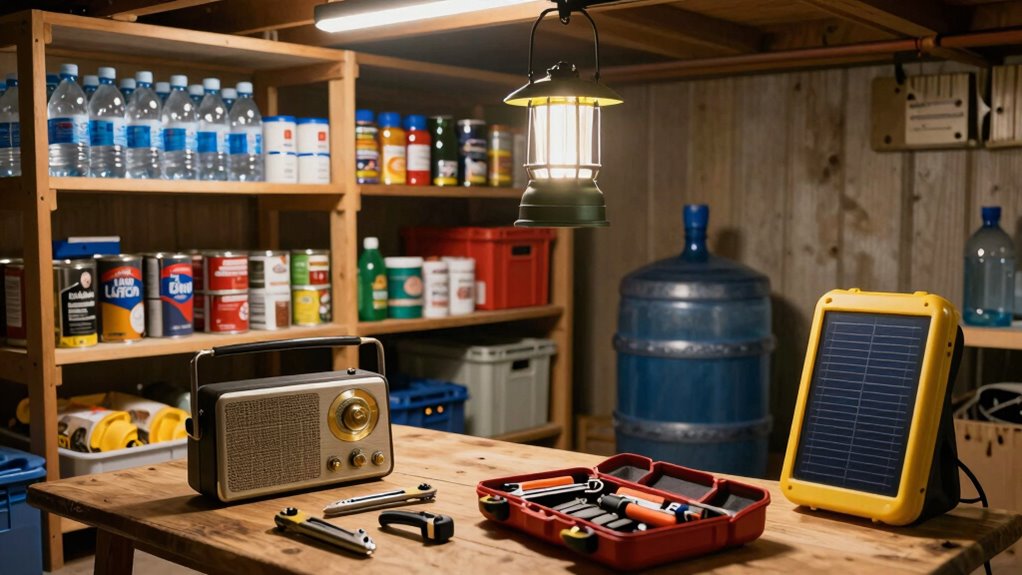
Prepare for outages with emergency radios, printed plans, and family check-in strategies to stay informed and connected.
Another vital factor in household preparedness is having alternative energy sources. Power outages can last for hours or even days, and depending on your situation, a generator or solar-powered devices can make all the difference. Portable generators provide a reliable backup to keep critical appliances running, such as refrigerators, medical devices, and lights. Just remember to operate generators outdoors to prevent carbon monoxide poisoning. Solar chargers are another excellent investment—they can power small devices like phones or radios without fuel, relying on sunlight instead. Emergency power solutions help reduce your dependence on the grid, ensuring you stay connected and comfortable during extended outages. Additionally, understanding the different types of backup power can help you choose the most suitable options for your household needs.
Water supply disruptions demand a different kind of readiness. Stockpiling enough bottled water for your household’s needs is essential, especially if you live in a region prone to water issues. Consider installing water storage tanks or rain barrels to collect and store water for non-drinking purposes. It’s also wise to have water purification methods on hand, such as filters or purification tablets, to ensure your stored water remains safe. Additionally, knowing how to properly disinfect and purify water can be crucial in maintaining safe drinking water during shortages. During water shortages, conserving water becomes vital. Fix leaks promptly, limit unnecessary usage, and plan your water needs carefully to stretch supplies as long as possible. Keeping track of your water usage and implementing water-efficient practices can significantly extend your supplies during an emergency.
Ultimately, being more prepared means thinking ahead in all aspects—communication, energy, and water. By establishing reliable emergency communication channels, investing in alternative energy sources, and managing your water supply wisely, you’re building resilience into your household. These measures help you avoid panic and reduce vulnerability, ensuring that when disruptions occur, you’re better equipped to handle them calmly and efficiently. Preparedness isn’t just about stockpiling supplies; it’s about creating a thorough plan that keeps your family safe, informed, and comfortable no matter what surprises come your way.
Frequently Asked Questions
How Can I Protect Sensitive Electronics During Outages?
To protect sensitive electronics during outages, you should use battery backups and surge protectors. Battery backups, or uninterruptible power supplies (UPS), keep devices running smoothly when power is out, preventing data loss. Surge protectors guard against voltage spikes when power surges back. Connect your computers, TVs, and other delicate electronics to these devices, ensuring they’re shielded from unexpected electrical damage and prolonging their lifespan during outages.
What Are the Best Portable Water Storage Options?
A portable water storage option that’s as reliable as your best friend is essential. Look for sturdy, BPA-free portable containers with secure lids to prevent leaks. Consider water purification devices like portable filters or tablets to guarantee safety. These options let you store and treat water on the go, making sure you’re never caught unprepared. Your water supply should be as dependable as your morning coffee—always ready when you need it.
How Often Should Emergency Supplies Be Updated?
You should update your emergency kit and perform supply rotation every six months to guarantee everything stays fresh and usable. Check perishables, medications, and batteries regularly, replacing expired items promptly. This routine helps you stay prepared for power and water disruptions. Additionally, review your supplies after any emergency to identify gaps. Staying proactive with these updates keeps your household ready to handle unexpected disruptions confidently.
What Are Affordable Ways to Improve Energy Efficiency?
Want to save money and reduce your environmental impact? You can start by switching to energy-saving appliances, which use less electricity and water. Consider investing in renewable sources like solar panels; they can substantially cut your energy bills long-term. Are you making the most of natural light and proper insulation? These simple, affordable steps boost energy efficiency and prepare your household for disruptions without breaking the bank.
How Can I Communicate With Neighbors During a Crisis?
During a crisis, you can communicate with neighbors through community communication channels like group chats, social media, or neighborhood notice boards. Make sure to establish neighbor coordination beforehand, sharing contact info and emergency plans. When a crisis hits, stay proactive by checking on others, sharing updates promptly, and coordinating resources. These efforts help everyone stay informed, connected, and better prepared to handle disruptions together.
Conclusion
By preparing now, you transform your household into an unstoppable fortress against power and water disruptions—so resilient, even a hurricane or a blackout won’t shake you! Stockpile enough supplies, create backup plans, and stay informed. Don’t wait until chaos hits; be the hero of your own story. With just a little effort, you can turn everyday chaos into a minor hiccup. Get ready today, and never let disruptions turn your life upside down!