
To make your yard more resilient to heat waves, choose native plants that are adapted to your climate, reducing water and maintenance needs. Create shaded zones with trees, pergolas, or shade sails to lower soil and air temperatures. Use mulch to retain moisture and keep roots cool, while implementing efficient drip irrigation to water deeply and minimize waste. Incorporating these strategies helps your yard withstand extreme heat—continue exploring for more tips to boost resilience even further.
Key Takeaways
- Incorporate native plants that are adapted to local climate and require less water and maintenance.
- Create shaded zones with trees or structures to lower soil and air temperatures.
- Use drought-tolerant, heat-resistant plants suitable for high temperatures and shaded areas.
- Apply mulch to retain soil moisture, cool roots, and suppress weeds.
- Implement efficient watering systems that deliver deep, targeted irrigation to reduce water waste.
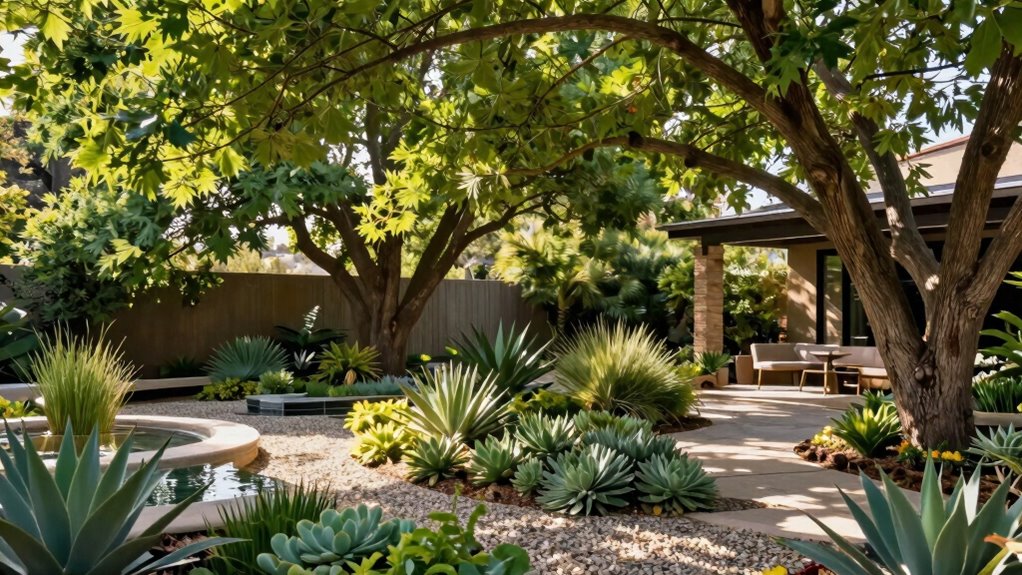
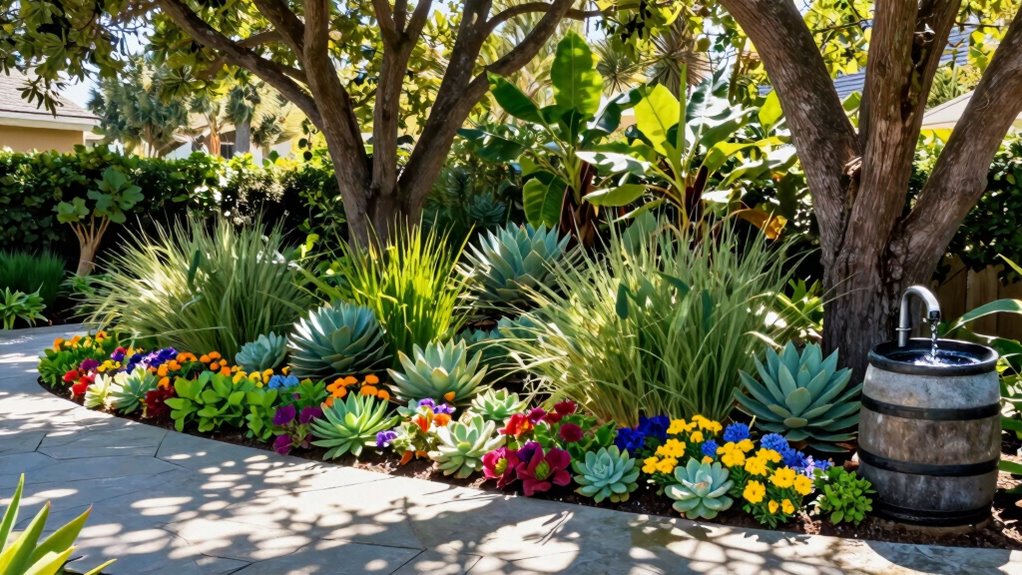
As heat waves become more frequent and intense, your yard needs to be prepared to withstand extreme temperatures. The key to resilience lies in planting wisely and designing your outdoor space to handle the heat. One of the most effective strategies is incorporating native plantings, which are naturally adapted to your local climate. Native plants require less water, fewer fertilizers, and less maintenance, making them better suited to survive scorching days. They also provide essential habitat for local wildlife, creating a balanced ecosystem that can better withstand environmental stressors. By choosing native species, you reduce the risk of plants wilting or dying during heat spikes, and you support the overall health of your yard. native plantings are particularly valuable because they help conserve local biodiversity and reduce the need for supplemental resources. Creating shaded zones is another essential element to boost your yard’s resilience. When you provide areas shaded by trees, pergolas, or shade sails, you give your plants relief from direct sunlight, which can markedly lower soil and air temperatures. These shaded zones help preserve moisture in the ground, reducing evaporation and keeping your yard cooler. They also create comfortable outdoor spaces for you and your family to enjoy, even during the hottest parts of the day. When selecting trees for shade, opt for those that are drought-tolerant and suitable for your climate to make sure they withstand prolonged heat without extra watering. Choosing the right drought-tolerant trees can significantly enhance your yard’s resilience and reduce water consumption during hot periods. Incorporating native species into shaded zones can further improve the durability of your landscape, as these plants are naturally equipped to thrive under such conditions. Additionally, selecting plants that are adapted to high temperatures can improve the overall heat tolerance of your landscape, making it more resilient to future heat waves. Furthermore, integrating shade-tolerant native plants into shaded zones enhances the durability of your yard. These plants thrive in lower light and are adapted to withstand high temperatures, making them ideal choices for shaded areas. Mulching around plants and trees also plays an essential role; it helps retain soil moisture, suppresses weeds, and keeps roots cool. Use organic mulches like bark or straw, which decompose gradually and enrich the soil, contributing to healthier, more heat-tolerant plants. Proper soil preparation and amendments can also improve the soil health, enabling plants to better withstand drought conditions. Water management is equally important. Implementing efficient irrigation systems, such as drip watering or soaker hoses, guarantees water goes directly to the roots where it’s needed most, minimizing waste and preventing water stress. During heat waves, watering deeply and less frequently encourages plants to develop deep root systems, making them more resilient over time. In your effort to make your yard resilient to heat waves, focus on native plantings, shaded zones, and smart water use. These elements work together to create a landscape that can endure extreme temperatures, conserving resources while maintaining beauty and functionality. With thoughtful planning and plant choices, you can turn your yard into a cool, thriving oasis—even during the hottest days.
Frequently Asked Questions
How Does Soil Type Affect Yard Heat Resilience?
Soil type considerably impacts your yard’s heat resilience because soil composition affects moisture retention. Sandy soils drain quickly and hold less water, making your yard more vulnerable to heat stress. In contrast, loamy soils retain moisture better, helping keep plants cooler during heat waves. Improving soil with organic matter can boost moisture retention, making your yard more resilient. Choosing the right soil type and enhancing it can help your yard withstand extreme heat better.
Can Specific Plants Improve Yard Resilience to Heat?
Yes, planting native species and drought-tolerant plants can substantially boost your yard’s resilience to heat. Native plants are adapted to your local climate, helping them withstand high temperatures, while drought-tolerant varieties require less water and stay healthy during heat waves. By choosing these types of plants, you create a more sustainable yard that resists heat stress, conserves water, and reduces your overall maintenance efforts.
What Role Does Yard Shading Play in Heat Resistance?
Shade trees and canopy coverage considerably boost your yard’s heat resistance, reducing ground temperatures by up to 20%. When you plant shade trees strategically, you create cooler microclimates that protect plants and reduce outdoor temperatures. This natural shading minimizes heat stress, conserves water, and makes your yard more comfortable during heat waves. Investing in proper shade coverage is a simple, effective way to increase your yard’s resilience to extreme heat.
How Can Irrigation Methods Influence Yard Heat Tolerance?
Using efficient irrigation methods like drip irrigation greatly boosts your yard’s heat tolerance by providing targeted watering, reducing water runoff, and minimizing evaporation. This method guarantees your plants get consistent moisture, helping them withstand high temperatures. Plus, drip irrigation promotes water conservation, making your yard more resilient to heat waves. You’ll maintain healthier plants, save water, and create a cooler, more comfortable outdoor space during extreme heat conditions.
Are There Cost-Effective Ways to Enhance Yard Resilience?
Did you know that cost-effective landscaping can lower your yard’s temperature by up to 20%? To boost resilience on a budget, consider adding native plants, which require less water and care. Mulching around plants reduces soil heat, providing budget-friendly cooling. Planting shade trees strategically can also protect your yard from heat, making your outdoor space more comfortable without overspending. These simple steps make your yard more resilient and eco-friendly.
Conclusion
So, next time your yard’s wilting under the sun’s relentless gaze, remember: a little shade, some drought-tolerant plants, and savvy water use will turn your yard into a veritable oasis. Who knew resilience could be so stylish? With these tips, you’ll outwit the heat wave like a garden genius—while your neighbors scramble for shade and soggy grass. After all, why just survive a heat wave when you can thrive, all while looking effortlessly sophisticated?