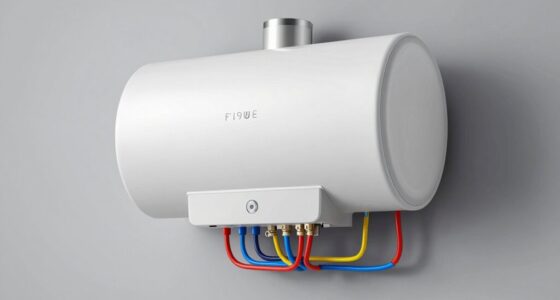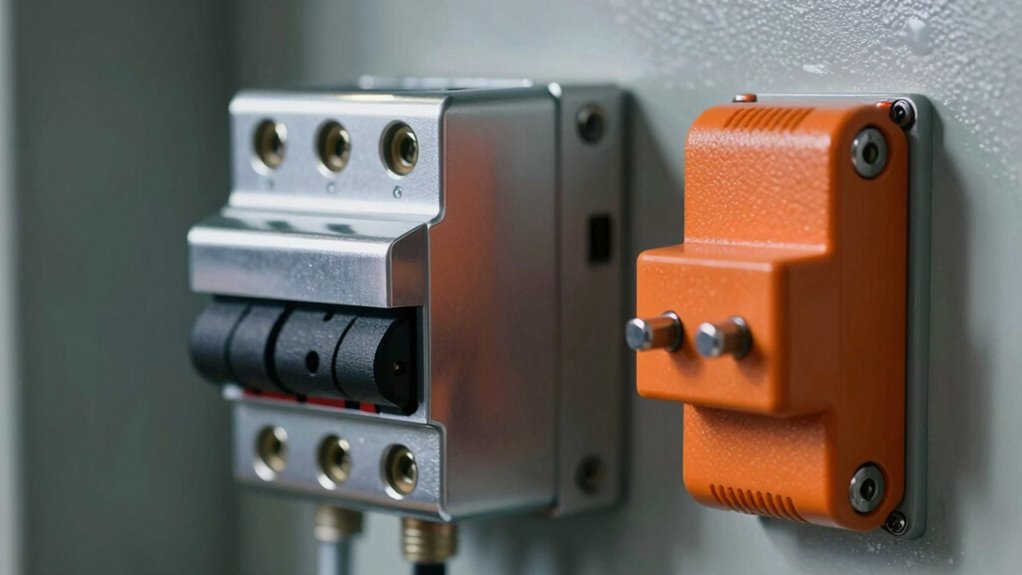

Transfer switches automatically or manually switch power sources to keep your critical systems running during outages, preventing interruptions and backfeeding that could harm workers or damage equipment. Interlocks, on the other hand, are safety devices that prevent incompatible operations, such as connecting two power sources at once. While transfer switches focus on reliable power transfer, interlocks guarantee safety and prevent accidents. If you want to understand how these devices work together to protect your system, keep exploring.
Key Takeaways
- Transfer switches ensure seamless power source transition during outages, while interlocks prevent simultaneous connection of incompatible power sources.
- Transfer switches focus on maintaining continuous power, whereas interlocks prevent dangerous backfeeding between sources.
- Interlocks mechanically or electrically block unsafe switching, complementing transfer switches’ automated or manual functions.
- Proper use of interlocks enhances safety by preventing equipment damage and protecting personnel during power source changes.
- Both devices work together to ensure safe, reliable, and efficient transfer of power in complex electrical systems.
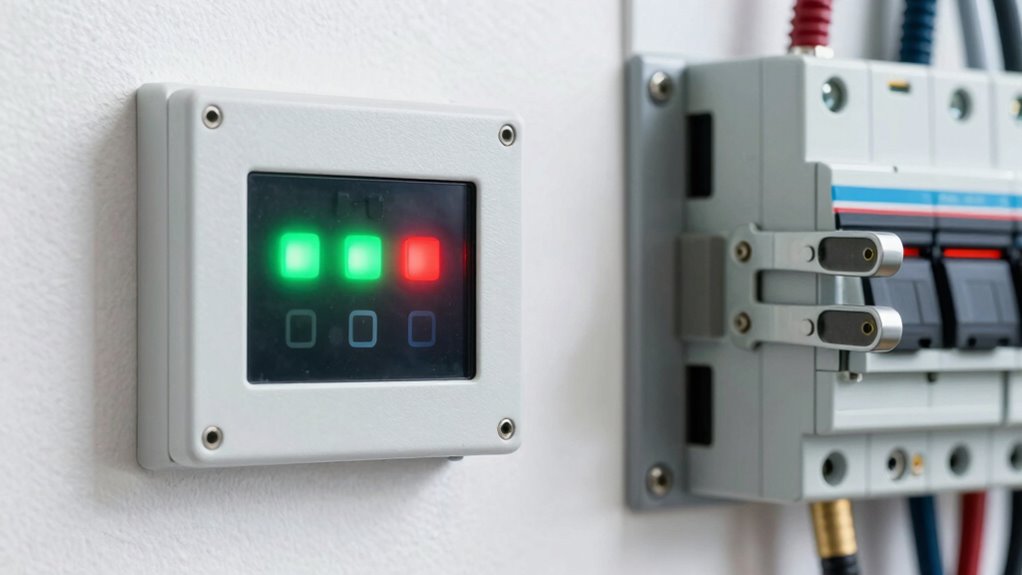
When managing backup power systems, transfer switches and interlocks play a crucial role in guaranteeing safe and reliable operation. You need to understand how these devices address different problems to keep your system functioning correctly. Transfer switches are essential for switching your power source from the utility grid to an emergency generator seamlessly. If the power grid fails, the transfer switch detects the outage and automatically or manually switches to your backup generator, ensuring your essential systems stay operational. This prevents interruption of services, especially in critical environments like hospitals, data centers, or industrial facilities, where continuous power is fundamental. A well-designed transfer switch also prevents backfeeding, which can harm utility workers or damage equipment during power restoration. By controlling this switching process, it guarantees your emergency preparedness plans are effective, reducing downtime and safeguarding your infrastructure. Additionally, proper installation and maintenance of these systems are crucial to ensure they function correctly when needed. Proper installation and regular testing are vital for maintaining system reliability and safety. Understanding the importance of system components working together can help prevent potential failures and improve overall system resilience. Recognizing the critical safety features integrated into transfer switches can further enhance the safety of your power system.
automatic transfer switch for home generator
As an affiliate, we earn on qualifying purchases.
As an affiliate, we earn on qualifying purchases.
Frequently Asked Questions
What Are the Main Differences Between Manual and Automatic Transfer Switches?
Manual transfer switches require you to operate them manually during an outage, giving you control over generator compatibility and load prioritization. Automatic transfer switches detect power loss and switch loads seamlessly, ensuring continuous power without intervention. You prefer manual options for simplicity and control, while automatic switches suit those wanting quick, hassle-free transfers. Both handle generator compatibility and load prioritization, but automation offers more convenience during emergencies.
How Do Interlocks Prevent Backfeeding During Power Transfers?
Did you know backfeeding can cause dangerous electrical shocks or fires? Interlock mechanisms prevent backfeeding during power transfers by physically blocking the simultaneous connection of utility and generator power sources. When you switch to backup power, the interlock ensures only one source is connected at a time, providing essential backfeeding prevention. This simple yet effective device protects you and your equipment from potentially deadly electrical hazards.
Are Transfer Switches Suitable for Residential or Commercial Applications?
Transfer switches are suitable for both residential and commercial applications, depending on your generator compatibility and installation considerations. For homes, a manual or automatic transfer switch guarantees safe power switching during outages. In commercial settings, larger, more robust switches handle higher loads and complex systems. You should consider factors like generator capacity, wiring, and local codes to choose the right transfer switch, ensuring safe, reliable power transfer in any environment.
What Maintenance Is Required for Transfer Switches and Interlocks?
You need to follow regular maintenance schedules for transfer switches and interlocks to guarantee reliable operation. This includes inspecting for signs of wear, cleaning contacts, and testing the system periodically. Troubleshooting procedures help identify issues like faulty connections or mechanical failures. By performing routine checks and addressing problems promptly, you extend the lifespan of your equipment and prevent unexpected failures during power outages.
Can Transfer Switches Be Integrated With Smart Home Systems?
Did you know that over 60% of homeowners want smarter energy management? Yes, transfer switches can be integrated with smart home systems, allowing you to control and monitor your backup power seamlessly. With smart home integration, you can automate generator activation during outages and optimize energy use, making your home more efficient. This tech-savvy approach guarantees reliability and convenience, giving you peace of mind in any situation.
Conclusion
Think of transfer switches and interlocks as the guardians of your electrical kingdom, each with its own battle to fight. While one guarantees a seamless shift during power outages, the other prevents chaos by stopping conflicting connections. Together, they form a vigilant team, safeguarding your home or business. When you understand their roles, you’re like a wise ruler, confidently protecting your domain from unseen threats, guaranteeing safety and reliability in every current that flows through your territory.