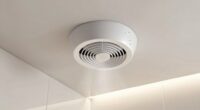
Choosing the right bathroom exhaust fan can fix persistent humidity problems, preventing mold and odors. Make sure the fan’s airflow capacity (CFM) matches your bathroom size—about 1 CFM per square foot—and opt for a quiet model around 1 to 2 sones for comfort. Look for energy-efficient options with features like humidity sensors for automatic operation. Proper selection and installation are key to maintaining a dry, fresh bathroom—discover more ways to boost your ventilation.

Get home appliances delivered free with Prime
- Fast, free delivery on millions of items
- Prime Video, Amazon Music and more included
- Member-only deals all year
Key Takeaways
- Select a fan with sufficient CFM to match your bathroom size for effective humidity removal.
- Prioritize high ventilation efficiency to quickly eliminate moisture, odors, and airborne pollutants.
- Choose low-noise fans (1-2 sones) to maintain a peaceful bathroom environment.
- Consider additional features like humidity sensors for automatic, consistent humidity control.
- Proper installation and matching fan size prevent over- or under-ventilation, reducing mold and mildew risks.
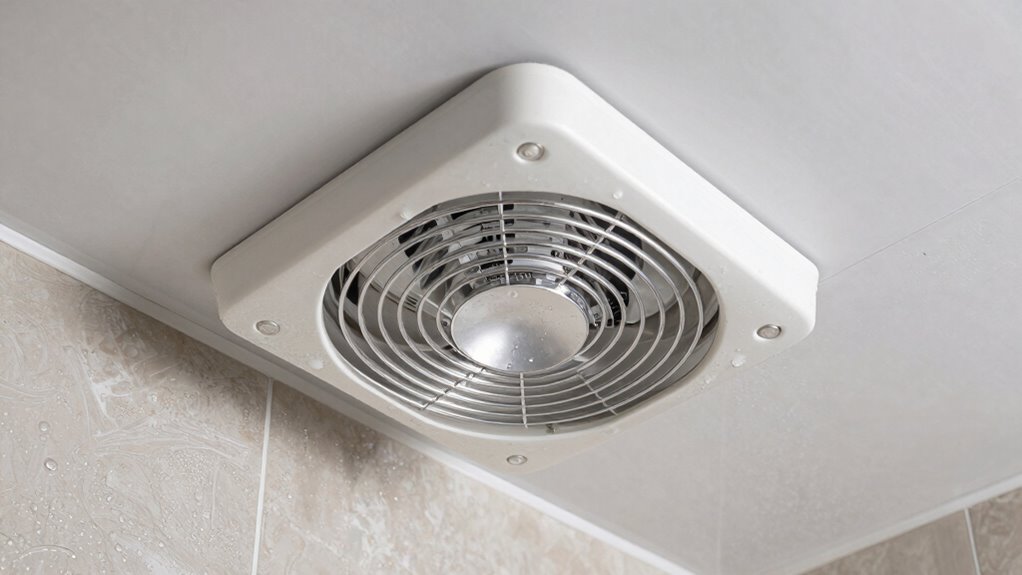
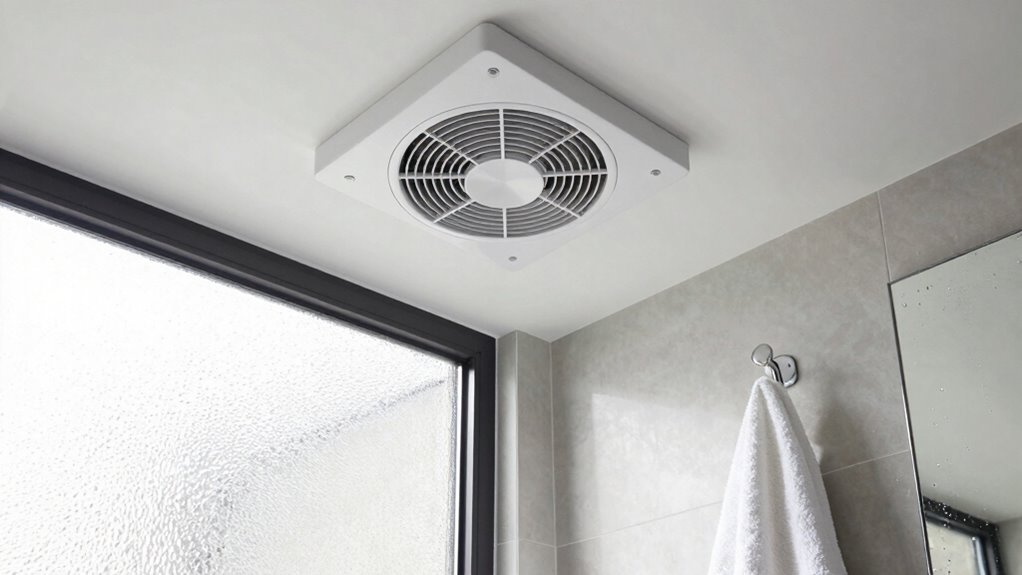
Are you unsure how to choose the right bathroom exhaust fan for your space? If so,, you’re not alone. Picking the perfect fan can seem overwhelming, but focusing on a few key factors can make the process easier. First, consider ventilation efficiency. This measures how effectively a fan removes humidity, odors, and airborne pollutants from your bathroom. A fan with high ventilation efficiency will quickly and thoroughly clear the space, preventing mold, mildew, and lingering smells. To determine the right size, you’ll want to match the fan’s airflow capacity, measured in cubic feet per minute (CFM), to your bathroom’s size. Generally, a bathroom needs at least 1 CFM per square foot of space, but if your bathroom has a shower or tub, add a few extra CFM to handle the higher humidity.
Choose a bathroom fan with the right CFM to match your space for optimal ventilation.
Next, think about noise levels. Nobody wants a loud fan disrupting your morning routine or late-night bathroom visits. Fans with low noise levels operate quietly, often around 1 to 2 sones, which is hardly noticeable. On the other hand, more powerful fans, while effective at ventilating larger bathrooms, tend to generate more noise. So, strike a balance between performance and comfort—look for models specifically designed to run quietly without sacrificing ventilation efficiency. Many manufacturers now list the noise level specifications, so you can compare options before making a decision.
Beyond these two factors, also consider installation space and energy consumption. Compact fans fit better in tight ceilings, while energy-efficient models save you money over time. Some fans come with features like humidity sensors that automatically turn on when moisture levels rise, which can be a real convenience. When you choose a fan with the right ventilation efficiency, you’ll notice a marked difference in how quickly your bathroom dries out after showers, reducing the risk of mold growth. Meanwhile, selecting a model with low noise levels ensures that your bathroom remains a peaceful retreat rather than a noisy annoyance. Additionally, the contrast ratio of the fan can influence how well it performs in different lighting conditions and the overall clarity of the environment.
In the end, it’s all about finding a balance. You want a fan powerful enough to handle your bathroom’s humidity problems without being disruptive. By paying close attention to ventilation efficiency and noise levels, you can select a unit that keeps your space fresh, dry, and comfortable. Proper ventilation isn’t just about comfort—it’s about maintaining a healthy bathroom environment, free from excess moisture and unpleasant odors. With a little research and consideration, you’ll be able to choose a bathroom exhaust fan that fits your needs perfectly.
bathroom exhaust fan with humidity sensor
As an affiliate, we earn on qualifying purchases.
As an affiliate, we earn on qualifying purchases.
Frequently Asked Questions
How Often Should I Replace My Bathroom Exhaust Fan?
You should replace your bathroom exhaust fan every 10 to 15 years. Regular fan maintenance, like cleaning the blades and checking the motor, helps it run efficiently longer. If you notice strange noises, reduced airflow, or persistent humidity issues, it’s time for a replacement. Following a consistent replacement schedule guarantees your bathroom stays well-ventilated and prevents mold growth, keeping your space safe and comfortable.
Can a Bathroom Exhaust Fan Help Reduce Mold Growth?
Yes, a bathroom exhaust fan helps reduce mold growth by improving ventilation effectiveness. It removes excess humidity and moisture from the air, preventing mold spores from settling and thriving. To maximize mold prevention, use the fan during and after showers, ensuring proper airflow. Regularly clean the fan to maintain its effectiveness, and consider upgrading to a high-quality model if moisture issues persist.
What Energy Efficiency Ratings Should I Look For?
When shopping for bathroom exhaust fans, don’t just settle for anything—look for high energy efficiency ratings. Check the energy labels and guarantee they meet or surpass efficiency standards like ENERGY STAR, which guarantees lower energy consumption. An efficient fan saves you money on your energy bills and helps the environment. Think of it as killing two birds with one stone—saving energy and preventing mold growth, all while keeping your bathroom fresh.
Is It Necessary to Install a Humidity Sensor With the Fan?
Yes, installing a humidity sensor with your fan is a smart choice. It enables automatic operation, so the fan turns on when humidity rises and shuts off when it drops. This not only helps maintain ideal moisture levels but also saves energy by preventing unnecessary running. Humidity sensors make your bathroom more comfortable and protect your walls and fixtures from excess moisture damage effortlessly.
How Do I Determine the Right Size Fan for My Bathroom?
To determine the right size fan for your bathroom, start by evaluating your ventilation needs. Measure your bathroom’s square footage and select a fan rated to handle that space; generally, you need 1 CFM (cubic feet per minute) per square foot. Proper fan placement is essential—install it near the shower or tub to effectively reduce humidity, ensuring ideal airflow and moisture control.
Conclusion
Choosing the right bathroom exhaust fan isn’t just a small decision — it’s your secret weapon against a humidity invasion that can turn your bathroom into a swamp! Imagine mold and mildew invading every corner, ruining your space and health. But with the perfect fan, you’ll banish dampness like a superhero, leaving your bathroom fresh, dry, and mold-free. Don’t settle for less — take control now and transform your bathroom into a moisture-free sanctuary!
Cold & flu season Picks
humidifiers
As an affiliate, we earn on qualifying purchases.