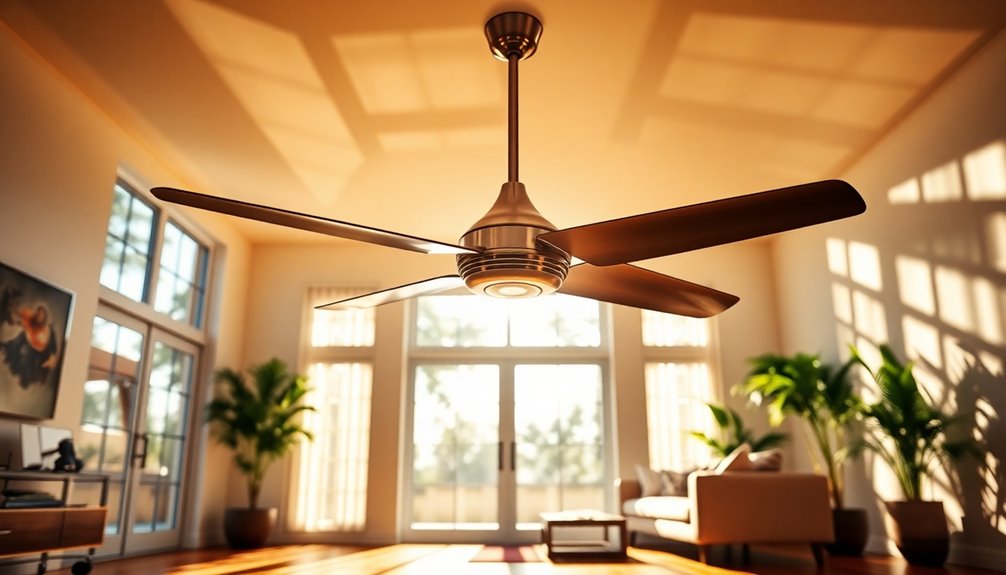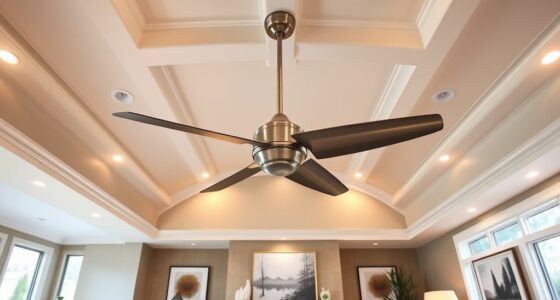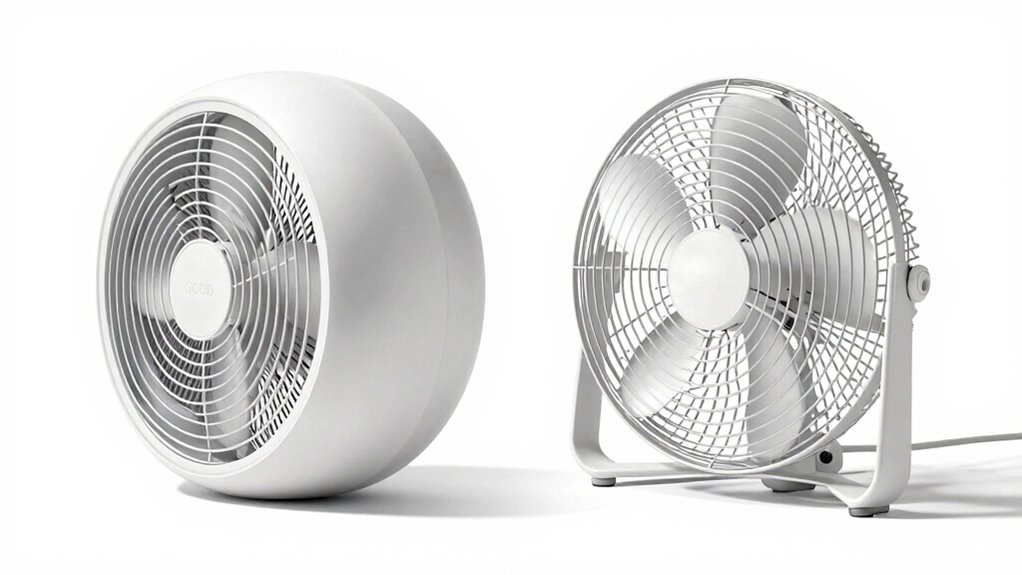
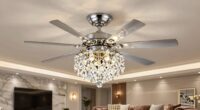
Enclosed fans tend to move air more efficiently in confined spaces because their aerodynamic blades and housing improve airflow while reducing noise. Open fans, with their exposed blades and larger size, often move more air in open areas but can be noisier and less energy-efficient. The better choice depends on your space and needs. To discover more about how design influences airflow and performance, keep exploring these options.
Key Takeaways
- Open fans generally move more air due to larger blades exposed directly to the environment.
- Enclosed fans optimize airflow with aerodynamic blades, improving performance in confined spaces.
- Larger blades in open fans produce higher airflow but may require more energy at high speeds.
- Enclosed fans’ housing can improve airflow efficiency by reducing turbulence and noise.
- The best choice depends on space size, airflow needs, and energy efficiency priorities.
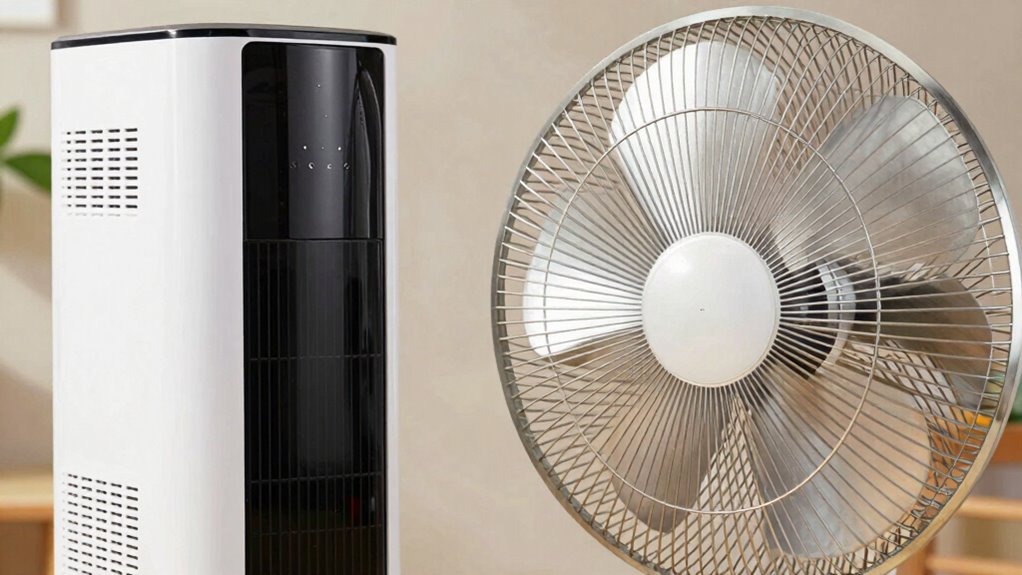
Are you wondering whether an enclosed fan or an open fan is better suited for your space? The choice largely depends on how you want the fan to perform and the environment in which it’ll operate. One key factor to consider is blade design. Enclosed fans usually have a housing that covers the blades completely or partially, which can influence the overall airflow and efficiency. Open fans, on the other hand, feature blades that are exposed, allowing for more direct contact with the surrounding air. This difference in blade design affects how air circulates and how much space the fan can effectively cover. Enclosed fans tend to be more compact and are often designed with aerodynamic blades that optimize airflow within the confined space of the housing. This can make them more suitable for areas where aesthetics matter or where dust and debris might interfere with exposed blades. Conversely, open fans usually have larger, more exposed blades that can move more air at higher speeds, making them ideal for larger or open spaces where maximum airflow is needed. Additionally, blade efficiency can significantly impact the overall performance and energy consumption of the fan.
Noise levels are another vital aspect that can sway your decision. Enclosed fans generally operate more quietly because the housing acts as a sound barrier, muffling the noise generated by the blades. If you’re installing a fan in a bedroom, office, or quiet workspace, an enclosed fan might be the better choice because it minimizes disruptive sound while still circulating air effectively. Open fans, with their exposed blades, tend to produce more noise, especially when running at higher speeds. The lack of a housing means there’s less to dampen the sound, which could be problematic if noise is a concern. However, some open fans come with noise-reducing features, so it’s worth checking specifications if you prefer the open design but want to keep noise levels down.
Frequently Asked Questions
How Do Enclosed Fans Impact Energy Efficiency?
Enclosed fans boost energy efficiency by reducing air leakage and minimizing energy waste, helping you save on electricity bills. They improve cooling efficiency because the enclosed design directs airflow more effectively, ensuring better air circulation in your space. By maintaining consistent airflow and preventing heat loss, enclosed fans make your cooling system more efficient, lowering energy consumption while keeping you comfortable. This makes them a smart choice for energy-conscious users.
Can Open Fans Be Used Outdoors Effectively?
While open fans can be employed outdoors, they’re not always the best choice for enduring outdoor conditions. You’ll find that open fans lack robust outdoor durability and weather resistance, making them vulnerable to moisture and debris. For reliable outdoor use, consider fans specifically designed for weather resistance and enhanced durability, ensuring consistent airflow without compromising longevity. This way, you enjoy effective cooling even amidst the elements.
What Noise Differences Exist Between Enclosed and Open Fans?
You’ll notice that enclosed fans tend to produce more fan noise due to their sealed design, which can amplify sound levels. Open fans generally operate more quietly because their design allows sound to escape more easily, reducing overall noise. If you’re sensitive to sound, an open fan might be a better choice. Keep in mind, noise levels can also vary based on fan size and speed settings.
Are Enclosed Fans Easier to Maintain Than Open Fans?
Enclosed fans are generally easier to maintain because their design minimizes dust buildup and protects internal components. You’ll find cleaning easier since the enclosure prevents debris from entering, reducing maintenance requirements. With fewer exposed parts, you spend less time on routine checks and cleaning. Open fans, on the other hand, require more frequent cleaning and maintenance due to their exposed blades and motor, making enclosed fans a more convenient choice.
Which Fan Type Offers Better Airflow in Large Spaces?
Think of your large space as a bustling city needing smooth traffic flow. An open fan acts like a wide boulevard, dispersing airflow more effectively across vast areas. Its open design allows better airflow patterns with strategic fan placement, ensuring even cooling. Enclosed fans, like narrow alleyways, focus airflow locally. For large spaces, choose an open fan to maximize airflow, and place it where it can cover the entire area efficiently.
Conclusion
In the end, choosing between enclosed and open fans depends on your needs, but don’t put all your eggs in one basket. If you want efficient airflow without sacrificing quietness, an enclosed fan might be your best bet. On the other hand, open fans are great for maximum air movement in bigger spaces. Remember, sometimes the best choice is the one that hits the sweet spot — balancing performance and comfort.