Most ceiling fans don’t need oiling, especially modern models with sealed bearings. However, if your fan has ball or sleeve bearings, it might benefit from lubrication to keep it running smoothly and quietly. Signs like squeaking, wobbling, or decreased performance suggest it’s time to add a few drops of oil. If you want to keep your fan operating quietly and efficiently, understanding when and how to lubricate can make a difference—more details ahead.
Key Takeaways
- Ceiling fans with ball or sleeve bearings may require oiling if they squeak or wobble.
- Sealed bearing fans generally do not need lubrication, as their components are sealed.
- Regular maintenance, including lubrication, helps reduce noise and extends fan lifespan.
- Check the fan’s manufacturer instructions to determine if oiling is recommended for your model.
- Signs like increased noise, wobbling, or reduced performance indicate it might be time to lubricate.
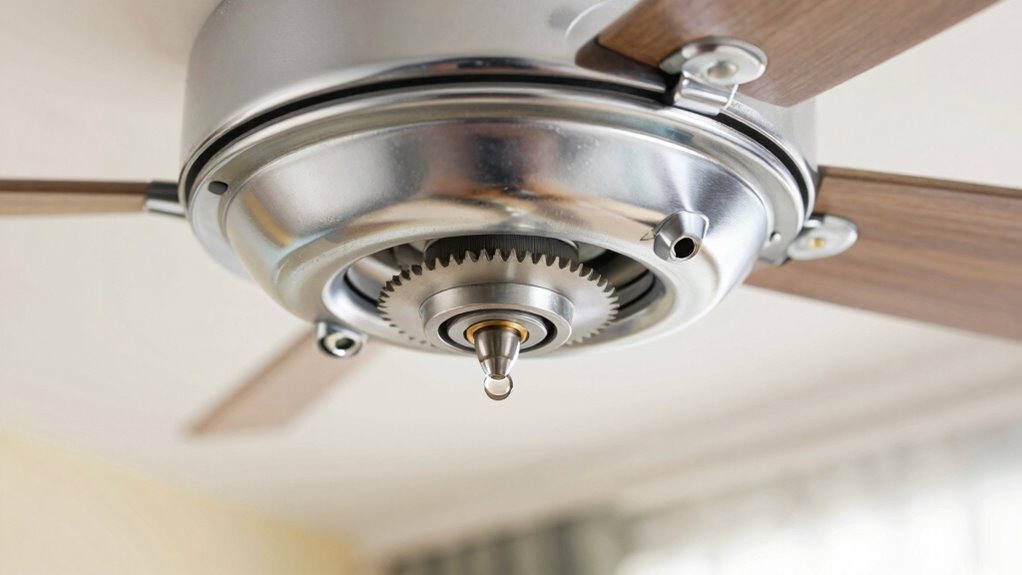
Have you ever noticed your ceiling fan making squeaky noises or wobbling? These issues often point to a need for proper fan maintenance, and one common culprit is lack of lubrication. Many people overlook whether their ceiling fan even needs oil, but regular lubrication can considerably reduce noise and improve performance. Fans with well-maintained moving parts run smoother and quieter, creating a more comfortable environment in your room. If your fan starts to squeak or wobble, it’s worth checking the blades and the motor housing for signs of dryness or dirt buildup. Applying the right lubricant to the appropriate parts can make a world of difference in noise reduction and overall function. Regular lubrication also helps prevent overheating and extends the lifespan of your fan’s components.
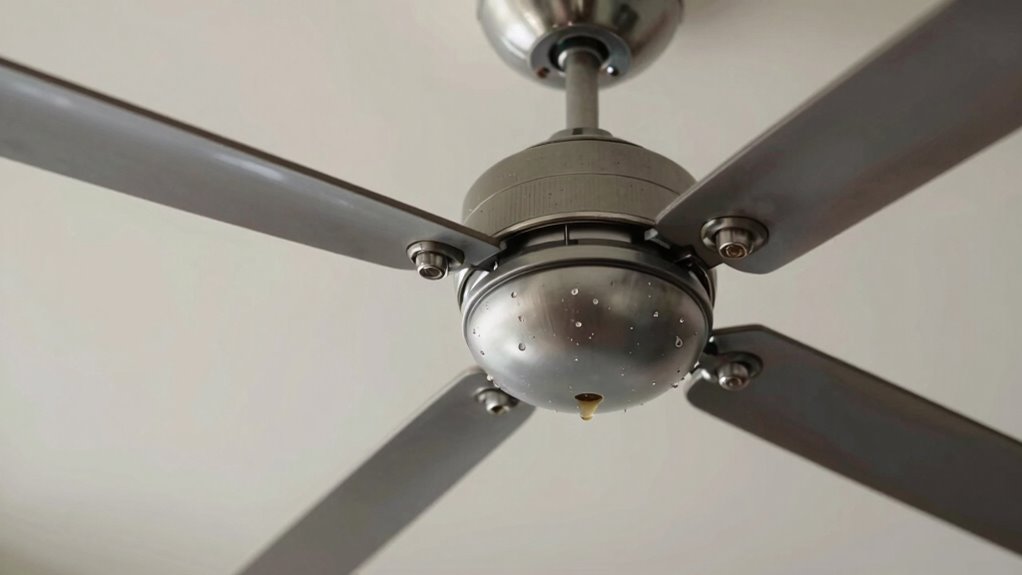
Not all ceiling fans require oiling, but many with ball bearings or sleeve bearings do. For fans with ball bearings, lubrication helps reduce friction between the moving parts, preventing squeaks and unnecessary wear. Sleeve bearings, which are often found in older or cheaper fans, tend to need more frequent lubrication because they lack sealed bearing systems. Before applying any oil, always switch off the fan and let it cool down. Then, carefully inspect the motor and bearing areas. If you see dust or debris, clean it gently to avoid clogging the moving parts. Once cleaned, add a few drops of lightweight machine oil or a manufacturer-recommended lubricant to the bearing points. This simple step can notably cut down on noise and extend your fan’s lifespan. Proper fan lubrication is an essential part of ongoing maintenance to keep your ceiling fan operating quietly and efficiently.
In terms of fan maintenance, don’t forget that regular lubrication isn’t a one-time task. Depending on usage and environmental conditions, you might need to oil your fan every year or so. If your fan is noisier or wobbles more than usual, it’s a sign it’s time for a quick oiling. However, if the fan still squeaks after lubrication, check for other issues like loose screws, bent blades, or worn-out parts. Proper fan maintenance involves not only lubrication but also tightening screws, balancing blades, and cleaning dust from the motor and blades. All these steps contribute to noise reduction and ensure your ceiling fan operates efficiently and quietly.
Frequently Asked Questions
How Often Should I Lubricate My Ceiling Fan?
You should lubricate your ceiling fan every couple of years to keep it running smoothly. Regular fan blade maintenance helps prevent wobbling and noise. Before applying oil, turn off the power to guarantee electrical safety. Check the manufacturer’s instructions, as some fans are maintenance-free. Proper lubrication reduces friction, prolonging your fan’s lifespan, so don’t skip this step for peak performance and safety.
Can I Use Household Oil on My Fan?
Yes, you can use household oils for fan lubrication, but it’s important to choose the right type. Light machine oil or motor oil works best, as they won’t gum up or cause damage. Avoid thick or multi-purpose household oils like cooking or WD-40, which can harm your fan. Always apply a small amount directly to the motor’s moving parts, and check your fan’s manual for specific lubrication recommendations.
What Signs Indicate My Fan Needs Lubrication?
Ever notice your fan making strange noises or wobbling more than usual? These signs point to your fan needing lubrication. Fan noise and unusual vibrations often mean the moving parts aren’t sliding smoothly. If you see these symptoms, it’s time to oil the motor or other moving parts. Regular lubrication keeps your fan quiet and stable, preventing further damage and prolonging its lifespan. Don’t ignore these signs—they’re your fan’s way of asking for help.
Is Lubrication Necessary for New Ceiling Fans?
Lubrication isn’t usually necessary for new ceiling fans, as they often come pre-lubricated. However, for ideal ceiling fan maintenance, check the manufacturer’s instructions to determine if lubrication is recommended and how often. If your fan starts making noise or isn’t spinning smoothly, it might need lubrication. Regularly inspecting and maintaining your fan ensures it runs quietly and efficiently, reducing the need for costly repairs down the line.
Are There Risks if I Over-Lubricate My Fan?
Over-lubricating your fan can lead to fan squeaking and increase over lubrication risks. When you add too much oil, it can attract dust and dirt, causing buildup that hampers movement. Excess oil may leak into motor parts, potentially damaging the fan’s components. To avoid these issues, only lubricate as needed, use the right amount, and follow manufacturer instructions. Proper maintenance keeps your fan running smoothly and quietly.
Conclusion
Remember, a well-maintained ceiling fan runs smoothly and lasts longer. If you notice squeaking or wobbling, it might be time to oil or inspect it. But don’t force lubrication where it’s not needed—sometimes, prevention is better than cure. As the saying goes, “A stitch in time saves nine.” Keep an eye on your fan’s performance, and you’ll ensure it keeps you cool without unnecessary fuss. Proper care now conserves trouble later.