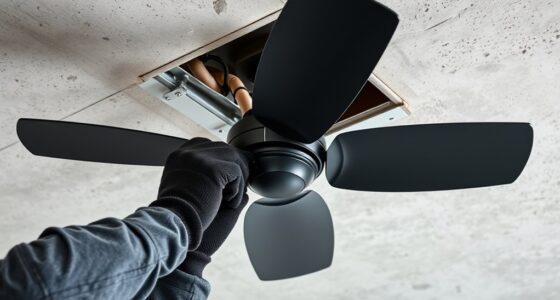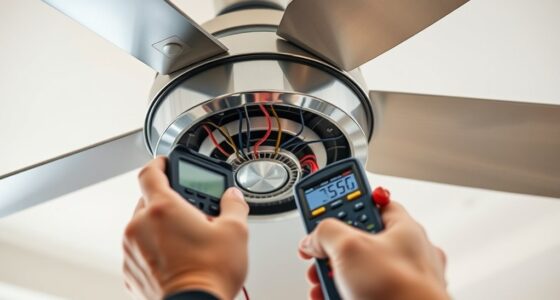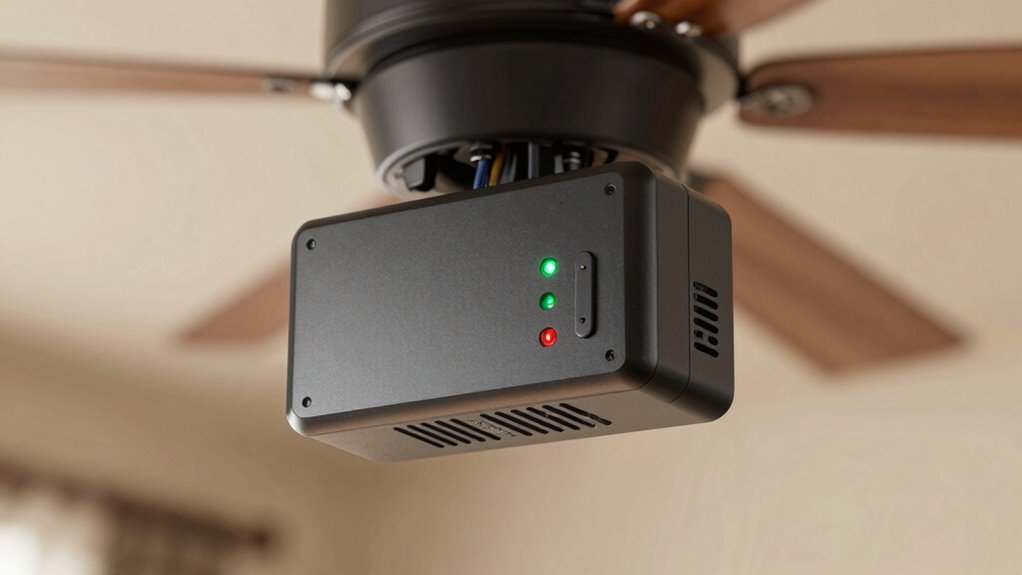
A whole-home surge protector shields your fan electronics from power spikes by blocking excess voltage before it reaches your home’s wiring. It’s installed at the main electrical panel, providing a reliable safeguard against surges caused by lightning or utility fluctuations. This protection helps prevent damage to sensitive components and extends the lifespan of your fans. To learn more about how this system keeps your electronics safe and your home secure, keep exploring the details below.
Key Takeaways
- Whole-home surge protectors divert voltage spikes before they reach fan electronics, preventing damage.
- Installed at the main electrical panel, they create a barrier against external power surges.
- Proper surge protection extends fan lifespan and reduces repair costs from voltage spikes.
- Regular maintenance ensures the surge protector remains effective against new or ongoing surge threats.
- Combining a whole-home surge protector with local protectors offers comprehensive safety for fans and other appliances.
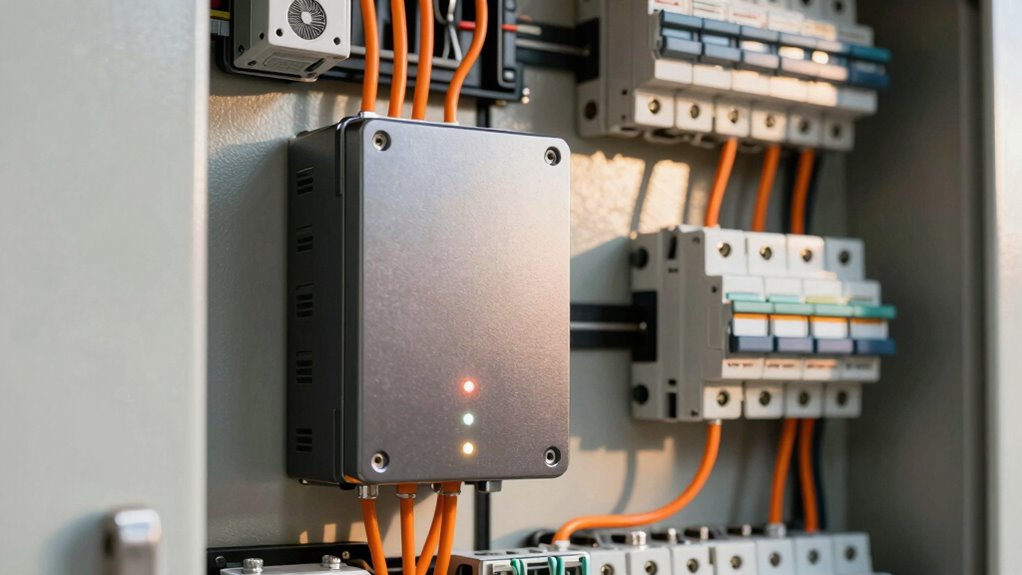
A whole-home surge protector is an essential device that shields your entire electrical system from unexpected power surges. When you consider electrical safety, protecting your home’s wiring and appliances becomes a top priority. Power surges can happen unexpectedly, whether due to lightning strikes, utility grid fluctuations, or sudden changes in electrical demand. Without proper surge protection strategies, these spikes can damage sensitive electronics, cause system failures, or even pose fire hazards. Installing a whole-home surge protector provides a first line of defense, ensuring that your electrical system remains stable and your devices stay safe during voltage spikes.
Protect your home by installing a whole-home surge protector to guard against unexpected power surges and electrical hazards.
By integrating a surge protector at your main electrical panel, you’re effectively creating a barrier that diverts excess voltage away from your home’s wiring. This approach is far more reliable than plugging individual devices into surge protector strips, especially for high-value electronics like your TV, computers, or home theater systems. The key is to select a surge protector rated appropriately for your home’s electrical load and to have it installed by a qualified electrician. This guarantees that your setup adheres to electrical safety standards and that your entire system benefits from extensive surge protection. Furthermore, a whole-home surge protector minimizes the risk of damage from external causes like lightning strikes, which can send powerful surges through utility lines and into your home.
Understanding surge protection strategies means recognizing that not all surges are created equal. Some are small and frequent, caused by everyday electrical switching, while others are large and catastrophic, such as those from a nearby lightning strike. A high-quality surge protector can handle both types of surges effectively, absorbing excess voltage and preventing it from reaching your sensitive electronics. This not only prolongs the lifespan of your devices but also safeguards your investment. Regular maintenance and inspections of your surge protection system ensure it remains in top condition, ready to guard against future surges. Additionally, employing whole‑home surge protection can help protect your entire electrical system from the damaging effects of power spikes.
Adopting extensive surge protection strategies involves more than just installing a whole-home device. You should also consider local surge protectors for specific appliances, especially those with microprocessors. Combining these layers of protection creates a robust system that enhances electrical safety across your entire home. Remember, surge protection is an investment in peace of mind, protecting your electronics, extending their lifespan, and preventing costly repairs. When you prioritize these strategies, you’re taking active steps to shield your home from unpredictable electrical events, ensuring a safer, more reliable electrical environment for you and your family.
Frequently Asked Questions
How Often Should I Test My Whole-Home Surge Protector?
You should test your surge protector at least once a year to guarantee it’s working properly. Follow a regular testing schedule, especially after severe storms or power outages, to check for any damage or malfunctions. Many surge protectors have indicator lights that show their status. Regular testing helps you catch issues early, so your fan electronics stay protected from unexpected power spikes.
Can I Install a Surge Protector Myself or Need a Professional?
You can attempt DIY installation, but unless you’re an electrical wizard, it’s best to call professional assistance. Sure, tinkering might seem tempting, but a wrong connection can turn your home into a lightning rod. Save yourself the shock and hassle—hire a pro who knows their way around surge protectors. Your fan electronics will thank you, and you’ll avoid the risk of costly mistakes.
Does a Surge Protector Interfere With My Home’s Wi-Fi?
A surge protector generally doesn’t interfere with your home’s Wi-Fi or cause electronic disruption. Most modern surge protectors are designed to prevent any Wi-Fi interference, so you can safely install one without worrying about disrupting your network. If you notice connection issues, check for other sources of Wi-Fi interference like thick walls or electronic devices, but a quality surge protector shouldn’t impact your Wi-Fi performance.
What Is the Lifespan of a Typical Whole-Home Surge Protector?
A typical whole-home surge protector lasts about 5 to 10 years, depending on surge protector durability and usage. You should check the replacement interval recommended by the manufacturer, as exposure to frequent power surges can shorten its life. Regular inspections, testing, and timely replacements keep your electronics safe, ensuring your surge protector works efficiently. Stay proactive, monitor its performance, and replace it as needed to maintain peak protection.
Are There Any Maintenance Requirements for Surge Protection Devices?
You should perform regular surge protector inspections to guarantee it’s functioning properly. Check for any signs of damage or wear, and follow the recommended replacement schedule, usually every 5 to 10 years or after a significant surge event. Keeping up with these maintenance steps helps maintain ideal protection for your fan electronics and other connected devices, preventing potential damage from power spikes.
Conclusion
Think of a whole-home surge protector as a sturdy shield guarding your home’s heartbeat. Just as a fortress stands strong against storms, it defends your fan electronics from sudden spikes, keeping your comfort safe inside. When you install one, you’re planting a silent sentinel that watches over your home’s energy flow, ensuring peace of mind. With this protector in place, you can face life’s unpredictable surges, knowing your home’s harmony remains unbroken—your steadfast guardian in every storm.