If you’re choosing between a telescoping and extension ladder for indoor use, the telescoping option is generally safer. Its compact design makes it easier to store and maneuver, reducing the risk of accidents. Reinforced locking mechanisms keep it stable during adjustments, providing extra security. Extension ladders tend to be heavier and harder to handle in tight spaces, which can increase safety concerns. To discover the key differences and which ladder suits your needs best, keep exploring the details.
Key Takeaways
- Telescoping ladders with reinforced locking mechanisms provide secure height adjustments, reducing the risk of slips or collapses indoors.
- Lightweight materials in telescoping ladders enhance maneuverability and ease of handling compared to heavier extension ladders.
- Compact, foldable design of telescoping ladders allows for safer storage and quick repositioning in tight indoor spaces.
- Proper locking and material quality are essential for the stability and safety of both ladder types during indoor use.
- Extension ladders require careful setup and locking of rungs, which may pose safety risks if not properly secured indoors.
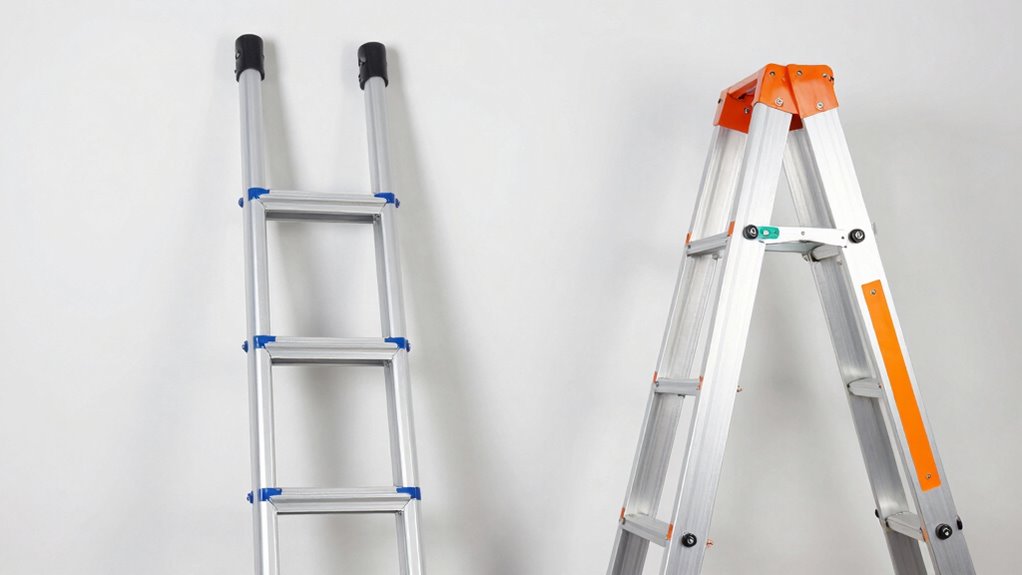
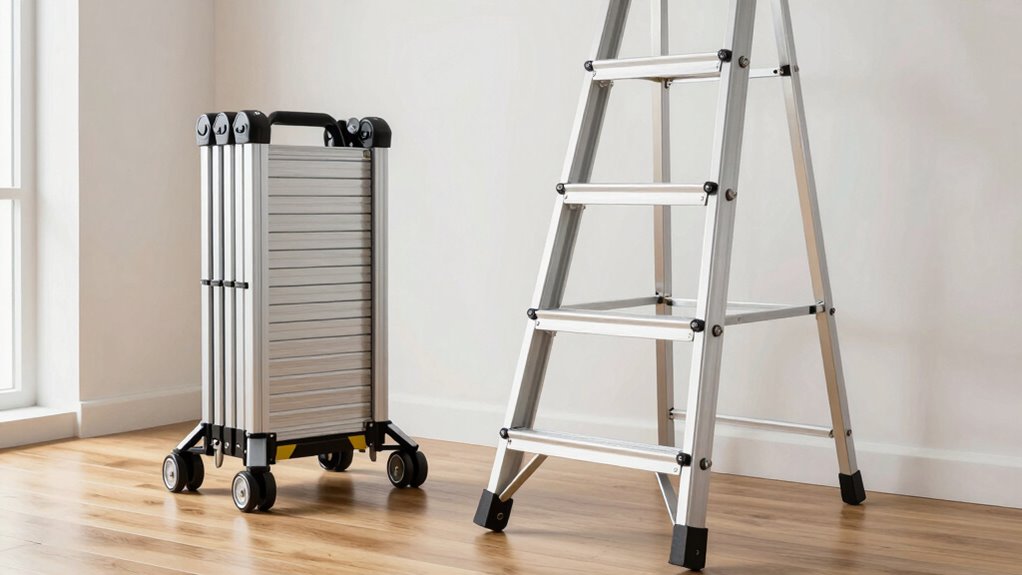
When choosing between a telescoping ladder and an extension ladder, understanding their differences can help you make the right decision for your needs. One of the key factors to consider is material durability. Telescoping ladders are often made from lightweight materials like aluminum or fiberglass, which offer excellent resistance to rust and corrosion. These materials are sturdy enough for most indoor tasks, such as painting or changing light fixtures, yet light enough for you to carry and maneuver easily. Extension ladders, in the other hand, are typically constructed from similar durable materials but tend to be heavier due to their design. This added weight can make them more stable but also more cumbersome to handle, especially if you need to move them around frequently indoors. Additionally, the design features of telescoping ladders often include reinforced locking mechanisms that enhance safety during height adjustments. Another critical aspect is compact storage. When working indoors, space is often limited, and storing bulky equipment can be a hassle. Telescoping ladders excel in this area because they collapse down to a fraction of their extended height, allowing you to store them in closets, under beds, or in narrow storage cabinets. This compact storage feature makes them highly convenient if you’re dealing with limited space. Extension ladders, in contrast, are substantially longer and bulkier when fully extended, often requiring a designated storage area. They don’t fold down into a compact size, which can be problematic if you’re working in tight spaces or need to frequently move the ladder from one room to another. Material durability also influences safety. A sturdy, well-made ladder minimizes risks of bending, breaking, or wobbling while in use. Both types of ladders, when made from quality materials, provide a stable platform, but telescoping models with reinforced locking mechanisms can add an extra layer of safety during height adjustments. The ease of locking and unlocking sections on telescoping ladders ensures you can set the ladder to your desired height securely, reducing the chances of slips or collapses. Extension ladders, with their traditional rung-style design, tend to be more straightforward to set up but require careful attention when extending and locking all sections properly.

Telescoping Ladder, SocTone 12.5 FT Aluminum Lightweight Extension Ladder with 2 Triangle Stabilizers, Heavy Duty 250lbs Max Capacity, Multi-Purpose Collapsible Ladder for RV or Outdoor Work
- Enhanced Stability: Includes two triangle stabilizers for reduced wobble
- Safe and Smooth Retraction: Smart locking pins ensure secure, controlled retraction
- Durable Aluminum Construction: Made from high-quality, corrosion-resistant aluminum alloy
As an affiliate, we earn on qualifying purchases.
As an affiliate, we earn on qualifying purchases.
Frequently Asked Questions
Which Ladder Is More Suitable for Uneven Indoor Surfaces?
You should choose an extension ladder for uneven indoor surfaces, as it offers better stability and surface compatibility. Extension ladders can be adjusted to match irregularities, reducing stability issues. Telescoping ladders may wobble or shift on uneven ground, making them less safe. So, for uneven surfaces, an extension ladder provides a more secure and reliable option, giving you confidence while working at height indoors.
Can Telescoping Ladders Support Heavier Weights Than Extension Ladders?
You might think telescoping ladders are superheroes, but when it comes to weight capacity, extension ladders often support heavier loads. Generally, extension ladders boast higher load limits, making them better for heavier tasks. Telescoping ladders usually have a lower weight capacity, designed for lighter indoor jobs. Always verify the specific load limits and weight capacity of each ladder to guarantee safety and suitability for your needs.
Are Telescoping Ladders More Prone to Mechanical Failure Indoors?
Yes, telescoping ladders can be more prone to mechanical failure indoors due to their complex ladder durability mechanisms. You should regularly check for signs of wear or damage to guarantee indoor safety. Proper maintenance and cautious use help prevent failures, especially in confined spaces. While they’re convenient, stay vigilant about their condition to avoid accidents, making sure you prioritize safety when using telescoping ladders indoors.
How Long Does It Take to Set up Each Type of Ladder?
Setting up a telescoping ladder takes about a minute since you just release and extend sections, making it quick and easy. An extension ladder may take a few minutes because you need to secure each rung and guarantee stability. Regular ladder maintenance and proper storage considerations, like keeping it clean and protected from damage, help guarantee safety and quick setup for both types. Always follow manufacturer instructions for the best use.
Which Ladder Type Is Easier for One Person to Operate Safely?
If you want a ladder that’s easier for one person to operate safely, go with a telescoping ladder—it’s like the ninja of ladders, blending portability and ease of storage seamlessly. You can extend or collapse it with a flick, making setup quick and safe. Its lightweight design means you won’t need a forklift, unlike bulky extension ladders. So, for solo jobs, telescoping ladders are your best bet—less hassle, less risk!
Conclusion
Choosing between a telescoping ladder and an extension ladder is like selecting a trusted companion for your indoor adventures. Think of the telescoping ladder as a nimble friend, easily adjusting to tight spaces, while the extension ladder is a sturdy ally for taller heights. Both can serve you well, but safety depends on knowing their strengths. Ultimately, pick the one that fits your needs like a well-fitting glove—ensuring your climb remains steady and secure, no matter the height.