
To select the appropriate ceiling fan mounting bracket, consider your ceiling type, height, and fan weight. Flat ceilings often need flush-mount or hugger brackets, while angled ceilings require adjustable or universal brackets. Make certain the bracket is rated for your fan’s weight and compatible with your electrical box. Proper installation and safety checks are essential for stability. Keep exploring to discover more tips for a secure, professional setup.

Get home appliances delivered free with Prime
- Fast, free delivery on millions of items
- Prime Video, Amazon Music and more included
- Member-only deals all year
Key Takeaways
- Match the bracket type (flush, angled, universal) to your ceiling’s angle and height for proper support.
- Consider the fan’s weight and size when selecting a bracket rated for safety and durability.
- Ensure compatibility with your electrical box, upgrading to a fan-rated box if necessary for heavy fans.
- Verify that the bracket is suited for your ceiling type—flat, angled, or vaulted—for secure installation.
- Follow manufacturer instructions and use proper tools to securely attach the bracket, ensuring safety and stability.

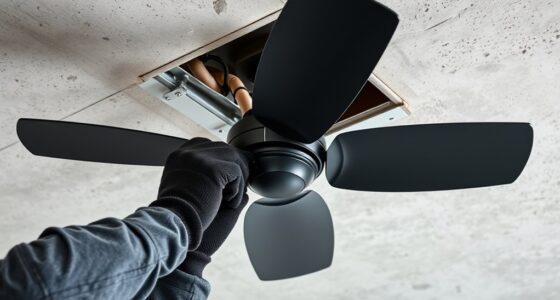
Have you ever wondered how your ceiling fan stays securely in place? The secret lies in choosing the right ceiling fan mounting brackets. These brackets are vital for proper installation, ensuring the fan is stable, safe, and functions effectively. When selecting a mounting bracket, it’s important to consider the type of ceiling you have, the weight of your fan, and the specific requirements of your space. Proper installation tips can make all the difference, so take your time to follow manufacturer instructions carefully. Always turn off the power before beginning, and double-check that your electrical box is rated to support the weight of the fan. This is a key safety consideration—if your box isn’t rated for ceiling fans, it could pose serious risks of falling or electrical hazards. Think about upgrading to a fan-rated box if necessary.
Choosing the right mounting bracket and following safety tips ensures your ceiling fan stays secure and functions safely.
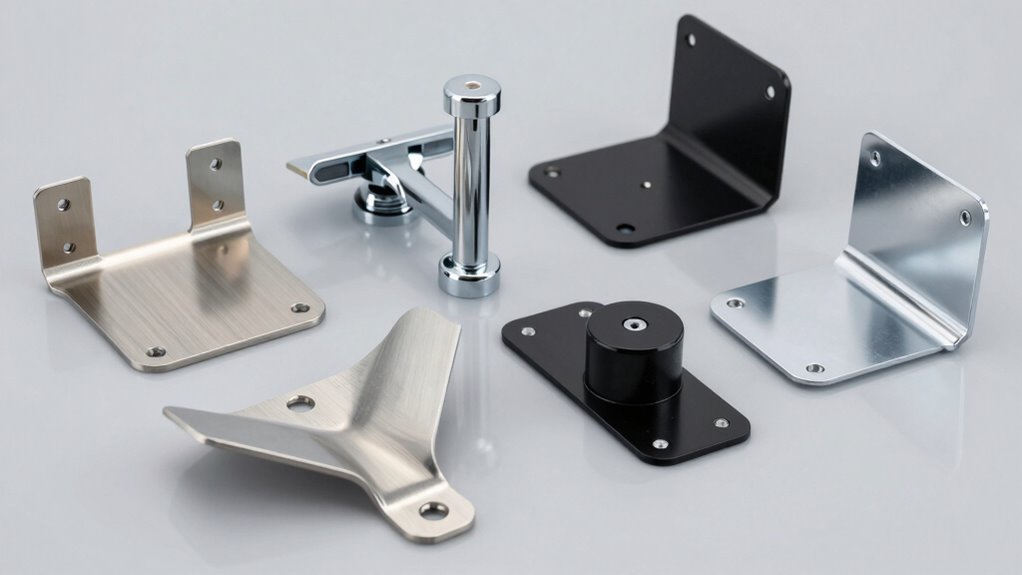
Next, match the mounting bracket to your ceiling type. For standard flat ceilings, a flush mount or hugger bracket often suffices, providing a close-to-ceiling installation that works well in low-clearance areas. If you have angled or vaulted ceilings, you’ll need a specially designed angled mount or a universal bracket that accommodates sloped surfaces. These brackets help guarantee the fan hangs evenly and operates smoothly. When installing, secure the bracket to the electrical box tightly using the provided screws, making sure it’s flush and level. Use a level tool if needed to verify proper alignment. A loose or uneven mount can cause wobbling or noise, which not only affects comfort but also safety.
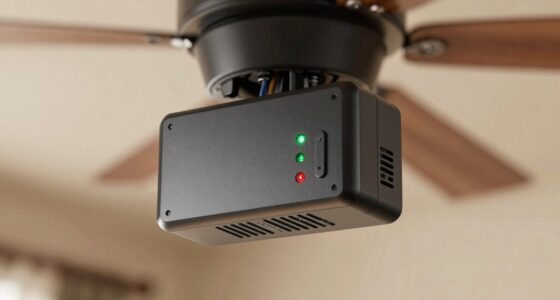
Safety considerations extend beyond just securing the bracket. Check that all connections—electrical wires, mounting screws, and support arms—are tightened properly. Use the correct size and type of screws or bolts recommended by the manufacturer. Over-tightening can damage components, while under-tightening can lead to instability. If you’re unsure, don’t hesitate to consult a professional. Additionally, make sure the mounting bracket is compatible with your fan’s weight and size; using an undersized or unsuitable bracket could lead to a dangerous situation. It’s also helpful to be aware of vetted installation standards and guidelines to ensure compliance and safety.
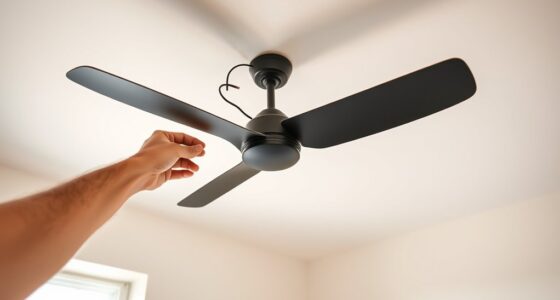
Finally, always test the installation once completed. Turn on the power and gently run the fan at different speeds, watching for wobbling or vibrations. If you notice any issues, double-check your mounting points and connections. Remember, safety is paramount—if anything feels off, shut off the power and reevaluate your setup. Choosing the right ceiling fan mounting bracket and following proper installation tips can save you time, money, and potential hazards, giving you peace of mind that your fan is securely and safely installed for years to come.
As an affiliate, we earn on qualifying purchases.
Frequently Asked Questions
Can I Install a Ceiling Fan Without a Mounting Bracket?
You shouldn’t install a ceiling fan without a mounting bracket because it compromises installation safety and stability. The bracket provides a secure connection to your ceiling, preventing wobbling or falling. Without it, controlling fan speed and ensuring safe operation becomes risky. Always use the proper mounting bracket designed for your ceiling type, as it guarantees the fan stays firmly in place and functions correctly, giving you reliable airflow and safety.
What Weight Capacity Should a Mounting Bracket Support?
Think of your ceiling fan as a delicate dancer needing a sturdy stage. You should choose a mounting bracket with a weight capacity of at least 35-50 pounds, ensuring it can support the fan’s weight comfortably. Always prioritize safety considerations by verifying the bracket’s maximum load, so your fan stays secure and your ceiling remains intact. Remember, a well-supported fan keeps the cool breeze flowing smoothly and safely.
Are There Specific Brackets for Sloped or Vaulted Ceilings?
Yes, there are specific brackets for sloped or vaulted ceilings. You should look for sloped ceiling compatibility brackets, which include adjustable angles to accommodate various ceiling pitches. For vaulted ceilings, consider specialized vaulted ceiling solutions that provide extra support and flexibility. These brackets help guarantee your ceiling fan is securely mounted and operates safely, regardless of the ceiling’s angle or height. Always select a bracket designed for your ceiling type.
How Do I Replace a Damaged Ceiling Fan Bracket?
You need to act quickly when replacing a damaged ceiling fan bracket, but don’t rush—installation safety is paramount. First, turn off the power, then carefully remove the old bracket, ensuring compatibility with your fan model. Carefully check the mounting area for damage, then select a replacement bracket that fits securely. Proper installation guarantees safety and stability, preventing future issues. Take your time, double-check connections, and enjoy the cool comfort safely.
Do Mounting Brackets Affect Fan Blade Clearance?
Yes, mounting brackets impact blade clearance because they determine how far the fan hangs from the ceiling. If the bracket is too long or not properly installed, it can reduce blade clearance, causing the blades to get too close to the ceiling or nearby objects. Choosing the correct bracket guarantees adequate blade clearance, which helps prevent wobbling, noise, and safety issues. Always verify the bracket‘s size and compatibility with your fan’s specifications.
Conclusion
Choosing the right ceiling fan mounting bracket is like finding the key to your room’s perfect comfort. It might seem small, but it holds the power to keep your fan secure and your space stylish. Don’t settle for less—your ceiling deserves the best support. Remember, a sturdy bracket isn’t just a detail; it’s the foundation of safe, effective cooling. With the right choice, you’ll enjoy cool breezes without a worry—because a secure fan is a happy fan.
NFL season / tailgating Picks
team gear
As an affiliate, we earn on qualifying purchases.