To avoid false alarms when using a non-contact voltage tester, guarantee it’s working properly by testing it on a known live circuit first. Keep your hands dry and avoid metallic contact, approaching wires carefully and slowly. Always verify the circuit is de-energized with the tester after turning off power at the breaker. Regularly check your device’s functionality, and remember environmental factors can affect readings. Continuing will help you master safe, accurate testing techniques.

Get home appliances delivered free — and shop member deals
- Fast, free delivery on millions of items
- Access to Prime Big Deal Days deals on October 6–7
- Prime Video, Amazon Music and more included
Key Takeaways
- Verify the tester’s functionality on a known live circuit before use.
- Keep hands dry and approach outlets or wires slowly to avoid false readings.
- Turn off the circuit breaker and confirm de-energization with the tester before working.
- Minimize proximity to metallic parts or interference sources during testing.
- Use the tester alongside other safety measures, such as turning off power and using a multimeter if needed.
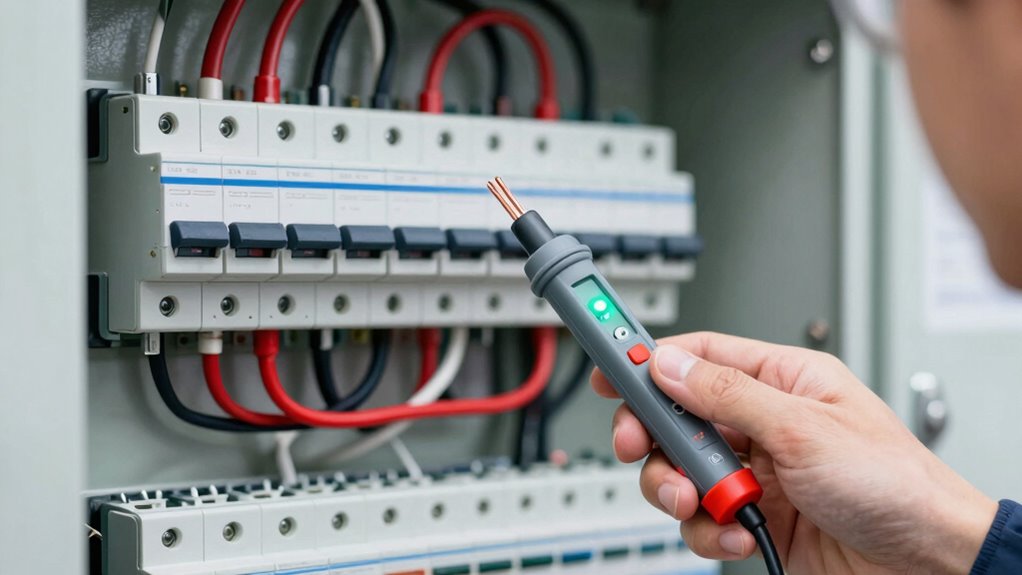
A non-contact voltage tester is a handy tool that helps you quickly determine whether an electrical wire or outlet is live without touching any conductors. It’s an essential device for anyone working around electricity, especially when you need to verify circuit protection before starting repairs or installations. Using this tool correctly ensures you stay safe and compliant with safety regulations designed to prevent electrical accidents. However, false alarms can occur if you’re not careful, which might lead to unnecessary concern or even dangerous assumptions. To avoid these issues, understanding how to properly use your tester is crucial.
First, always check that your voltage tester is in good working condition before use. Most models have a built-in tester light or a test button. Test it on a known live circuit, like an outlet or a lamp that’s plugged in, to confirm it’s functioning correctly. If it doesn’t light up or beep on the live circuit, don’t rely on it for safety checks. Proper functioning of the tester is fundamental to ensuring accurate detection and maintaining safety standards.
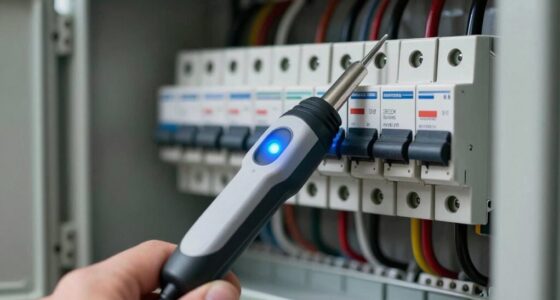
Check your voltage tester on a known live circuit before use to ensure accurate and safe readings.
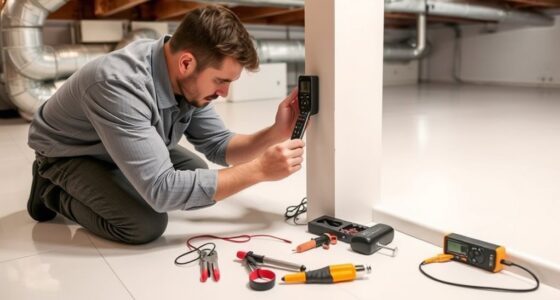
Next, when approaching an outlet or wire, make sure your hands are dry, and you’re standing on a dry, non-conductive surface. This minimizes the risk of electrical shock. When bringing the tester near the conductor, move slowly and carefully. Many false alarms happen because the device is too close to energized parts or if you’re not holding it properly. Keep the tip of the tester close enough to the wire or outlet to get an accurate reading, but avoid pressing it against metallic parts or other sources of interference. Remember, electrical fields from nearby devices or wiring can sometimes cause false positives, so be cautious about your environment.
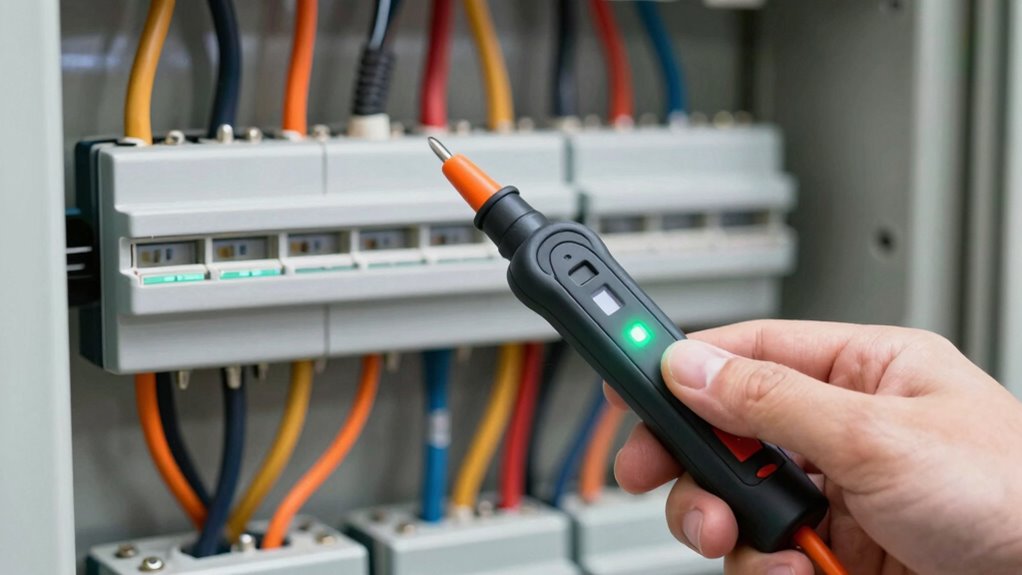
Additionally, always follow safety regulations when working with electricity. Turn off the circuit breaker whenever possible before testing or working on wiring. This step provides an added layer of circuit protection and minimizes the chance of accidental shocks. After turning off power, use the non-contact voltage tester to confirm that the circuit is dead. If the tester still indicates voltage, recheck your breaker and ensure the circuit is properly shut off before proceeding.
Finally, trust your senses and the device, but don’t rely solely on it. Use it as part of a comprehensive safety protocol, including turning off power and verifying with a multimeter if necessary. Proper training on the use of your voltage tester helps you avoid false alarms and ensures you’re complying with safety regulations. Remember, safety comes first, and a well-used non-contact voltage tester is a vital tool for safe electrical work, providing peace of mind and protecting your well-being. Additionally, familiarizing yourself with the navigation and mapping features of some advanced testers can improve accuracy and safety during complex electrical inspections.
non-contact voltage tester with LED indicator
As an affiliate, we earn on qualifying purchases.
As an affiliate, we earn on qualifying purchases.
Frequently Asked Questions
Can a Non-Contact Voltage Tester Detect Low-Voltage Signals?
Yes, a non-contact voltage tester can detect low-voltage signals if it has high voltage sensitivity. However, not all testers are designed for low-voltage detection, so check the specifications before use. You should also verify you’re close enough to the wire or component, as distance can affect detection. For accurate readings, choose a tester that explicitly states it supports low-voltage detection and follow the manufacturer’s instructions carefully.
How Often Should I Calibrate My Voltage Tester?
You should calibrate your voltage tester at least once a year to maintain proper calibration frequency and verify tester accuracy. If you notice inconsistent readings or suspect it’s not functioning correctly, calibrate it more often. Regular calibration helps prevent false alarms or missed detections, keeping your measurements reliable. Always follow the manufacturer’s recommendations for calibration intervals, and consider calibrating after any impact or exposure to extreme conditions to keep your tester accurate.
Is It Safe to Use a Non-Contact Tester on Wet Hands?
Using a non-contact voltage tester on wet hands isn’t safe. Water reduces electrical insulation, increasing the risk of false alarms or electric shock. You might think you’re protected, but moisture can create a dangerous pathway for electricity. Always make certain your hands are dry, and prioritize water safety. A quick check before testing can prevent accidents, ensuring you stay safe while working around electrical sources. Stay cautious, stay safe.
Can Electromagnetic Interference Cause False Alarms?
Electromagnetic interference can indeed cause false alarms on your non-contact voltage tester. To prevent this, keep the tester away from strong electromagnetic sources like motors, radios, or fluorescent lights. Always verify readings with a known safe voltage source and avoid testing in high-interference environments. Regular calibration and using the tester in a controlled setting help improve false alarm prevention, ensuring more accurate and reliable results.
What Is the Maximum Distance a Non-Contact Tester Can Detect Voltage?
You can detect voltage from up to 2 inches away with your non-contact voltage tester, but never rely on this as a magic wand—distance limitations vary. Beyond this range, accuracy drops dramatically, making false readings more likely. Keep the tester close to the wiring or outlet to guarantee reliable voltage detection, and always follow manufacturer guidelines to avoid missing live wires or risking electric shock.
Conclusion
Using a non-contact voltage tester is like having a reliable alarm system—you trust it to alert you without false alarms. I once nearly touched a live wire, but the tester buzzed loudly, saving me from a shock. Just as a fire alarm keeps you safe by alerting you early, mastering proper testing techniques guarantees your safety and avoids false alarms. With practice, you’ll use it confidently, knowing it’s your silent guardian against electrical surprises.
Cold & flu season Picks
humidifiers
As an affiliate, we earn on qualifying purchases.