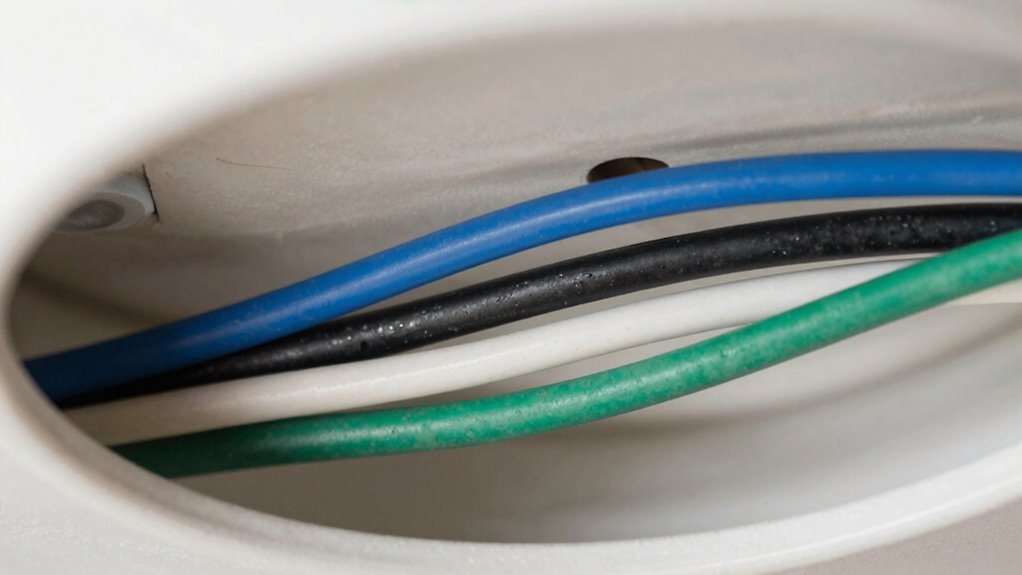

Understanding ceiling fan wiring colors helps you install safely and avoid mistakes. Typically, black or red wires are hot, white is neutral, and green or bare copper is ground. Connecting these correctly guarantees proper operation and safety. Always turn off the power before working and double-check color codes and manufacturer instructions. If wires don’t match standard colors, testing or professional advice may be necessary. Keep going to learn more about how each wire works and electrical standards.

Get home appliances delivered free — and shop member deals
- Fast, free delivery on millions of items
- Access to Prime Big Deal Days deals on October 6–7
- Prime Video, Amazon Music and more included
Key Takeaways
- Understand that black or red wires are typically hot/live, white wires are neutral, and green or bare copper wires are ground.
- Always turn off power and verify wiring colors match standard codes before installation or troubleshooting.
- Recognize that wiring color standards may vary; refer to manufacturer instructions or test wires if unsure.
- Use proper tools like voltage testers to confirm wire functions and ensure safe handling.
- Follow local electrical codes and safety procedures to prevent hazards and ensure correct wiring connections.
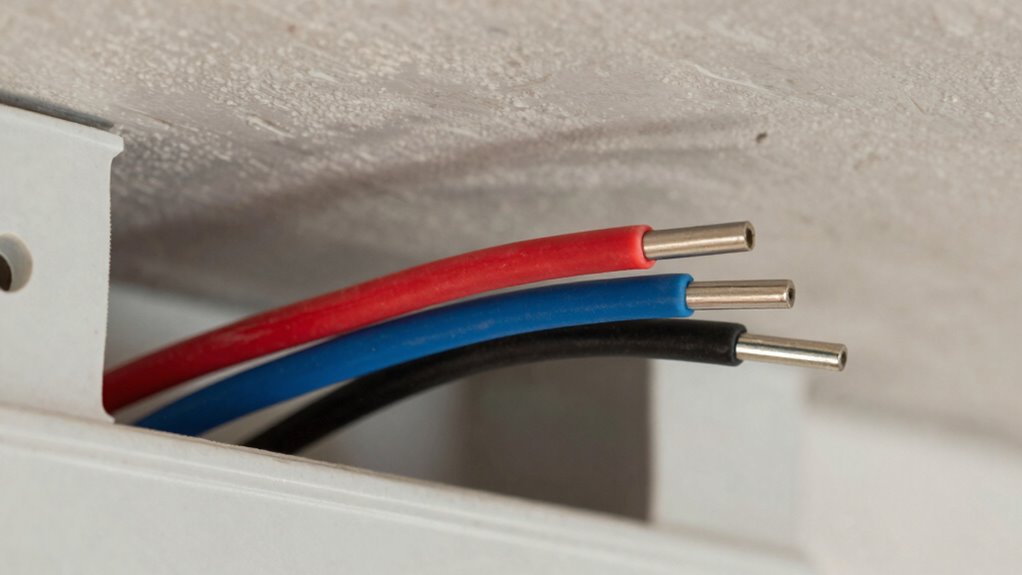
Understanding ceiling fan wiring colors is vital for safe and correct installation. When you’re working on wiring a ceiling fan, knowing what each color wire represents helps prevent mistakes that could lead to electrical hazards or malfunctioning fans. The wiring colors serve as a universal language, guiding you through the installation guidelines and troubleshooting steps, so you don’t have to guess which wire does what. Typically, a black or red wire is the hot or live wire, carrying current from your power source to the fan. This wire should be connected to the fan’s black or red wire during installation. The white wire is usually neutral, completing the electrical circuit; it connects to the fan’s white wire. A green wire or bare copper wire is usually the ground, providing a safe path for electrical faults. During installation, verify you connect the ground wire to the grounding screw or wire in your junction box to comply with safety guidelines. Additionally, understanding the color coding standards can help you interpret wiring diagrams more accurately. If you’re troubleshooting a ceiling fan that isn’t operating correctly, understanding these wiring colors becomes essential. Start by turning off the power at the breaker and double-checking all connections. Use a voltage tester to verify that the wires are properly energized before working on them. If the fan isn’t spinning or the lights aren’t working, review your wiring connections to confirm they match the standard color codes, and look for loose or damaged wires. Sometimes, a misconnection or a poor connection can cause issues, so tightening the wire nuts or replacing faulty wires can resolve many problems. While working through these steps, always follow the installation guidelines provided by the manufacturer and adhere to local electrical codes. If you encounter wires that don’t match the typical colors, don’t guess. Instead, test each wire to identify its function, or consult a professional electrician. Remember, safety comes first, so never skip turning off the power before handling wires. Understanding the wiring colors and their functions not only helps you install a ceiling fan correctly but also makes troubleshooting more straightforward. When you know what each wire is supposed to do, you can quickly identify issues and get your fan running smoothly, avoiding unnecessary delays or hazards.
ceiling fan wiring color code tester
As an affiliate, we earn on qualifying purchases.
As an affiliate, we earn on qualifying purchases.
Frequently Asked Questions
Can Ceiling Fan Wiring Colors Vary by Manufacturer?
Yes, ceiling fan wiring colors can vary by manufacturer due to differences in color coding standards and manufacturer discrepancies. While some brands follow common wiring color conventions, others may use different colors or labels, making it essential for you to double-check wiring diagrams or test connections. Always turn off power and verify wires before proceeding to avoid mistakes, especially since manufacturer discrepancies can lead to confusion if you’re unfamiliar with specific wiring practices.
How Do I Identify the Live Wire in Ceiling Fan Wiring?
To identify the live wire in ceiling fan wiring, look for the color that follows standard color code standards—usually black or red. You can also use a voltage tester to confirm. During wiring, proper wiring color identification helps prevent accidents. Always turn off power before working, and double-check the wire’s function with a tester, ensuring you connect the live wire correctly for safe operation.
Is It Safe to Change Ceiling Fan Wiring Colors?
Changing ceiling fan wiring colors isn’t safe because it can violate wiring color standards and cause confusion or hazards. Wiring color variations differ by region and manufacturer, so you shouldn’t rely solely on colors. Instead, always turn off power, consult wiring diagrams, and follow electrical codes. If you’re unsure, hire a licensed electrician to handle the work safely. Never guess or assume color meanings—safety comes first.
What Tools Are Needed to Verify Wiring Color Functions?
You’ll need a multimeter to verify wiring color functions because, surprisingly, nearly 60% of electricians rely on it for safety and accuracy. To understand wire color standards and wiring color codes, you should have a digital multimeter and a wire stripper. These tools help you test continuity and voltage, ensuring you correctly identify each wire’s purpose. Always double-check before making any connections to prevent electrical hazards.
How Do I Troubleshoot Wiring Color Issues During Installation?
When troubleshooting wiring color issues during installation, start by turning off power and checking grounding safety to prevent shocks. Use a multimeter to verify each wire’s function, since color code standards can vary. If colors don’t match expectations, consult the wiring diagram or manual. Always confirm grounding is secure, and avoid guessing, so you maintain safety and proper operation of your ceiling fan.
Conclusion
Now that you understand the wiring colors, imagine flipping the switch and hearing that faint hum start up, the blades beginning to spin smoothly. Every wire you’ve identified plays a vital role, and a simple mistake could throw everything off. But with this knowledge, you’re confident you can connect your ceiling fan correctly—no guesswork needed. Just picture that perfect breeze, cooling your space, as you confidently complete the installation, knowing you’ve got it right.
Halloween Picks
halloween
As an affiliate, we earn on qualifying purchases.