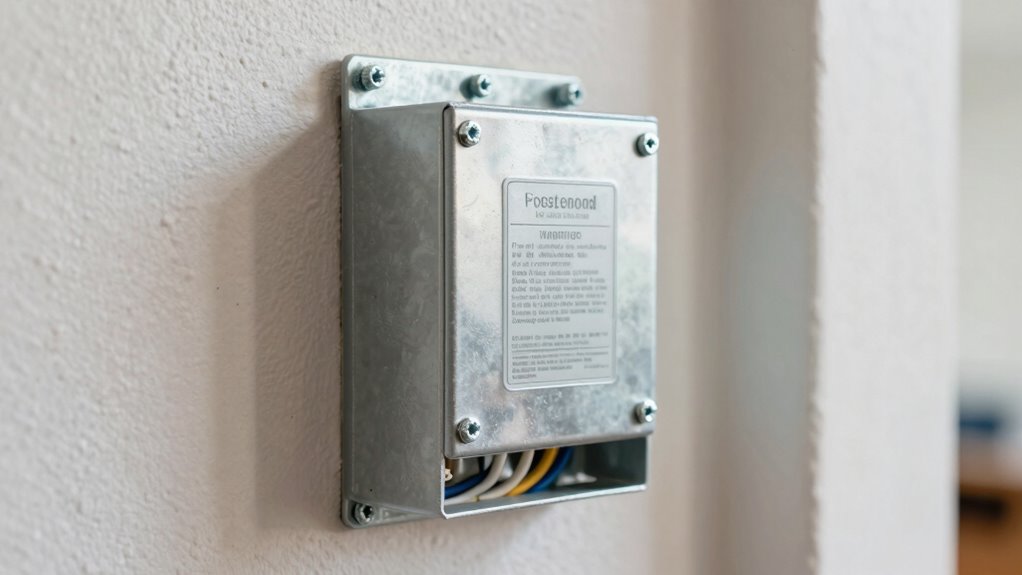
To prevent electrical disasters, make certain you’re using a fan-rated electrical box specifically designed to support ceiling fans and heavy loads. These boxes are built to withstand the weight and vibrations, preventing cracks, looseness, or failure over time. Investing in the right box and verifying its suitability is a vital safety step that protects your home from fires, structural damage, and electrical hazards. Keep these safety measures in mind as you continue to explore how proper electrical box choices can safeguard your space.

Get home appliances delivered free with Prime
- Fast, free delivery on millions of items
- Prime Video, Amazon Music and more included
- Member-only deals all year
Key Takeaways
- Ensure the electrical box is specifically rated for fans to support weight and vibrations safely.
- Verify that the box is securely mounted and not cracked or loose over time.
- Confirm proper grounding and check for corrosion or damaged wiring connections.
- Replace non-rated or damaged boxes immediately to prevent structural failure.
- Conduct routine safety inspections to identify potential issues before they cause hazards.
Electrical boxes are critical components of your home’s wiring system, and ensuring their safety can prevent electrical hazards. When it comes to maintaining a safe environment, performing regular ground wire inspections is one of the most vital steps. A proper ground wire provides a safe pathway for stray electrical current, reducing the risk of shocks or fires. During your inspection, look for loose connections, corrosion, or damaged wires. If you notice any signs of wear or corrosion, it’s essential to replace or repair those wires immediately. Ensuring the ground wire is correctly installed and secure helps prevent dangerous electrical faults that could escalate into fires or injury.
Regular ground wire inspections prevent electrical hazards and ensure safety.
In addition to ground wire inspection, circuit breaker testing is equally crucial. Circuit breakers act as your home’s first line of defense against electrical overloads and short circuits. Testing them regularly guarantees they trip correctly when necessary, cutting power before a problem can cause damage or harm. You can test a circuit breaker by switching it off and then back on, observing if it resets properly without sticking. If a breaker trips frequently or won’t reset, it indicates an underlying issue with the wiring or the breaker itself. Addressing these problems promptly helps maintain a safe electrical system and prevents potential disasters.
When inspecting your electrical box, don’t forget to check for signs of overheating or burning smells. These are clear indicators that something’s wrong, which may be linked to loose connections, overloaded circuits, or faulty breakers. If you notice any of these signs, turn off the power and contact a licensed electrician immediately. Remember, working with electrical systems carries inherent risks, so never attempt complex repairs unless you’re qualified.
Ensuring your electrical box can accommodate your current needs is also essential. Using a fan-rated electrical box for ceiling fans or large appliances is vital because these boxes are designed to support the weight and vibrations associated with fans. If your box isn’t rated for fans, it could crack or become loose over time, creating a serious safety risk. Always verify that the electrical box is suitable for its intended load, and upgrade if necessary.
Finally, make it a habit to schedule regular electrical safety checks. These checks should include ground wire inspections, circuit breaker testing, and an overall assessment of your electrical system’s condition. Incorporating whole-house electrical safety into your maintenance routine can significantly reduce the risk of electrical failures and hazards. By staying proactive, you minimize the chance of electrical failures that could lead to fires, shocks, or other hazards. Remember, safety isn’t just about quick fixes—it’s about consistent maintenance and vigilance. Your attention to these details keeps you, your family, and your home safe from preventable electrical disasters.
Products Worth Considering

Ring Alarm 14-Piece Wireless Security System Kit

Bose TV Speaker (2nd Gen) Compact Soundbar with Bluetooth and HDMI Connectivity

Philips Hue Large Smart Light Tube, Black – White and Color Ambiance LED Color-Changing Light – 1 Pack
As an affiliate, we earn on qualifying purchases.
Frequently Asked Questions
How Often Should I Perform a Safety Check on My Electrical Box?
You should perform routine maintenance and inspect your electrical box at least once a year. Regular inspection helps catch loose connections, corrosion, or signs of overheating early, preventing potential hazards. If you notice flickering lights, sparks, or burning smells, do an immediate check. Maintaining a consistent inspection frequency guarantees your electrical system stays safe, reliable, and compliant with safety standards, reducing the risk of electrical fires or damage.
Can I Replace an Electrical Box Myself Without Professional Help?
You can replace an electrical box yourself if you have DIY electrical skills and prioritize homeowner safety. However, make sure to turn off the power at the breaker, verify no current flows, and follow proper wiring procedures. If you’re unsure or uncomfortable, it’s best to consult a professional. Doing it right reduces risks and guarantees your electrical system remains safe and reliable, protecting your home and loved ones.
What Are the Signs of a Faulty Electrical Box?
You might notice signs of a faulty electrical box if you see wiring damage, such as frayed or burnt wires, or if you smell a burning odor nearby. A burning smell indicates overheating, which can be dangerous. Also, if switches or outlets flicker or don’t work properly, it’s a clear sign your electrical box could be faulty. Always take these signs seriously and consider consulting a professional to inspect and fix the issue.
Are There Specific Safety Regulations for Electrical Boxes in Older Homes?
Think of older homes’ wiring as a delicate antique clock; it needs careful handling to stay compliant. Safety regulations for electrical boxes in historic wiring focus on code compliance and ensuring boxes are properly rated and grounded. You should check local building codes, which often specify updates for safety, especially when installing fans. Falling behind on these rules risks hazards, so it’s wise to consult a professional familiar with historic wiring standards.
What Tools Are Needed for a Proper Electrical Box Safety Inspection?
You need a few essential tools for a proper electrical box safety inspection. Grab a reliable circuit tester to check for live wires and make certain everything is de-energized. Use a screwdriver set to open and inspect the box, verifying proper wiring and secure connections. These tools help you identify potential hazards, especially in older homes, preventing dangerous situations before they occur. Always prioritize safety and turn off power before starting your inspection.
Conclusion
Always treat your electrical box like a vigilant guard at the gate—staying alert and performing safety checks keeps disaster at bay. A simple inspection is your shield against sparks and shorts, turning a potentially dangerous situation into a fortress of safety. Don’t let neglect be the silent thief of peace; instead, be the vigilant protector of your home. Remember, a quick check today keeps the chaos away tomorrow—safety is your best armor.