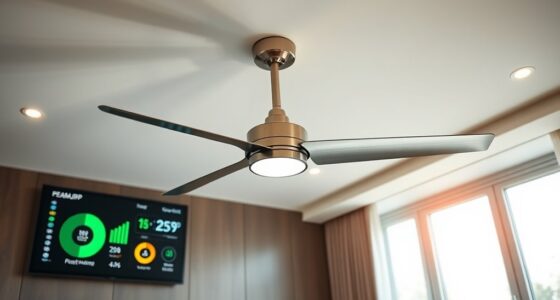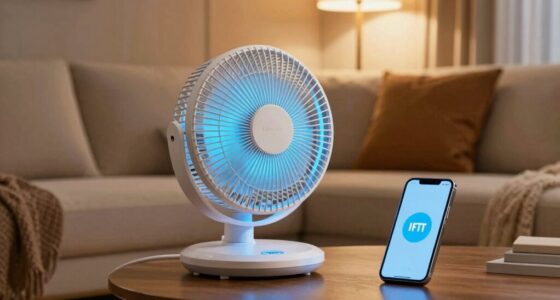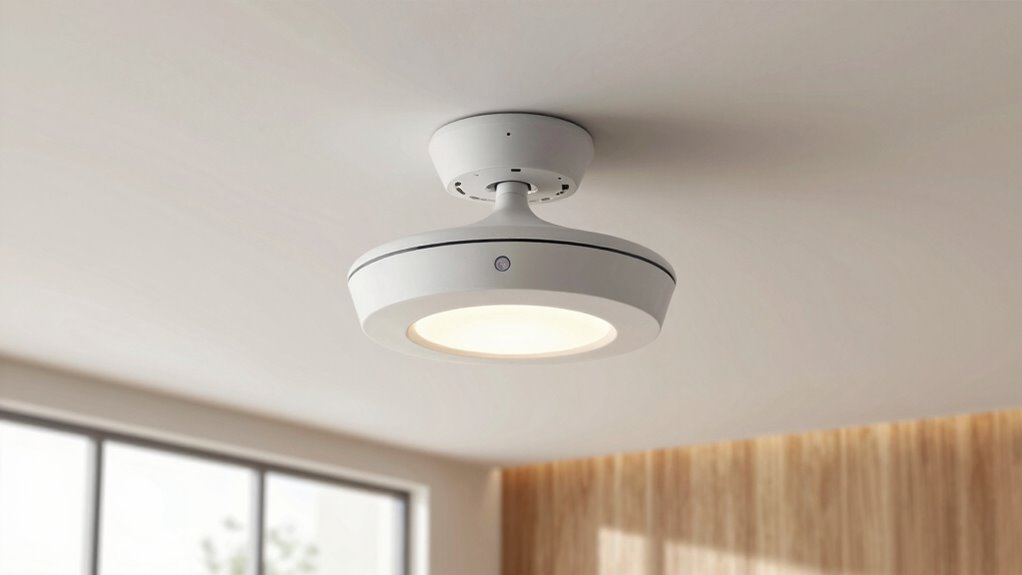

Using occupancy sensors for fans helps you automatically turn them off when a room’s unoccupied, stopping the common habit of leaving fans on and wasting energy. These sensors detect movement, ensuring fans run only when needed, which boosts energy savings and reduces utility bills. They are easy to install and maintain, providing a smarter, more sustainable way to manage airflow. Keep exploring how these devices can make your space more efficient and eco-friendly.
Key Takeaways
- Occupancy sensors automatically turn fans off when spaces are unoccupied, preventing energy waste.
- They enable customized sensitivity and timing settings for optimal energy efficiency.
- Quick installation and minimal maintenance make deploying sensors cost-effective and hassle-free.
- Sensors enhance comfort by maintaining proper airflow based on real-time activity monitoring.
- Using occupancy sensors reduces utility bills and promotes sustainable, eco-friendly fan operation.
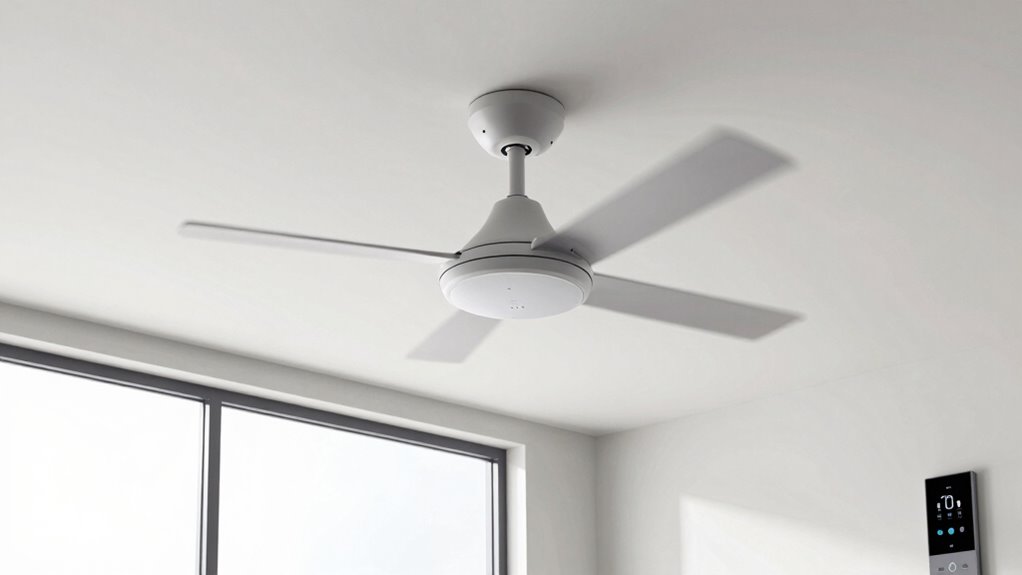
Have you ever wondered how to make your fans more energy-efficient and responsive? If so, incorporating occupancy sensors into your fan systems could be the game-changer you need. These sensors are designed to detect movement and automatically control fan operation, ensuring they run only when needed. This simple upgrade can markedly boost your energy savings by eliminating unnecessary fan use during unoccupied periods. Instead of leaving fans on all day or manually turning them off, sensor installation takes the guesswork out of energy management, making your space more efficient and environmentally friendly. Proper sensor calibration ensures optimal performance and prevents false triggers that could compromise energy savings.
Once you install occupancy sensors, you’ll notice a more intelligent approach to managing airflow and comfort. The sensors continuously monitor activity in the room, so fans turn on when someone enters and switch off when the space is empty. This automation not only conserves energy but also extends the lifespan of your fans by reducing wear and tear caused by constant operation. Plus, it enhances user convenience—there’s no need to remember to switch fans on or off; the sensors handle everything seamlessly.
Installing occupancy sensors automatically manages fan operation, saving energy, extending lifespan, and enhancing convenience effortlessly.
Energy savings become immediately apparent after sensor installation. By preventing fans from running unnecessarily, you cut down on wasted electricity, which translates into lower utility bills. Over time, these savings add up, making occupancy sensors a cost-effective investment. Additionally, many modern sensors are adjustable, allowing you to customize their sensitivity and timing. This flexibility ensures peak performance tailored to your specific space and usage patterns, further refining energy efficiency.
Sensor installation is straightforward and can be done without disrupting your daily routine. Many sensors are designed to be compatible with existing fan systems, and professional installers can set them up quickly. Once installed, they require minimal maintenance—just a periodic check to ensure they’re functioning correctly. The benefits are immediate: improved energy efficiency, reduced operational costs, and a more eco-conscious environment.
Incorporating occupancy sensors isn’t just about saving energy; it’s about creating smarter, more responsive spaces. As you modernize your fan systems, you’ll enjoy the peace of mind that comes with knowing your energy consumption is being managed intelligently. Whether in commercial buildings, offices, or even residential settings, sensor installation is a smart move towards reducing waste and enhancing comfort. Ultimately, these sensors help you eliminate the #1 “wasted energy” habit—leaving fans on when no one is around—making your space more sustainable, cost-effective, and user-friendly.
Frequently Asked Questions
Can Occupancy Sensors Be Integrated With Existing Fan Systems?
Yes, you can integrate occupancy sensors with existing fan systems. Many smart home and retrofit options make this easy, allowing you to automate fans based on room occupancy. You just need compatible sensors and a simple installation process. This setup helps eliminate wasted energy by turning fans off when rooms are empty, saving you money and reducing energy consumption without needing a complete system overhaul.
What Is the Typical Lifespan of an Occupancy Sensor?
You can expect an occupancy sensor’s lifespan to be around 8-10 years, depending on sensor durability and usage. Regularly, these sensors require minimal maintenance, but eventual replacement might be needed to prevent false readings or malfunctions. Considering replacement costs, investing in high-quality sensors can save you money long-term, as durable sensors reduce frequency of replacements and ensure energy-saving benefits continue without interruption.
Are Occupancy Sensors Effective in Large or Open Spaces?
You’ll be amazed how effective occupancy sensors are in large or open spaces, cutting energy waste dramatically. Proper sensor placement is key—place them where movement is frequent, and they’ll detect even the slightest activity. This ensures lights and fans turn on only when needed, maximizing energy reduction. Don’t underestimate their power; with strategic placement, you’ll see a massive drop in wasted energy, saving you money and boosting efficiency.
Do Occupancy Sensors Require Regular Maintenance or Calibration?
You’ll need to regularly maintain and calibrate your occupancy sensors to guarantee peak performance. Proper sensor installation and compatibility are essential, as incompatible sensors might misdetect occupancy, wasting energy or failing to turn off fans. Check manufacturer guidelines periodically, clean sensors to prevent dust buildup, and recalibrate if you notice issues. Doing so guarantees your sensors work efficiently, saving you energy and extending their lifespan.
How Much Can a Building Save Annually Using Occupancy Sensors?
You can save up to 30% on energy costs annually with sensor installation, making a big impact on your building’s efficiency. Occupancy sensors optimize energy conservation by automatically turning fans off when spaces are unoccupied. This proactive approach reduces waste and lowers utility bills, proving that smart sensor use isn’t just convenient—it’s a powerful way to cut costs and promote sustainability in your building.
Conclusion
So, next time you leave a room, don’t forget to turn off the fan—unless you want to keep wasting energy. Ironically, all it takes is a simple occupancy sensor to put an end to that habit you didn’t even realize was draining your energy and wallet. It’s almost funny how such a small device can make such a big difference. Don’t let your habits keep you in the dark—literally and figuratively.