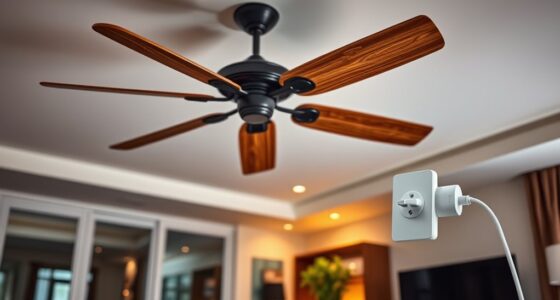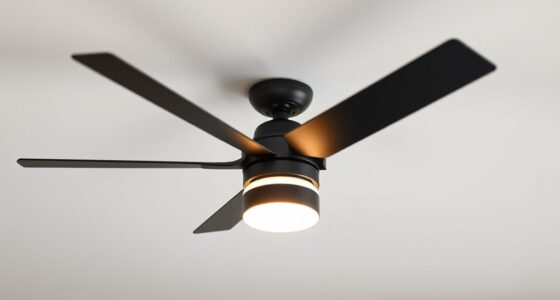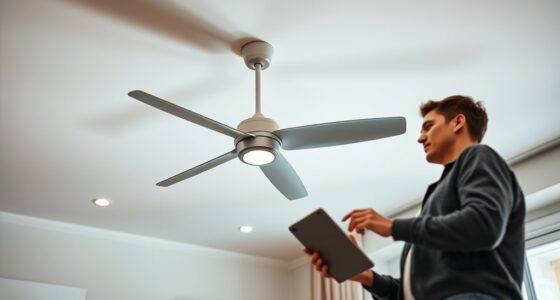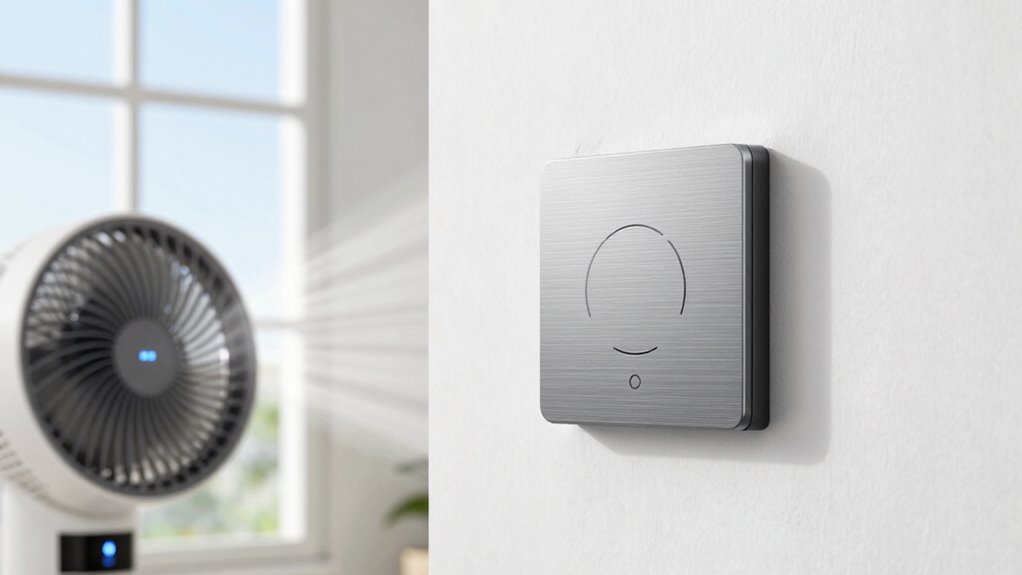
Choosing between a smart fan switch and a smart fan depends on your budget and installation skills. A smart switch is usually cheaper and easier to install, allowing you to control your existing fan remotely and set schedules. A smart fan offers more advanced features like app controls, voice commands, and sleek design, but at a higher cost and with more complex setup. If you want to save money while upgrading smart controls, a smart switch is often the best choice—yet, you’ll find more details if you continue.
Key Takeaways
- Smart switches are easier and cheaper to install, making them a budget-friendly upgrade option.
- Smart fans often have higher upfront costs but offer integrated features and modern design.
- Replacing switches avoids fixture replacement, saving money and simplifying installation.
- Using smart switches for existing fans reduces energy waste with remote control and scheduling.
- Smart fans may deliver enhanced aesthetics and advanced controls, ideal for home renovations or style upgrades.
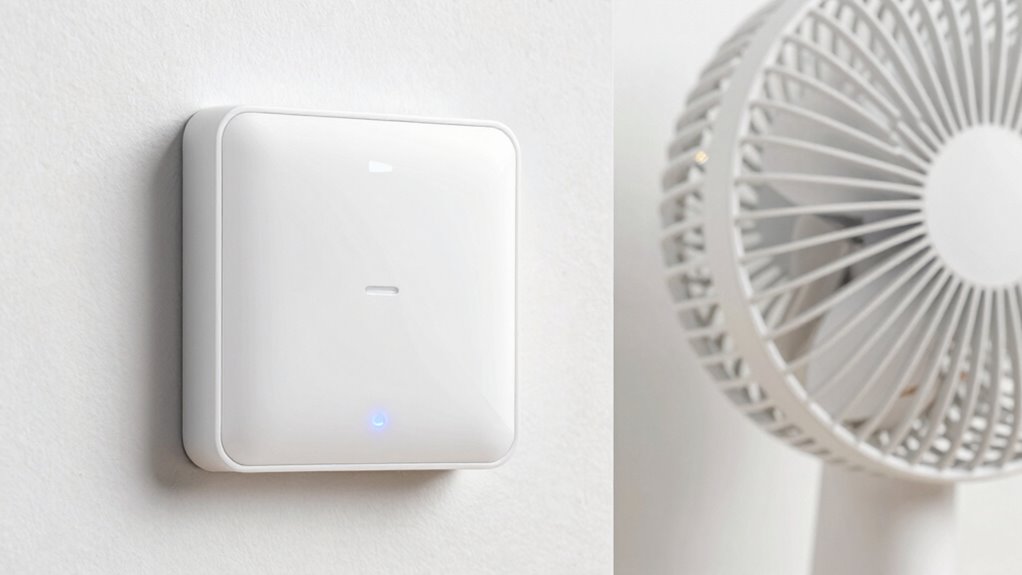
When choosing between a smart fan switch and a smart fan, understanding their differences can help you make the right decision for your home. Both options offer ways to upgrade your space, but they serve different needs and come with distinct advantages. If you’re focused on energy savings, a smart fan switch might be the better choice, as it allows you to control existing fans more efficiently. With a smart switch, you can set schedules, dim the fan, or turn it off remotely, helping you avoid unnecessary energy use. Additionally, smart switches generally have a simpler installation process, often requiring just replacing your current switch without the need for complex wiring or additional devices. This ease of setup means you can enjoy energy-efficient control without much hassle or disruption.
Choosing a smart switch offers simple, energy-efficient control of existing fans with easy installation.
On the other hand, a smart fan is an integrated device that combines a fan with smart features built in. These fans often come with app controls, voice compatibility, and customizable settings that allow for precise comfort management. While they tend to be more expensive upfront, they can provide a more seamless experience, especially if you’re looking for a fully automated or voice-controlled environment. However, installing a smart fan usually involves replacing the entire fixture, which can be more complex and time-consuming. If you’re not comfortable with electrical work, this might mean hiring a professional, adding to the overall cost and installation complexity.
From a cost perspective, a smart fan switch is often more budget-friendly and easier to retrofit into your existing setup. It provides a simple way to upgrade your current fans without replacing them entirely. If you already have ceiling fans you like, controlling them via a smart switch offers substantial energy savings and convenience at a lower investment. Additionally, recent advancements in AI-powered tools like GPT-4 have made planning and managing smart home devices easier, further enhancing the value of upgrading your home. Conversely, a smart fan can be more appealing if you’re planning a home renovation or want a more integrated, high-tech look. They often come with features like smart speed control and integrated lighting, enhancing both functionality and style.
Ultimately, your choice depends on your priorities. If you want a straightforward, cost-effective upgrade with easy installation and energy savings, a smart fan switch is likely your best bet. But if you’re seeking a fully automated, high-tech experience and are willing to invest more upfront, a smart fan offers a sleek, integrated solution. Both options can help you save money in the long run by reducing energy waste, but your decision should align with your comfort level with installation and your home’s existing setup.
Frequently Asked Questions
Can I Install a Smart Fan Switch Myself or Need Professional Help?
You can do a DIY installation if you’re comfortable with electrical work and understand wiring safety. However, for complex setups or if you’re unsure about professional wiring, it’s best to hire a professional. They ensure everything’s correctly connected and safe. If you’re confident in handling electrical components and follow instructions carefully, installing a smart fan switch yourself can save you money and time. Just prioritize safety and know your limits.
Are Smart Fan Switches Compatible With All Types of Ceiling Fans?
Smart fan switches are compatible with many ceiling fan types, but switch compatibility varies depending on your fan’s wiring and control features. You should check if your ceiling fan has a neutral wire and whether it supports remote or wall control. Most modern fans work well with smart switches, but older models might need additional adapters or may not be compatible at all. Always verify switch compatibility for your specific ceiling fan type before installation.
Do Smart Fan Switches Work With Voice Assistants Like Alexa or Google Assistant?
Did you know over 60% of smart home devices now support voice assistant compatibility? Smart fan switches generally work seamlessly with voice assistants like Alexa and Google Assistant, making smart home integration simple. You can control your ceiling fan with just your voice, enhancing convenience and energy efficiency. Just verify your switch is compatible, and you’ll enjoy hands-free control, added comfort, and smarter energy use every day.
What Is the Typical Lifespan of a Smart Fan Switch Compared to a Smart Fan?
A smart fan switch typically lasts 10 to 15 years, showing a durability comparison that often exceeds smart fans, which usually last about 8 to 12 years. You’ll find smart switches require less maintenance since they have fewer moving parts and are built for durability. Smart switches are a reliable long-term choice, providing consistent performance with minimal upkeep, making them a cost-effective upgrade over smart fans.
How Much Can I Realistically Save on Energy Bills With These Upgrades?
You can slash your energy bills by up to 30% with these upgrades, saving you hundreds annually! Smart fan switches and smart fans are incredibly cost-effective, offering significant energy savings by optimizing usage and reducing waste. Over time, these devices pay for themselves through lower utility costs. Imagine the extra cash you’ll have for other joys—these upgrades truly transform your home into an efficient, money-saving powerhouse!
Conclusion
Choosing between a smart fan switch and a smart fan is like deciding whether to wield a sword or a shield—you’ll save money either way. If you want simple control and easy upgrades, the switch is your trusty sword. But if you crave a sleek, integrated look, the smart fan is your loyal shield. Whichever you choose, you’re channeling the wisdom of those who built smarter, more efficient homes—making your space both clever and cost-effective.