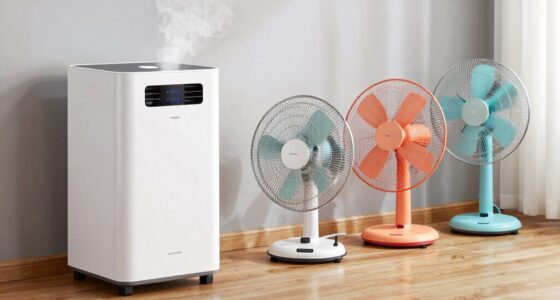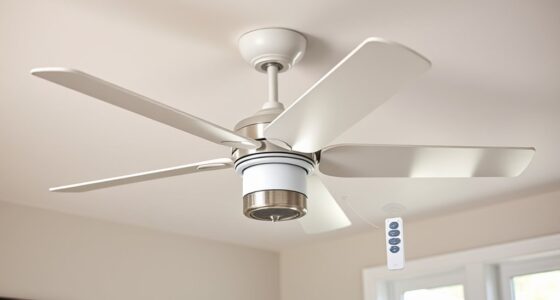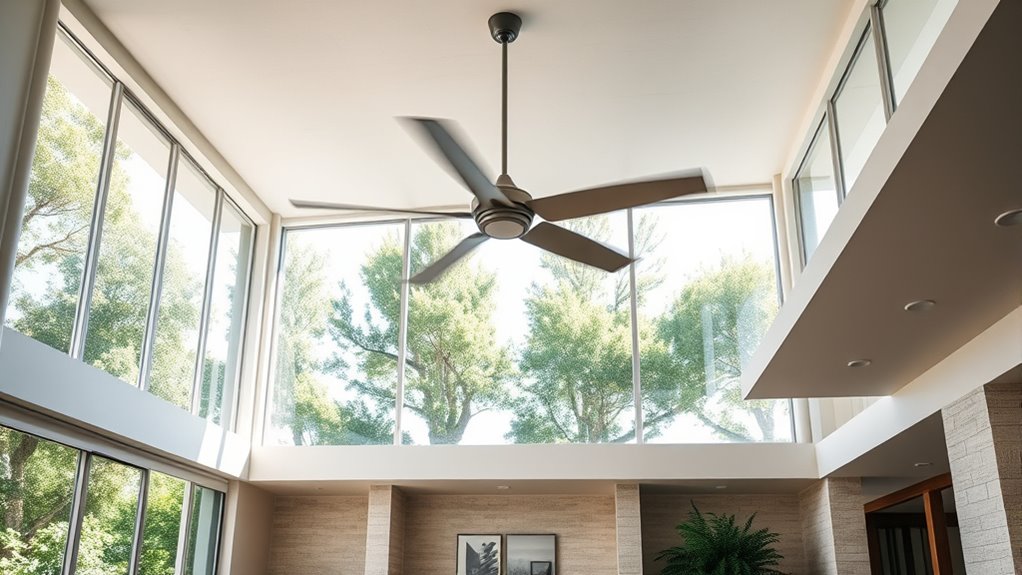

By combining ceiling fans with passive cooling techniques, you optimize airflow, enhance heat dissipation, and reduce energy use. Position fans near windows or vents to promote cross-ventilation and set them for ideal rotation—counterclockwise in summer for breeze and clockwise to prevent stratification in cooler months. Using shading alongside fans minimizes solar heat gain, while integrating thermal mass materials accelerates heat exchange. If you explore further, you’ll discover how these strategies work together for effective cooling solutions.

Get home appliances delivered free with Prime
- Fast, free delivery on millions of items
- Prime Video, Amazon Music and more included
- Member-only deals all year
Key Takeaways
- Use ceiling fans in conjunction with shading devices to enhance airflow and reduce solar heat gain indoors.
- Operate fans during peak heat hours with windows open for improved cross-ventilation and heat dissipation.
- Place fans near windows or vents to facilitate airflow around thermal mass materials, aiding heat absorption and release.
- Set fans to rotate counterclockwise in warm months to create a cooling breeze and improve air circulation.
- Incorporate smart controls to synchronize fan operation with passive cooling strategies, maximizing energy efficiency.
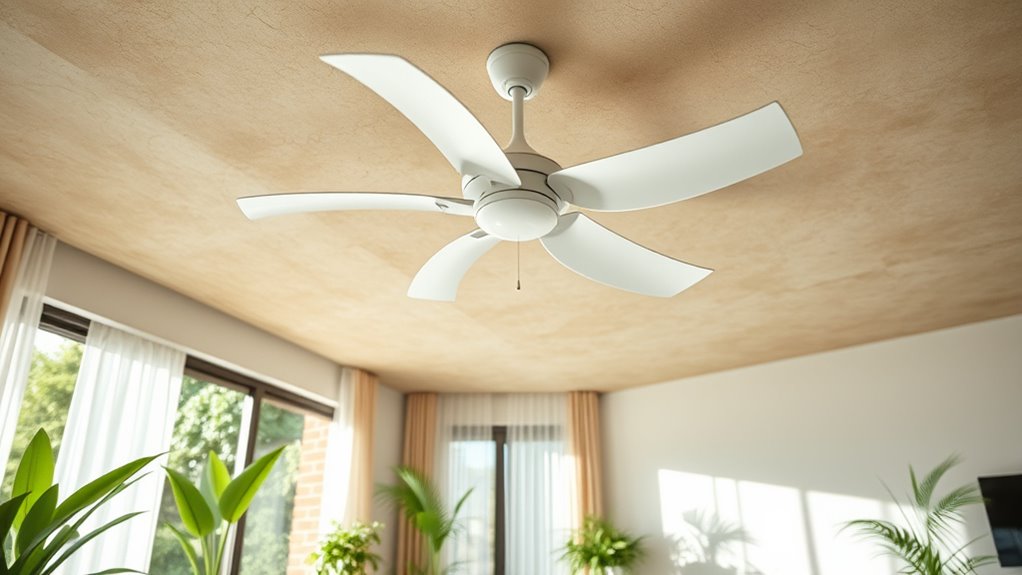
Integrating ceiling fans with passive cooling techniques offers an effective strategy for reducing indoor temperatures without relying heavily on energy-intensive air conditioning. This approach leverages the natural principles of heat transfer, air circulation, and thermal mass management to optimize indoor comfort efficiently. By understanding how passive cooling methods function, you can strategically position and operate ceiling fans to maximize their cooling potential, resulting in energy savings and enhanced environmental sustainability.
Passive cooling primarily involves altering building design and materials to facilitate heat dissipation and airflow. Techniques include shading exterior walls and windows with overhangs or vegetation, utilizing natural ventilation by opening windows during cooler periods, and employing thermal mass elements such as concrete or stone that absorb heat during the day and release it at night. When combined with ceiling fans, these methods considerably improve airflow distribution and heat removal within interior spaces.
Enhance airflow and heat removal by combining shading, natural ventilation, and thermal mass with ceiling fans.
Ceiling fans enhance passive cooling effectiveness by promoting air movement that accelerates the evaporation of moisture and improves convective heat transfer. In warmer months, setting fans to rotate counterclockwise creates a downward airflow that produces a wind-chill effect, making occupants perceive a cooler environment without lowering the air temperature. This technique relies on the principle that moving air increases the body’s heat loss through evaporation, providing thermal comfort at higher ambient temperatures. Conversely, during cooler periods, fans can be set to rotate clockwise at low speeds to promote gentle air circulation that prevents stratification—where warm air accumulates near the ceiling—thus maintaining a more uniform temperature throughout the space.
Optimal integration of ceiling fans with passive cooling strategies requires precise control of airflow direction, speed, and timing. For instance, operating fans during peak heat hours while windows are open can maximize cross-ventilation, expelling warm indoor air and drawing in cooler outdoor air. Additionally, pairing fans with shading devices reduces solar gain, decreasing the overall heat load. Proper placement of fans near windows or vents ensures they facilitate airflow between shaded and sun-exposed areas, further enhancing cooling efficiency.
Furthermore, understanding the thermal inertia of building materials informs fan operation schedules. Materials with high thermal mass absorb excess heat during the day and release it at night, creating cooler indoor conditions. Using ceiling fans to circulate air around these materials accelerates heat dissipation, effectively reducing indoor temperatures. This synergy between passive design and mechanical assistance minimizes reliance on active cooling systems, leading to reduced energy consumption and improved indoor air quality.
Additionally, incorporating smart controls for ceiling fans can optimize their operation based on real-time temperature and humidity data, further enhancing passive cooling effectiveness and energy savings.
ceiling fans with smart controls
As an affiliate, we earn on qualifying purchases.
As an affiliate, we earn on qualifying purchases.
Frequently Asked Questions
How Do Ceiling Fans Affect Indoor Air Quality?
Ceiling fans improve indoor air quality by promoting air circulation, reducing stagnation, and dispersing airborne pollutants. They help remove indoor odors and minimize moisture buildup, which can decrease mold growth. However, fans don’t filter pollutants or allergens. To maximize benefits, combine ceiling fans with proper ventilation systems and air purifiers. Regular maintenance, like cleaning blades and vents, ensures ideal performance and prevents dust accumulation that could negatively impact air quality.
Can Passive Cooling Techniques Reduce Energy Bills Effectively?
Passive cooling practices, particularly proper insulation, shading, and natural ventilation, effectively lower energy bills by reducing reliance on mechanical cooling. You can optimize these techniques through strategic window placement, reflective roofing, and ventilation corridors, which work synergistically to maintain comfortable indoor temperatures. Implementing these methods minimizes energy consumption, maximizes efficiency, and markedly cuts costs, creating an economically and environmentally sustainable cooling solution that actively reduces your utility expenses.
Are There Specific Ceiling Fan Features That Enhance Cooling?
Yes, selecting ceiling fans with reversible motors allows you to switch blade direction seasonally, optimizing airflow. Look for fans with high airflow rates, measured in cubic feet per minute (CFM), to maximize cooling efficiency. Energy-efficient models with low wattage operation and integrated dimming or smart controls give you precise regulation. Additionally, fans with wider blade spans improve air distribution, enhancing passive cooling and reducing reliance on air conditioning, consequently lowering energy bills.
How Do Climate Differences Influence Passive Cooling Strategies?
Climate differences substantially influence passive cooling strategies; in hot, dry regions, you should maximize shading and natural ventilation to reduce indoor temperatures effectively. In humid environments, focus on dehumidification and cross-ventilation, using wind-driven airflow to cool spaces without increasing humidity. Cold climates require insulation and minimal ventilation to retain heat, while in temperate zones, strategic window placement and shading can enhance seasonal comfort. Adjust your passive techniques based on your local climate conditions for ideal cooling.
What Maintenance Is Required for Optimal Passive Cooling Performance?
Ironically, neglecting maintenance can sabotage your passive cooling efforts. To guarantee ideal performance, regularly clean ceiling fan blades and vents to prevent dust buildup, which hampers airflow. Check for loose mounting or wobbling parts, and lubricate bearings if needed. Seal leaks around windows and doors to maintain consistent cooling. These precise, routine actions keep passive cooling systems efficient, saving energy and ensuring your home stays comfortable without added effort.
Conclusion
By integrating ceiling fans with passive cooling techniques, you optimize indoor thermal comfort efficiently. For example, installing ceiling fans alongside strategic shading and natural ventilation can reduce reliance on air conditioning by up to 30%. This combination not only lowers energy consumption but also enhances sustainability. Implementing these methods systematically guarantees precise climate control, making your space more energy-efficient and environmentally friendly. Embracing this integrated approach is essential for modern passive cooling strategies.
Halloween Picks
halloween
As an affiliate, we earn on qualifying purchases.