Increasing blade length boosts the swept area, capturing more wind energy and raising power output, but also adds structural stresses and costs. Enhancing pitch angle improves aerodynamic efficiency across different wind speeds; adjusting it prevents overloading or damage. Longer blades and precise pitch control work together to maximize energy extraction while maintaining stability. Understanding how these factors interplay can help you improve turbine performance—exploring further reveals how to balance design choices for ideal energy use.
Key Takeaways
- Longer blades increase swept area, capturing more wind energy and boosting power output, but also raise structural and maintenance costs.
- Adjusting blade pitch optimizes aerodynamic efficiency, allowing maximum energy extraction across varying wind speeds.
- Proper pitch control prevents aerodynamic instabilities like stall or flutter, ensuring consistent energy generation.
- Larger blades and optimized pitch reduce mechanical stress, prolonging turbine lifespan and reducing energy losses.
- Advanced monitoring and modeling help balance blade length and pitch for optimal energy use and operational reliability.
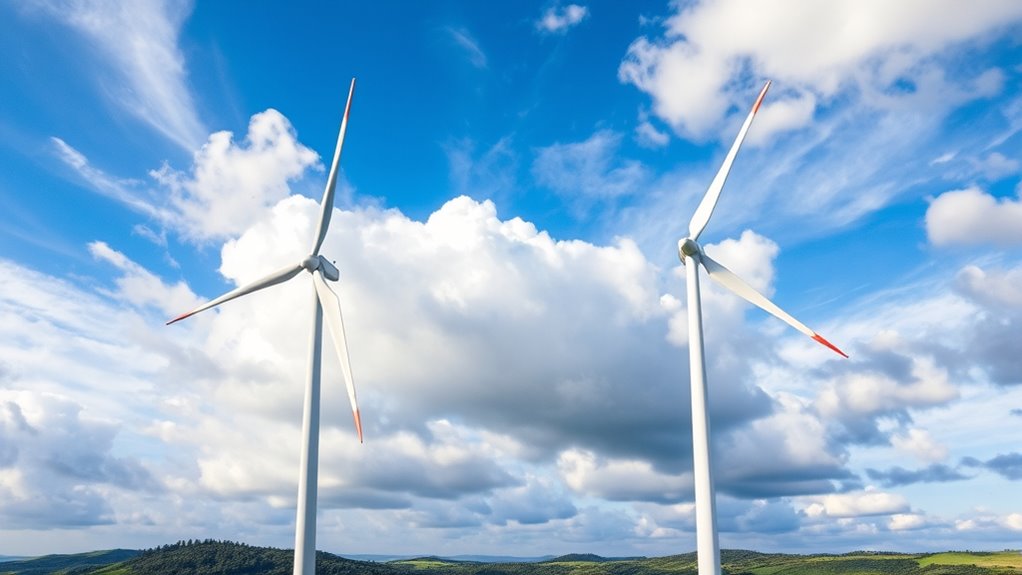
Blade length and pitch are critical design parameters that directly influence the aerodynamic performance and energy efficiency of wind turbines. When you consider blade length, longer blades increase the swept area, enabling the turbine to intercept more wind energy. This expansion in the swept area generally results in higher power output, assuming other factors remain constant. However, longer blades also introduce increased structural loads and material stresses, which can affect the turbine’s operational lifespan and maintenance requirements. You need to balance the benefits of increased energy capture against the mechanical limitations and cost implications associated with larger blades. Longer blades are more susceptible to fatigue and require more robust support structures, which can increase initial investment and ongoing maintenance costs. Additionally, the aerodynamic forces acting on longer blades can lead to more complex dynamic responses that must be carefully managed.
The pitch angle, on the other hand, controls how the blades intercept wind flow and convert it into rotational energy. Adjusting the pitch allows you to enhance the aerodynamic efficiency across different wind speeds. When wind speeds are low, a slight increase in pitch angle can prevent overloading the turbine, thereby conserving energy and reducing stress on components. Conversely, at higher wind speeds, pitching the blades to a more feathered position minimizes aerodynamic drag and prevents excessive rotational speeds, which could cause mechanical failure. Precise pitch control is essential for maintaining the turbine’s ideal power coefficient, maximizing energy extraction while reducing loads that could damage the blades or drive train.
The interaction between blade length and pitch is complex and requires careful analysis. For instance, longer blades have a greater tendency to experience aerodynamic instabilities, such as flutter or stall, especially if the pitch angle isn’t properly optimized. You must consider the dynamic response of the blades to changing wind conditions, which involves real-time pitch adjustments to maintain efficiency and structural integrity. The aerodynamic forces acting on the blades are directly influenced by both their length and pitch, with the potential to either enhance or diminish overall energy production. This relationship underscores the importance of integrated blade design, where length and pitch are optimized simultaneously using computational models that account for turbulence, gusts, and other environmental factors. Moreover, innovative structural health monitoring technologies can help detect early signs of stress or fatigue, ensuring longevity.
Ultimately, understanding the precise impact of blade length and pitch on energy use requires a detailed, physics-based approach. By carefully analyzing these parameters, you can improve the aerodynamic efficiency of your turbine, reduce energy losses, and extend operational lifespan. Achieving the right balance ensures that the turbine operates at peak performance across varying wind conditions, ultimately maximizing energy yield while minimizing maintenance costs and mechanical stress.
wind turbine blade length adjustment kit
As an affiliate, we earn on qualifying purchases.
As an affiliate, we earn on qualifying purchases.
Frequently Asked Questions
How Does Blade Material Affect Energy Efficiency?
Blade material critically affects energy efficiency by influencing aerodynamic performance and durability. Lightweight materials like composites reduce inertia, allowing blades to respond better to wind changes, thereby maximizing energy capture. Conversely, high-strength metals can withstand extreme conditions, reducing maintenance downtime. You should consider material density, stiffness, and fatigue resistance, as these factors impact overall efficiency and longevity. Selecting suitable blade materials ensures better energy conversion rates and minimizes operational costs over the turbine’s lifespan.
What Role Does Wind Speed Variability Play?
Wind speed variability acts like a roller coaster, causing fluctuations in energy output. When wind speeds change rapidly, your turbine’s efficiency drops because blades can’t optimize pitch or rotor speed instantly. Data shows that turbines experience up to 30% less energy capture during gusty conditions. You need adaptive control systems to mitigate this, ensuring steady energy production despite unpredictable wind patterns, much like a skilled driver adjusting to sudden turns.
Can Blade Design Influence Noise Levels?
Yes, blade design directly influences noise levels. Longer blades tend to produce more noise due to increased surface area, while sharper pitch angles can generate aerodynamic noise. Optimizing blade shape, surface smoothness, and pitch can mitigate noise emissions. Incorporating aerodynamic features like serrations or vortex generators helps reduce turbulence and sound. As a result, precise blade design is essential for balancing energy efficiency with noise reduction, especially in noise-sensitive environments.
How Do Maintenance Practices Impact Energy Output?
Regular maintenance directly boosts your turbine’s energy output by ensuring *ideal* blade efficiency and preventing mechanical issues. You might think minor repairs are insignificant, but they eliminate drag and reduce vibrations, which otherwise waste energy. Visualize the blades as aerodynamically optimized; neglecting maintenance causes buildup and damage, decreasing performance. Consistent inspections, cleaning, and part replacements keep the blades functioning at *maximum* efficiency, maximizing energy generation and prolonging equipment lifespan.
Are There Environmental Impacts Linked to Blade Modifications?
Yes, blade modifications can have environmental impacts. Altering blade length or pitch may affect local wildlife, especially bird and bat populations, by increasing collision risks. Additionally, manufacturing and installing new blades consume energy and resources, potentially increasing carbon footprint. Improper modifications might also reduce turbine efficiency, leading to higher energy consumption overall. As a result, careful assessment is essential to balance performance gains with environmental preservation.
Conclusion
By optimizing blade length and pitch, you shape the turbine’s efficiency like tuning a finely crafted instrument. Longer blades capture more wind, but may increase drag, while pitch adjustments fine-tune energy capture and reduce load. Balancing these factors is essential, much like adjusting sails for maximum wind harnessing. Precise calibration minimizes energy wastage, ensuring your system operates at peak performance. Ultimately, understanding these relationships enables you to maximize energy output while reducing operational costs.