To install a ceiling fan over a dining table, ensure the ceiling height allows for a downrod length that keeps blades 30-36 inches below your ceiling, maintaining at least 7 feet clearance from floor to blades. Center the fan directly over the table’s midpoint for even airflow, choosing a fan size (48-60 inches) based on your table’s dimensions. Confirm the mounting is secure and compliant with safety guidelines. Proper measurements and setup optimize airflow, safety, and aesthetic balance—discover more to perfect your installation.
Key Takeaways
- Measure and mark the table’s center point to align the fan directly overhead.
- Choose a fan size (48-60 inches) suitable for your table dimensions for optimal airflow.
- Hang the fan 30-36 inches below the ceiling for 8-10 ft ceilings, maintaining at least 7 feet clearance from blades to floor.
- Use a proper downrod length if ceiling height exceeds 8 feet, ensuring safe mounting and clearance.
- Confirm all measurements meet safety standards and mounting supports for efficient, safe installation.
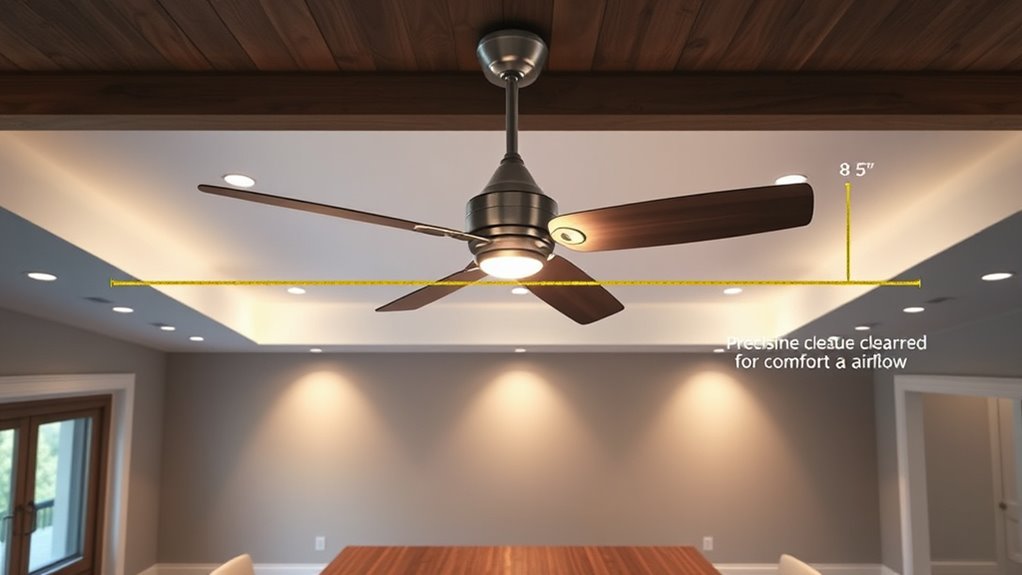
Installing a ceiling fan over a dining table enhances comfort and airflow efficiency, but it requires careful planning and adherence to safety standards. Accurate measurements are vital to ensure proper clearance, ideal airflow, and safe operation. Begin by determining the height of your ceiling. Standard ceiling heights are typically 8 feet, but if your ceiling exceeds this, you need to adjust your installation plan accordingly. For ceilings between 8 and 10 feet, the fan’s blades should hang approximately 30 to 36 inches below the ceiling to provide effective airflow without obstructing sightlines or movement. In rooms with higher ceilings, consider using downrods of appropriate length—usually between 12 to 36 inches—to achieve this clearance.
Next, measure the dimensions of your dining table. Most standard dining tables are 36 to 40 inches wide and 60 to 72 inches long. The fan should be centered over the table to ensure even airflow distribution. Use a tape measure to locate the exact center point of the table, and mark this position on the ceiling. This positioning guarantees that the fan’s airflow covers the entire table surface uniformly, avoiding dead spots or excessive drafts at the edges. When selecting a fan size, verify the diameter is appropriate for your table dimensions. A fan with a diameter of 48 inches suits most standard rectangular tables, while larger tables may benefit from a 52- or 60-inch fan. This sizing prevents overpowering the space or failing to circulate air effectively.
The height and positioning of the fan also influence its safety and functionality. Maintain a minimum of 7 feet from the fan blades to the floor to prevent accidental contact, especially in rooms with high foot traffic or low ceilings. This clearance is vital for safety compliance and to avoid interference with hanging light fixtures or decorative elements. Ensure the mounting point is structurally sound, capable of supporting the fan’s weight, and conforms to electrical codes. Use a ceiling joist or a suitable mounting bracket designed for fan installation. Verify that the electrical wiring meets local safety standards, and turn off power at the circuit breaker before beginning installation to prevent electrical hazards.
Finally, confirm that the fan’s downrod length and mounting height conform to manufacturer specifications and safety guidelines. Proper measurement and adherence to these standards reduce vibration, noise, and mechanical stress, ensuring a safe, efficient, and aesthetically pleasing installation. A comprehensive understanding of safety standards and careful planning are essential for ideal airflow, safety, and the longevity of your ceiling fan over the dining table.

Kviflon Farmhouse Crystal Ceiling Fans with Lights and Remote, 48 Inch Chandelier Ceiling Fans, Black Fandelier Ceiling Fan for Bedroom Living Room, Quiet DC Motor, Reversible, Bulb not Included
Farmhouse Ceiling Fan – 48 inch farmhouse style ceiling fan with light, blending classic retro design with modern…
As an affiliate, we earn on qualifying purchases.
As an affiliate, we earn on qualifying purchases.
Frequently Asked Questions
Can I Install a Ceiling Fan Without an Existing Ceiling Fixture?
Yes, you can install a ceiling fan without an existing fixture. First, turn off power at the breaker, then install a mounting bracket directly to the ceiling joist or electrical box rated for fans. Run wiring from your power source to the fan location, guaranteeing proper grounding. Follow manufacturer instructions carefully for secure mounting and electrical connections. If unsure, consult a licensed electrician to ensure safety and code compliance.
What Type of Ceiling Fan Is Best for High Ceilings?
For high ceilings, choose a fan with an extended downrod—at least 12 inches or more—to guarantee proper clearance and airflow. Opt for a model with a powerful motor and adjustable blades for ideal circulation. Look for ceiling fans with reversible motors for seasonal efficiency. Additionally, select fans with integrated lighting if needed, but prioritize size and blade pitch to maximize performance and safety at elevated heights.
How Do I Choose the Fan Size for My Dining Room?
Think of choosing a fan size like fitting a suit—precision matters. For your dining room, measure the table’s width and add 12 inches for effective airflow and aesthetics. A 48- to 52-inch fan generally suits a standard 8-foot ceiling over a table 48 inches wide. This ensures balanced circulation without overpowering the space, creating comfort and style seamlessly.
Is It Safe to Install a Ceiling Fan Over a Glass-Top Table?
Yes, it’s safe to install a ceiling fan over a glass-top table if you follow proper precautions. Make certain the fan is correctly rated for indoor use and installed at least 30-36 inches above the table surface to prevent accidental contact. Use a sturdy mounting bracket, and verify electrical connections are secure. Regularly check for stability and balance, and avoid placing heavy objects on the glass to prevent damage or accidents.
What Tools Are Needed for Installing a Ceiling Fan?
You’ll need a screwdriver, voltage tester, adjustable wrench, ladder, and possibly pliers. Imagine a toolkit that transforms a ceiling into a command center—each tool precise and purposeful. The screwdriver secures blades, the tester guarantees safety, and the wrench tightens connections. The ladder grants height and access, while pliers help with wiring adjustments. These tools work together, turning a complex task into a straightforward, safe installation process.

FEHEED 18 Inch Ceiling Fan Downrod, 1" Diameter Matte Black Ceiling Fan Extension Rod (No Threads),Universal Down Rods for Ceiling Fans,Easy Installation
【Universal Compatibility】 ✔ This Ceiling fan extension rod fits most standard ceiling fans with downrod connections. ✔ 1-inch…
As an affiliate, we earn on qualifying purchases.
As an affiliate, we earn on qualifying purchases.
Conclusion
Properly installing a ceiling fan above your dining table enhances both comfort and aesthetics. By honoring the recommended measurements and following best practices, you guarantee safe and efficient operation. Precision in placement minimizes potential issues and maximizes airflow. Remember, a well-executed installation subtly elevates your space’s functionality, making every meal a more enjoyable experience. Approach each step with care and attention to detail, and you’ll achieve a seamless integration that complements your dining area beautifully.

Ceiling Fan Mounting Bracket Mounting Kits Fan Components for Cathedral Canopy Living Room, 77059 Ceiling Fan Parts Black (Without Wire)
CONVENIENT KIT: In each package, you will receive 1 ceiling fan mounting bracket; each bracket comes with 2…
As an affiliate, we earn on qualifying purchases.
As an affiliate, we earn on qualifying purchases.

APBEAMLighting Farmhouse Ceiling Fans with Lights and Remote Control, 52 Inch Rustic Fandelier Ceiling Fan with Bubble Glass Shade 6-Speed Caged Ceiling Fan for Living Dining Room Bedroom,Walnut/Brown
UNIQUE DESIGN: This farmhouse ceiling fan is a combination of sturdy matte black lamp body and 5 sleek…
As an affiliate, we earn on qualifying purchases.
As an affiliate, we earn on qualifying purchases.