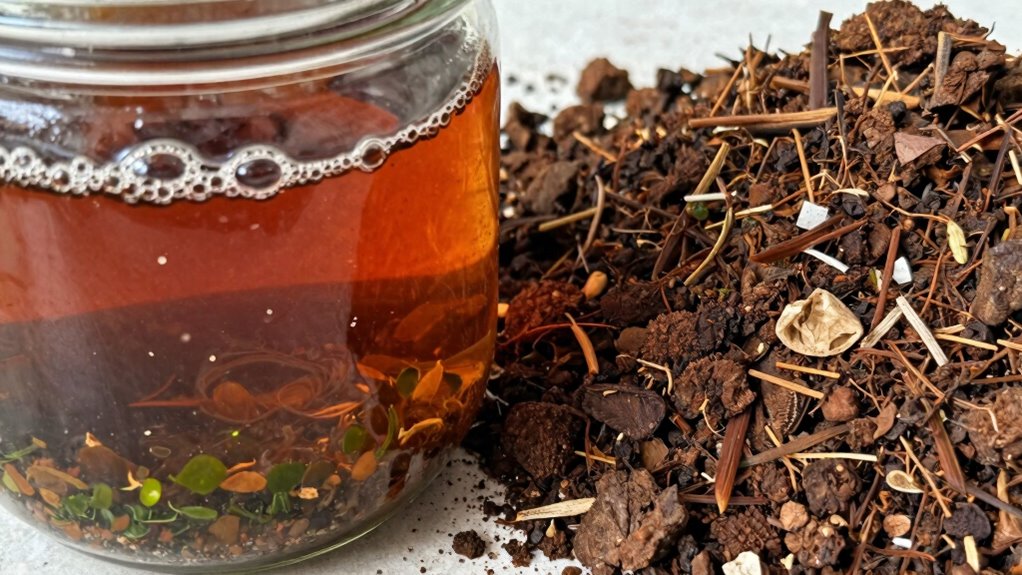

Compost tea is a liquid extract made by steeping finished compost in water, and it’s rich in beneficial microbes that activate quickly to boost plant health. In contrast, finished compost is a stable, nutrient-rich material used to improve soil structure and provide long-term fertility. Compost tea offers an immediate microbial and nutrient boost, while finished compost supports ongoing soil enhancement. To discover how these amendments work together, keep exploring the key differences.

Get home appliances delivered free with Prime
- Fast, free delivery on millions of items
- Prime Video, Amazon Music and more included
- Member-only deals all year
Key Takeaways
- Compost tea is a liquid extract with active microbes, while finished compost is a stable, earthy soil amendment.
- Compost tea provides immediate microbial and nutrient boosts, whereas finished compost offers slow-release nutrients.
- Compost tea is used for foliar sprays and soil drenches during active growth; finished compost is for soil improvement over time.
- Microbial activity in compost tea is higher and more dynamic than in finished compost.
- Finished compost enhances soil structure and long-term fertility, unlike the rapid microbial activity in compost tea.
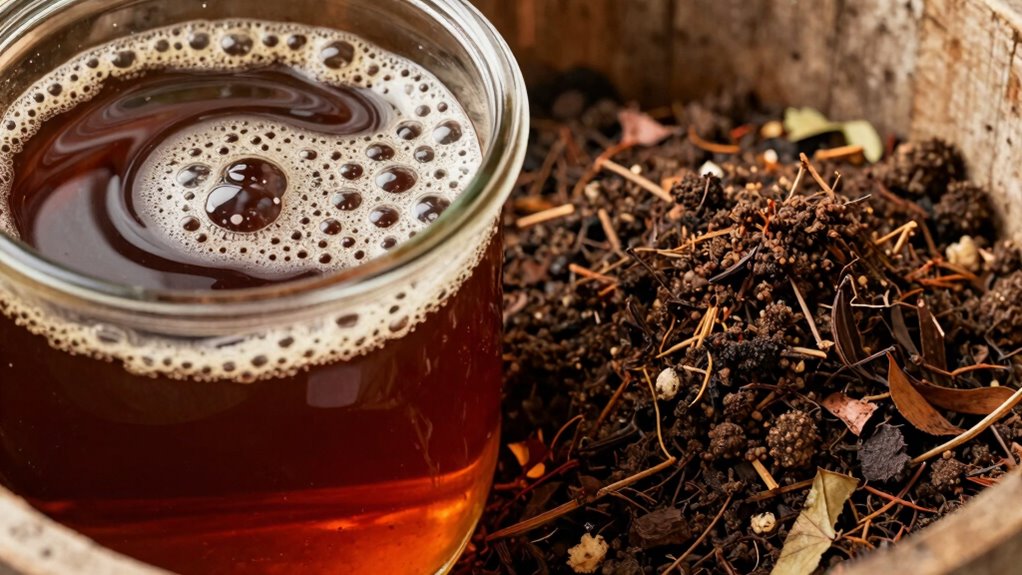
Have you ever wondered how compost tea differs from finished compost? While both are valuable for your garden, they serve different purposes and have distinct characteristics. Understanding these differences can help you decide when and how to use each effectively.
Compost tea is a liquid extract made by steeping finished compost in water, often with aeration. Its main strength lies in microbial activity. When you brew compost tea, you’re fundamentally encouraging beneficial microorganisms—bacteria, fungi, and protozoa—to flourish in the water. These microbes are highly active in compost tea, making it a powerful biological stimulant. By applying compost tea to your plants, you introduce a surge of live microbes directly to the soil and foliage. This boosts microbial diversity and activity in your garden, which in turn enhances nutrient cycling and plant health. The microbes in compost tea quickly colonize the root zone, breaking down organic matter and releasing nutrients in forms plants can readily absorb. This immediate boost in microbial activity is one of the key reasons gardeners favor compost tea as a foliar spray or soil drench. Additionally, compost tea can be used to suppress certain soil-borne diseases through microbial competition, which benefits plant health. The microbial activity in compost tea can be significantly influenced by the microbial community present in the finished compost used for brewing. A diverse and **robust microbial community** in the compost increases the effectiveness of the tea.
Compost tea boosts microbial activity, supporting nutrient cycling and plant health through live beneficial microbes.
Finished compost, on the other hand, is the end product of composting—an earthy, stable material full of organic matter and nutrients. Its primary role is as a soil amendment that gradually improves soil structure, increases organic content, and supplies nutrients over time. Its microbial community has matured through the composting process, leading to a more stable microbial community that supports long-term soil health. Its microbial activity is generally lower than that of compost tea, but it provides a slow-release source of nutrients. When added to your garden beds, finished compost enriches the soil, improves aeration, and enhances water retention. Its nutrient content is more balanced and less immediately accessible compared to compost tea, which offers a quick microbial and nutrient boost. Incorporating finished compost also encourages the development of a resilient soil ecosystem, essential for sustainable gardening practices. The slow breakdown of organic matter in finished compost continually feeds soil organisms, creating a balanced environment.
In essence, compost tea acts as a rapid delivery system for microbial activity and nutrients, helping plants recover quickly or fend off pests and diseases. Finished compost provides long-term benefits by building healthy soil biology and slowly releasing nutrients. You might use compost tea when plants need a quick nutritional or microbial pick-me-up, especially during active growth periods. Conversely, finished compost is ideal for preparing beds before planting or top-dressing to sustain ongoing soil health. Recognizing these differences allows you to tailor your compost application to your garden’s specific needs, ensuring healthier, more resilient plants.
As an affiliate, we earn on qualifying purchases.
Frequently Asked Questions
Can Compost Tea Replace Traditional Fertilizers?
Compost tea can supplement your traditional fertilizers, but it shouldn’t fully replace them. It enriches soil and boosts plant health by adding beneficial microbes and nutrients. When you use compost tea regularly, you enhance soil microbial activity, leading to healthier plants. However, for ideal growth, combine compost tea with balanced fertilization, ensuring your plants receive all necessary nutrients for vigorous growth and resilience.
How Often Should I Apply Compost Tea to Plants?
You should apply compost tea to your plants every 1 to 2 weeks. This frequency boosts plant growth by enhancing nutrient absorption, giving your plants essential nutrients they need to thrive. Regular applications help maintain healthy soil and promote vigorous growth. Keep an eye on your plants, and if you notice signs of nutrient deficiency, consider increasing the frequency. Consistent compost tea use supports strong, healthy plants over time.
Is Compost Tea Suitable for All Types of Plants?
Compost tea is generally suitable for most plants, but plant compatibility varies. You should consider application techniques carefully—diluting it properly and avoiding overuse to prevent potential issues. Some delicate or sensitive plants may react differently, so it’s wise to test a small area first. Monitoring your plants’ responses helps determine if compost tea benefits them. Overall, with proper application techniques, compost tea can boost a wide variety of plants effectively.
How Long Does Compost Tea Last Before It Expires?
Think of compost tea as a delicate brew that’s best enjoyed fresh—its shelf life is typically 24 to 48 hours. After that, beneficial microbes start to fade like a fading sunset. Store it in a sealed container in the fridge, away from sunlight, to extend its life. For best results, apply within this window, as its potency and microbial activity diminish over time.
What Equipment Is Needed to Make Compost Tea at Home?
To make compost tea at home, you need basic equipment like a bucket or a mesh bag, an aerator or air pump, and a stirring stick. You’ll use brewing methods that involve aeration to promote beneficial microbes. Keep your equipment clean and well-maintained to prevent contamination and guarantee the tea stays effective. Regularly check and sanitize your tools to maintain ideal brewing conditions and microbial health.
Conclusion
Understanding the difference between compost tea and finished compost is like knowing the difference between a nourishing potion and the earth’s own treasure. Compost tea acts as a quick, energizing boost for your plants, while finished compost is the rich, steady foundation that nurtures your garden over time. Both are essential tools in your gardening toolbox—each playing its unique role in fostering healthy growth. Use them wisely, and watch your garden flourish like a well-tuned symphony.
Fall yard work Picks
leaf blowers
As an affiliate, we earn on qualifying purchases.