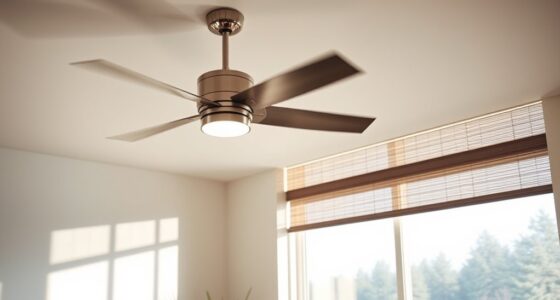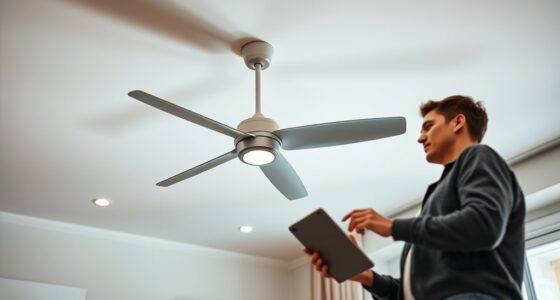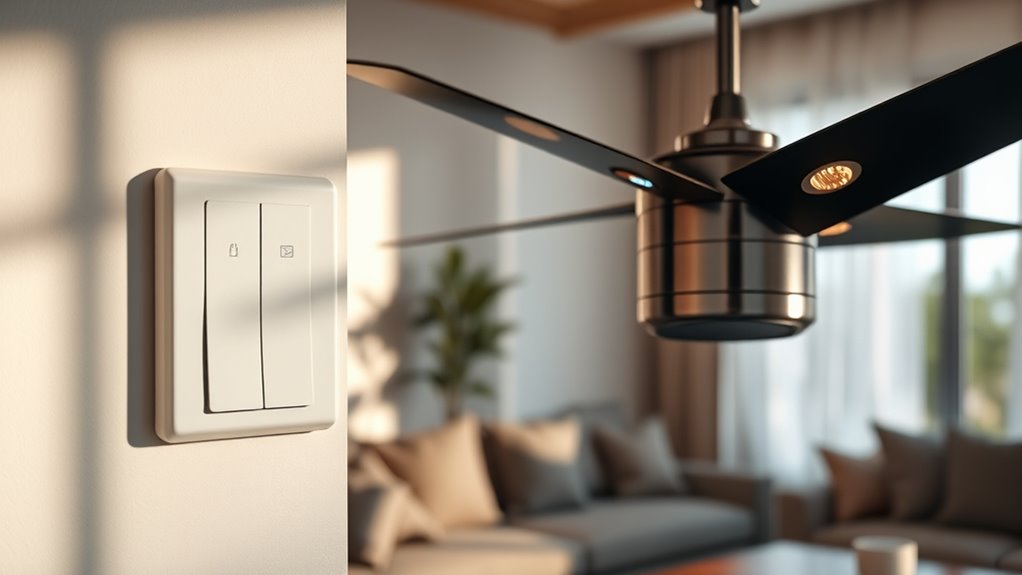

Smart switches give you broad control over various devices like lights and outlets, allowing automation, scheduling, and remote operation, making them versatile for total home management. Smart fans, however, focus specifically on optimizing airflow and comfort with features like speed control and oscillation, often integrating with voice commands. While switches are easier to install and adapt, fans can improve energy efficiency in climate control. Understanding these pros and cons will help determine which device best fits your automation goals.
Key Takeaways
- Smart switches offer broad control over multiple fixtures, enabling automation and remote access for lighting and outlets.
- Smart fans provide precise airflow regulation and energy-efficient climate control, ideal for rooms needing air circulation.
- Installation complexity varies; switches are generally easier to install, while fans may require professional wiring adjustments.
- Smart switches enhance overall home automation and security, while smart fans focus primarily on airflow and comfort.
- Combining both devices maximizes energy savings and automation, but each serves distinct functional needs.
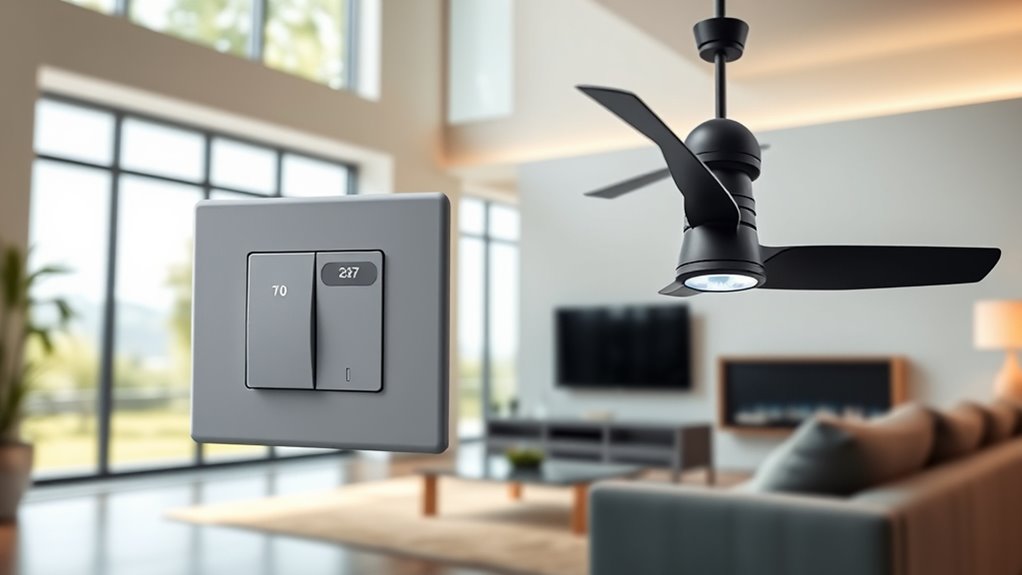
Smart home technology offers various ways to enhance comfort and energy efficiency, but choosing between smart switches and smart fans depends on your specific needs. Both options serve different functions and come with distinct advantages and limitations. Understanding these can help you make an informed decision that aligns with your lifestyle and energy goals.
Smart switches are versatile devices that control a broad range of electrical fixtures, including lights, outlets, and ceiling fans. They automate on/off cycles, enable remote control via smartphone apps, and can integrate with voice assistants like Alexa or Google Assistant. This flexibility makes them ideal for creating customized lighting scenes, scheduling, and enhancing safety by ensuring devices aren’t left on unnecessarily. The installation process typically involves replacing existing wall switches, which is straightforward for most DIY enthusiasts but may require professional help if wiring is complex. One notable advantage of smart switches is their ability to connect multiple devices within a single system, allowing centralized control. However, their effectiveness depends on the compatibility of your fixtures and the wiring infrastructure, which could pose challenges in older homes. Additionally, ongoing security concerns highlight the importance of AI security measures to protect connected devices from vulnerabilities.
Smart switches control various fixtures, automate lighting, and integrate with voice assistants for enhanced home automation.
Smart fans, on the other hand, focus specifically on controlling ceiling fans with advanced features. They usually come with remote controls, smartphone apps, or voice commands that enable adjusting fan speed, oscillation, and sometimes even lighting if integrated. Smart fans are particularly beneficial in rooms where airflow regulation is essential for comfort, such as bedrooms or living areas. They can be programmed to operate during specific times or in response to temperature changes, promoting energy savings by reducing reliance on air conditioning or heating. The installation of smart fans often involves replacing existing ceiling fans, which can be more complex than installing a switch, especially if the fan wiring or mounting is outdated. Their specialized function means they don’t offer the broader automation capabilities of smart switches but excel at providing precise airflow control. As AI technology advances, the integration of AI-driven diagnostics and predictive maintenance in smart fans is beginning to improve their reliability and user experience.
When weighing your options, consider whether your primary goal is to automate lighting and electrical fixtures broadly or to optimize airflow and comfort in specific spaces. If you want comprehensive control over various devices and lighting scenes, smart switches provide greater flexibility. Conversely, if your focus is on energy-efficient climate control and comfort, investing in a smart fan might be more advantageous. Both devices can contribute to energy savings—smart switches by turning off unused appliances and lights, and smart fans by reducing unnecessary airflow or cooling. Ultimately, the choice hinges on your home’s layout, existing fixtures, and personal preferences for automation and comfort. By understanding these differences, you can select the solution that best enhances your smart home experience.

Kasa Smart Light Switch HS200, Single Pole, Needs Neutral Wire, 2.4GHz Wi-Fi Light Switch Works with Google Home, UL Certified, No Hub Required, White
App-Guided Install: The Kasa or Tapo app guides you through step-by-step setup. Requires neutral wiring and 2.4 GHz…
As an affiliate, we earn on qualifying purchases.
As an affiliate, we earn on qualifying purchases.
Frequently Asked Questions
Do Smart Switches or Fans Consume More Energy?
Smart switches generally consume less energy than smart fans because they control lighting and small appliances, which use less power. Smart fans, especially when running, draw more energy due to the motor and continuous operation. If you’re aiming for energy efficiency, smart switches are the better choice. However, smart fans can save energy by optimizing airflow and reducing the need for air conditioning. Your choice depends on your specific needs and usage patterns.
Are Smart Switches Compatible With All Lighting Types?
Imagine flipping a switch that seamlessly lights up your entire space—smart switches are highly compatible, but not with all lighting types. They work best with LED, incandescent, and halogen bulbs, yet may struggle with older or specialized fixtures like dimmable or fluorescent lights. Always check your bulb specifications to guarantee compatibility, so you can enjoy smart control without flickering or connectivity issues.
Can Smart Fans Be Integrated With Home Automation Systems?
Yes, smart fans can be integrated with home automation systems. When you connect a smart fan, like those compatible with platforms such as Alexa, Google Home, or Apple HomeKit, you gain control through voice commands or apps. This integration allows you to automate fan operation based on schedules, temperature, or occupancy sensors, enhancing convenience, energy efficiency, and seamless system management within your smart home ecosystem.
What Is the Typical Lifespan of a Smart Switch Versus a Smart Fan?
Smart switches typically last around 10 to 15 years, while smart fans have a slightly shorter lifespan of about 8 to 12 years. This difference stems from the more complex motor components in fans, which are more prone to wear. If you prioritize longevity, smart switches might be the better choice. Regular maintenance and quality brands can extend the lifespan of both devices, ensuring your smart home stays efficient longer.
Are There Safety Concerns With Installing Smart Switches or Fans?
You should know that safety concerns with smart switches and fans mainly involve proper installation and compatibility. If you don’t follow electrical codes or improperly connect wires, you risk short circuits or fire hazards. Always turn off power before installing, use compatible devices, and consider professional help if unsure. Regularly update firmware and check for recalls to maintain safety. Proper installation minimizes risks and guarantees reliable, secure operation.
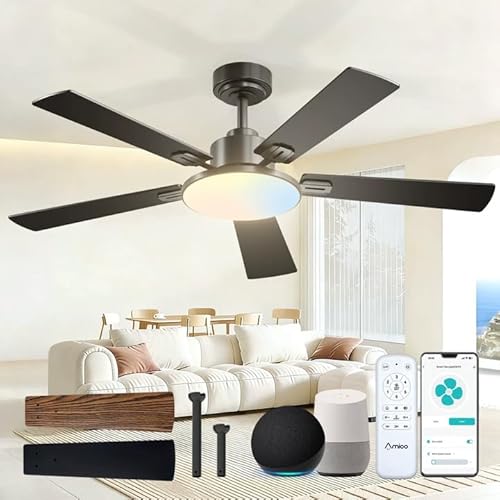
Amico Ceiling Fans with Lights, 52 inch Smart Ceiling Fan with Remote/APP/Alexa Control, Downrod Mount, Reversible DC Motor, 5 Blades, 6 Speeds, 3CCT, Dimmable, Noiseless, Bedroom, Living Room, Black
Smart Ceiling Fan with Lights and remote: This 52 inch ceiling fan with light features a downrod ceiling…
As an affiliate, we earn on qualifying purchases.
As an affiliate, we earn on qualifying purchases.
Conclusion
Choosing between smart switches and smart fans depends on your priorities. Smart switches offer versatile control over multiple devices, potentially reducing energy use, as studies show smart lighting can cut electricity bills by up to 30%. Smart fans provide targeted comfort and efficiency, but may lack the broader automation options. Ultimately, evaluating your needs and lifestyle will help you decide which smart solution maximizes convenience and savings, making your home smarter and more efficient.

53T Smart Wi-Fi Ceiling Fan Remote Control Kit, 3 Fan Speed & Light Dimmer,Compatible with Alexa & Google Home Smart Life APP
【Smart Wi-Fi Version】: Remote / Smart Life APP / Voice – 3 ways to control your ceiling fan…
As an affiliate, we earn on qualifying purchases.
As an affiliate, we earn on qualifying purchases.
Kasa Smart Light Switch HS200, Single Pole, Needs Neutral Wire, 2.4GHz Wi-Fi Light Switch Works with Google Home, UL Certified, No Hub Required, White
App-Guided Install: The Kasa or Tapo app guides you through step-by-step setup. Requires neutral wiring and 2.4 GHz…
As an affiliate, we earn on qualifying purchases.
As an affiliate, we earn on qualifying purchases.