
Smart ceiling fans designed for seniors feature easy-to-use remote controls with large buttons and clear labels, making operation simple and safe. Voice control compatibility allows you to turn the fan on, off, or change speeds with just your voice, enhancing independence. Touchscreen and app controls provide convenient remote access, while automated schedules and adjustable, quieter blades ensure comfort without much manual effort. To discover more about these user-friendly features, keep exploring how they can enhance your everyday comfort and safety.
Key Takeaways
- Large, clearly labeled buttons on remote controls facilitate easy operation for seniors.
- Voice control compatibility allows hands-free adjustments via virtual assistants like Alexa or Google Assistant.
- Touchscreen and app-based controls enable remote management from smartphones or tablets, reducing physical effort.
- Automated scheduling and programmable features create a comfortable environment with minimal manual input.
- Adjustable blade angles and quieter operation modes enhance safety and comfort for senior users.
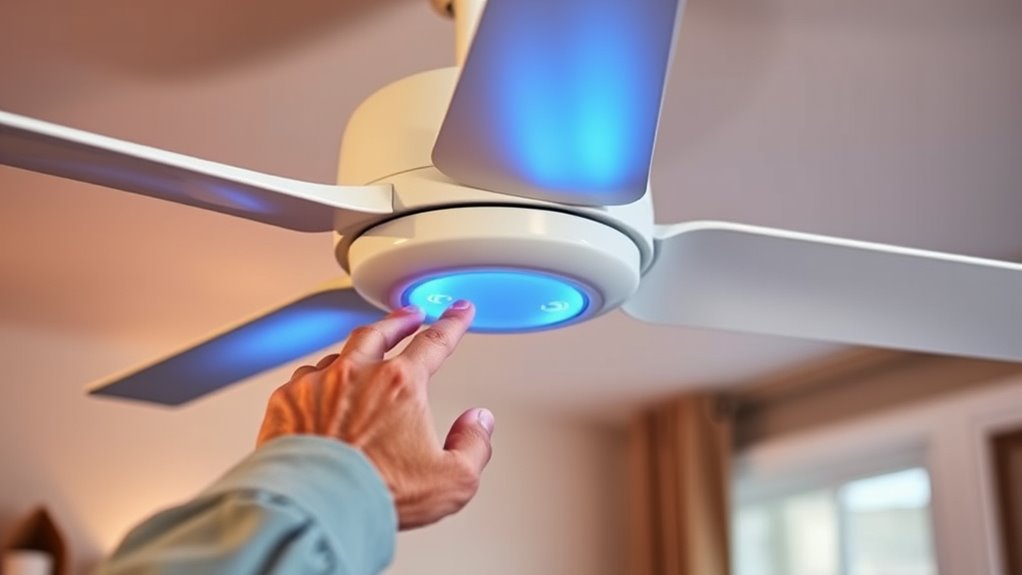
As seniors age, simple tasks like adjusting a ceiling fan can become challenging, especially if mobility or dexterity issues are involved. Smart ceiling fans are designed with these challenges in mind, providing accessible features that make controlling airflow easier and safer. If you or a loved one find it difficult to reach or operate traditional fan switches, these advanced options can markedly improve comfort and independence.
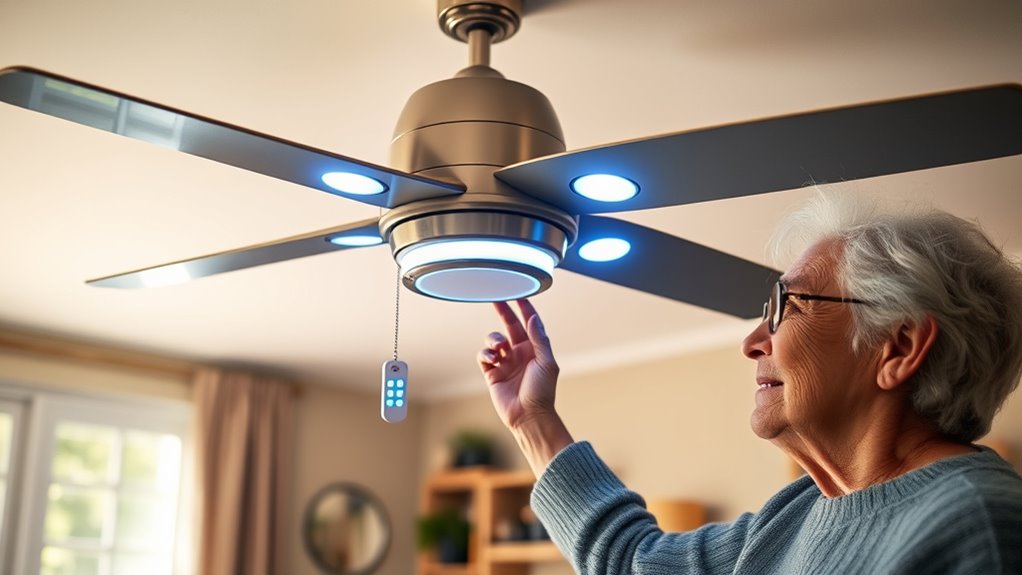
Many smart ceiling fans come equipped with remote controls that feature large, easy-to-press buttons, minimizing the effort needed to change settings. Some models include wall-mounted remotes positioned at a height that’s more accessible, reducing the need to stretch or climb. These remotes often have clearly labeled buttons for turning the fan on or off, adjusting speed, and switching between modes, which simplifies operation for those with limited dexterity. Additionally, some fans incorporate voice control compatibility with popular virtual assistants like Amazon Alexa, Google Assistant, or Apple HomeKit. With voice commands, you can easily turn the fan on or off, change speeds, or set schedules without needing to reach for a switch or remote. This hands-free operation is particularly beneficial if mobility is restricted or if you experience difficulty gripping small objects.
Many smart ceiling fans feature large, easy-to-press remote buttons and voice control for effortless operation.
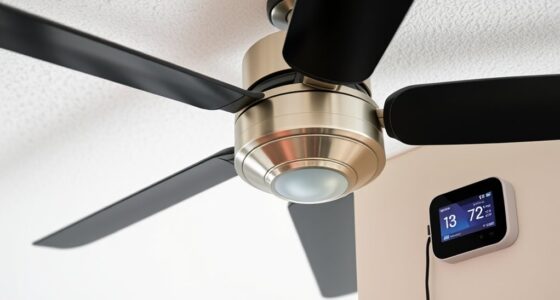
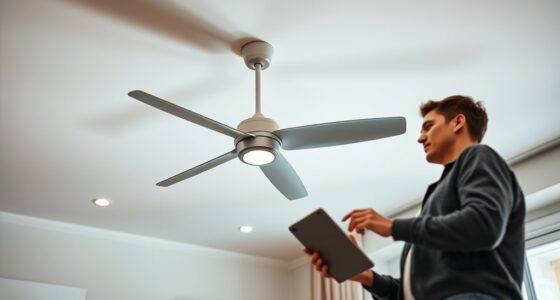
Touchscreen controls are another accessible feature found in some smart fans. These interfaces are often larger and more responsive than traditional switches, allowing for easier navigation even if your fine motor skills are limited. Many models also support app-based control via smartphones or tablets, enabling you to operate the fan from anywhere in the room or even remotely from another location. This flexibility lets you adjust airflow before you even get out of bed or settle into a chair, reducing the effort involved in manual adjustments.
Furthermore, smart ceiling fans can be programmed to operate on schedules, so you don’t have to remember to turn them on or off. Automated settings can include dimming or brightening integrated lighting, if available, creating a more comfortable environment with less manual intervention. Some fans feature adjustable fan blades or blade angles, allowing for quieter operation or more efficient airflow, which can be controlled via the app or remote. Incorporating accessible technology features ensures that seniors can enjoy a safer and more convenient user experience with their ceiling fans.
Frequently Asked Questions
Can Smart Ceiling Fans Be Integrated With Home Automation Systems?
Yes, smart ceiling fans easily integrate with home automation systems like Amazon Alexa, Google Home, or Apple HomeKit. You can control your fan remotely via voice commands or smartphone apps, ensuring convenience and accessibility. Most models connect through Wi-Fi or Zigbee/Z-Wave protocols, allowing seamless setup. This integration lets you customize settings, set schedules, and improve energy efficiency, making your home more comfortable and smartly connected.
Are Voice-Controlled Ceiling Fans Suitable for Seniors With Speech Impairments?
Voice-controlled ceiling fans can be suitable for seniors with speech impairments if they use alternative voice recognition technology, like customizable commands or visual feedback. You should consider fans that offer easy-to-understand prompts and multiple control options, such as app or remote control. Make certain the system is designed to accommodate speech difficulties and provides clear, accessible interfaces so you can comfortably manage airflow without frustration.
What Is the Average Lifespan of Smart Ceiling Fans?
Wondering how long your smart ceiling fan will last? Typically, they have an average lifespan of 10 to 15 years with proper care. You can extend this by cleaning the blades regularly, ensuring the motor is well-maintained, and following manufacturer guidelines. Are you prepared to keep your fan functioning smoothly? Regular upkeep helps you enjoy reliable performance, making your investment worthwhile and your space more comfortable for years to come.
Do Smart Ceiling Fans Require Professional Installation?
No, smart ceiling fans typically don’t require professional installation, but it’s recommended if you’re not comfortable with electrical work or ceiling fan mounting. You’ll need basic tools, and most models come with detailed instructions. If you’re unsure about wiring or mounting securely, hiring a professional guarantees safety and proper setup. This way, you avoid potential issues and enjoy your smart fan’s features seamlessly, with peace of mind.
How Secure Are Smart Ceiling Fans From Hacking or Unauthorized Access?
Think of your smart ceiling fan as a guarded fortress; it’s designed with robust security measures to fend off hackers. Most models use encryption and regular firmware updates to patch vulnerabilities. While no system is invulnerable, maintaining strong, unique passwords and enabling two-factor authentication markedly fortifies your defenses. Regularly updating your app and firmware keeps your fan resilient, ensuring your comfort isn’t compromised by unauthorized access.
Conclusion
Imagine a ceiling fan that responds to your needs like a trusted friend, making your daily comfort effortless. With accessibility features tailored for seniors, such as voice control and adjustable speeds, you gain independence and peace of mind. Just like a gentle breeze that adapts to your surroundings, these smart fans adapt to your preferences, ensuring safety and convenience. Embracing these innovations transforms your space into a haven where comfort and accessibility go hand in hand.