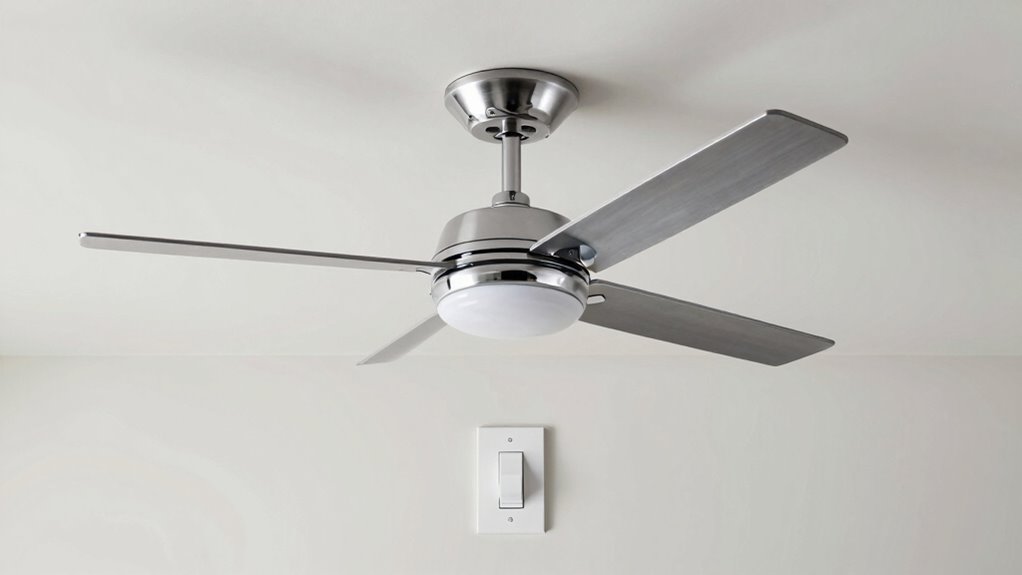

Controlling your ceiling fan and light with a single switch often causes confusion and frustration. Fortunately, modern solutions like remote controls and smart home systems let you operate each load independently and with greater ease. You can use remotes or voice commands for precise control, avoiding the hassle of manual switching. These advancements also help you save energy and customize routines. Keep going to discover how these options can transform your home’s convenience and efficiency.
Key Takeaways
- Use dedicated remote controls or smart switches for independent, clear control of fan and light.
- Integrate smart home systems to operate both loads seamlessly from a single device.
- Install multi-function switches with separate buttons for fan and light to avoid confusion.
- Implement automation routines to manage fan speed and lighting preferences effortlessly.
- Choose compatible, modern control solutions to eliminate manual toggling errors and enhance convenience.
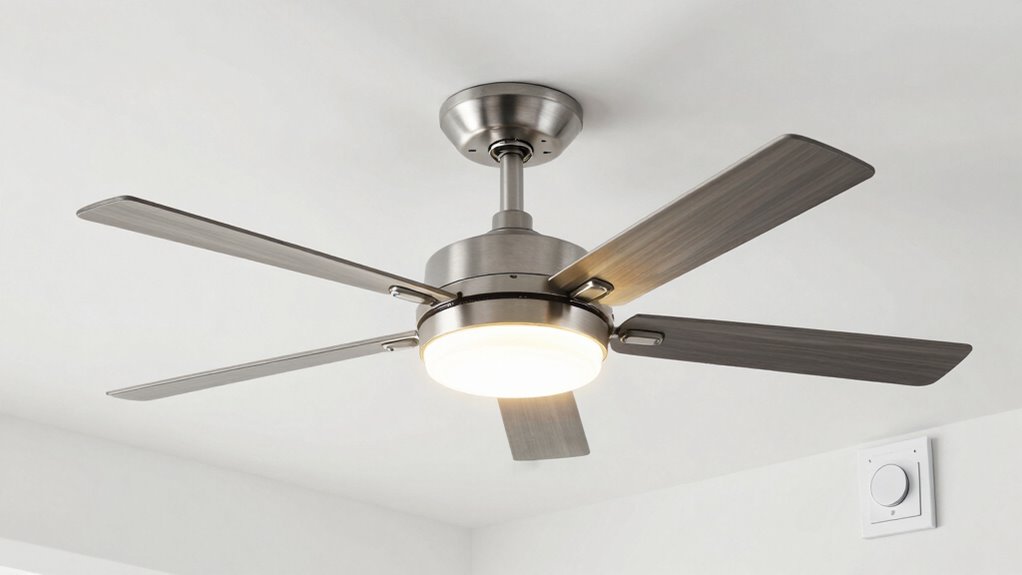
Have you ever struggled to turn your ceiling fan light on or off at the right moment? Maybe you find yourself reaching for the switch, only to realize you need to adjust the fan or vice versa. It’s a common frustration, especially when your ceiling fan and light are operated by a single switch. Luckily, modern solutions have made controlling both loads easier, more intuitive, and even smarter. By integrating a remote control or smart home system, you can manage your ceiling fan and light separately or together, all with minimal effort. This setup eliminates confusion and streamlines your experience, giving you more control over your comfort.
A remote control offers a simple way to operate your ceiling fan and light independently from anywhere in the room. Instead of getting up and flipping a switch, you can press a button on your remote to turn on the fan, adjust its speed, or toggle the light. Many remotes come with dedicated buttons for each function, so you can choose exactly what you want without fumbling around. This is especially useful if you like to control your environment from your favorite chair or bed. Plus, remotes are often easy to install and compatible with a variety of ceiling fan models, making them a versatile upgrade.
Smart home integration takes this convenience even further. With compatible smart switches or hubs, you can control your ceiling fan and light using your smartphone or voice commands. Imagine arriving home and saying, “Hey Alexa, turn on the living room fan and light,” or using an app to set a schedule for lighting and fan speed. Smart systems can be programmed to operate independently, so you don’t have to turn both loads on or off together unless you want to. They also sync with other smart devices in your home, creating a seamless environment. Whether you’re adjusting settings remotely or automating routines, smart home integration makes controlling your ceiling fan and light effortless and efficient.
This technology removes the confusion that often comes with a single switch controlling multiple loads. Instead of guessing if the fan or light is on, or dealing with inconsistent operation, these solutions give you clarity and precision. You can customize your control preferences to suit your lifestyle, whether it’s a dedicated remote or a all-encompassing smart home system. It’s about creating a simple, intuitive experience that enhances comfort without complicating your space. In today’s connected world, controlling your ceiling fan and light shouldn’t be a hassle—it should be as easy as a tap or a voice command. Additionally, incorporating AI-enabled devices can further optimize your energy consumption and provide smarter automation tailored to your habits.
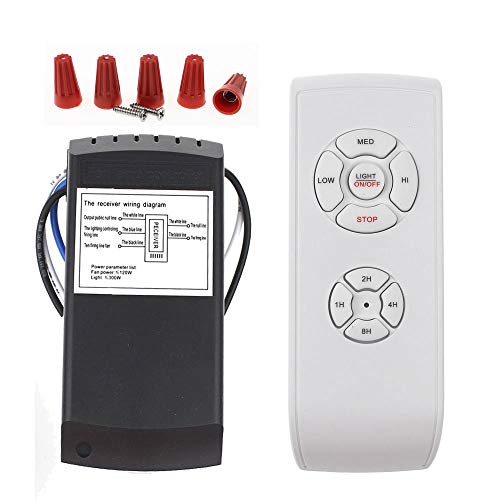
LPHUMEX Universal Ceiling Fan Remote Control Kit, 3-in-1 AC Motor Ceiling Fan Light Timing & Speed Remote, for Hunter/Harbor Breeze/Westinghouse/Honeywell/Other Ceiling Fan lamp
☞Easy Installation – Installation of the Universal Ceiling Fan Remote Controls Kit is a breeze and the looks…
As an affiliate, we earn on qualifying purchases.
As an affiliate, we earn on qualifying purchases.
Frequently Asked Questions
Can I Install This Control Without an Electrician?
You can attempt a DIY installation of this ceiling fan and light control, but make sure you understand the wiring and safety precautions. If you’re comfortable with electrical work, follow the instructions carefully to guarantee code compliance. However, if you’re unsure or unfamiliar with wiring standards, it’s best to hire an electrician. Proper installation guarantees safety, functionality, and adherence to local electrical codes.
Is This Switch Compatible With Smart Home Systems?
Think of this switch as a key to your smart home kingdom—yes, it’s compatible with smart home systems. It seamlessly integrates with voice control compatibility and smart home automation setups, turning your voice into a magic wand. You can control your ceiling fan and light from anywhere, making your space smarter and more responsive. Just make certain your system supports the switch’s protocol, and you’re ready to elevate your home experience.
What Is the Maximum Wattage for the Light Load?
You should check the switch’s specifications for the maximum wattage for the light load. Typically, these switches support a light load up to 600 watts, but this can vary. Exceeding the wattage limits risks damaging the switch or causing malfunction. Always verify the wattage limits listed by the manufacturer to ensure safe operation and compatibility with your light fixtures. If you’re unsure, consult the product manual or contact the manufacturer.
Does the Switch Support Dimming Functionality?
Yes, your switch supports dimming functionality, allowing you to easily adjust light levels for perfect ambiance. For example, imagine hosting a dinner where you want softer lighting; with dimming compatibility, you can lower the light for a cozy setting. This feature provides smooth light adjustment, giving you control over brightness without flickering or buzzing. Just verify your light bulbs are compatible with dimming switches for excellent performance.
How Does the Switch Prevent Flickering or Interference?
To prevent flickering or interference, your switch uses advanced interference mitigation technology, ensuring stable operation even with complex wiring setups. It actively filters out electrical noise that can cause flickering, maintaining a consistent light and fan performance. This design minimizes wiring complexity, so you don’t have to worry about unstable connections. With these features, your switch provides reliable control, reducing the chances of flickering or interference disrupting your comfort.

Kasa Smart Ceiling Fan Control & Dimmer Switch | Adjustable 4-Speed Fan & Brightness Control | Works w/Apple HomeKit, Alexa & Google Home | 2.4G Wi-Fi Only, Single Pole, Neutral Wire Required | KS240
【4 Fan Speeds】 Tailor your airflow to your exact preferences by choosing from four fan speeds for the…
As an affiliate, we earn on qualifying purchases.
As an affiliate, we earn on qualifying purchases.
Conclusion
With a well-designed switch setup, controlling your ceiling fan and light becomes a breeze—no more juggling multiple switches or getting tangled in wires. When you streamline your setup, everything runs smoothly, and you avoid the confusion that often comes with separate controls. Remember, a little planning goes a long way; it’s better to get it right the first time than to learn the hard way. Once installed properly, you’ll have peace of mind knowing your system works seamlessly.
LPHUMEX Universal Ceiling Fan Remote Control Kit, 3-in-1 AC Motor Ceiling Fan Light Timing & Speed Remote, for Hunter/Harbor Breeze/Westinghouse/Honeywell/Other Ceiling Fan lamp
☞Easy Installation – Installation of the Universal Ceiling Fan Remote Controls Kit is a breeze and the looks…
As an affiliate, we earn on qualifying purchases.
As an affiliate, we earn on qualifying purchases.

53T Smart Wi-Fi Ceiling Fan Remote Control Kit, 3 Fan Speed & Light Dimmer,Compatible with Alexa & Google Home Smart Life APP
【Smart Wi-Fi Version】: Remote / Smart Life APP / Voice – 3 ways to control your ceiling fan…
As an affiliate, we earn on qualifying purchases.
As an affiliate, we earn on qualifying purchases.