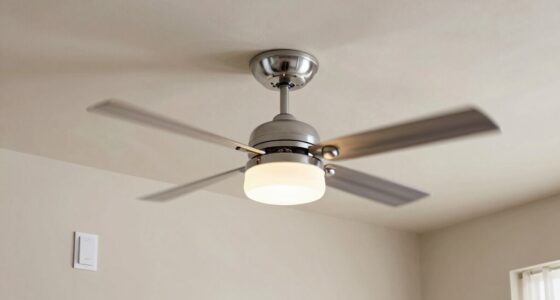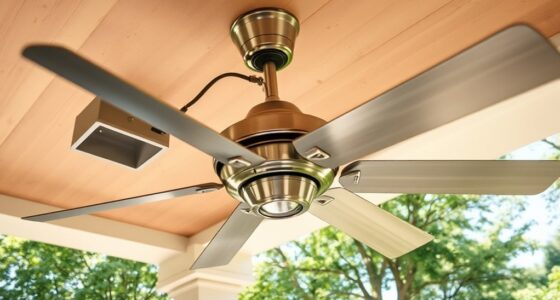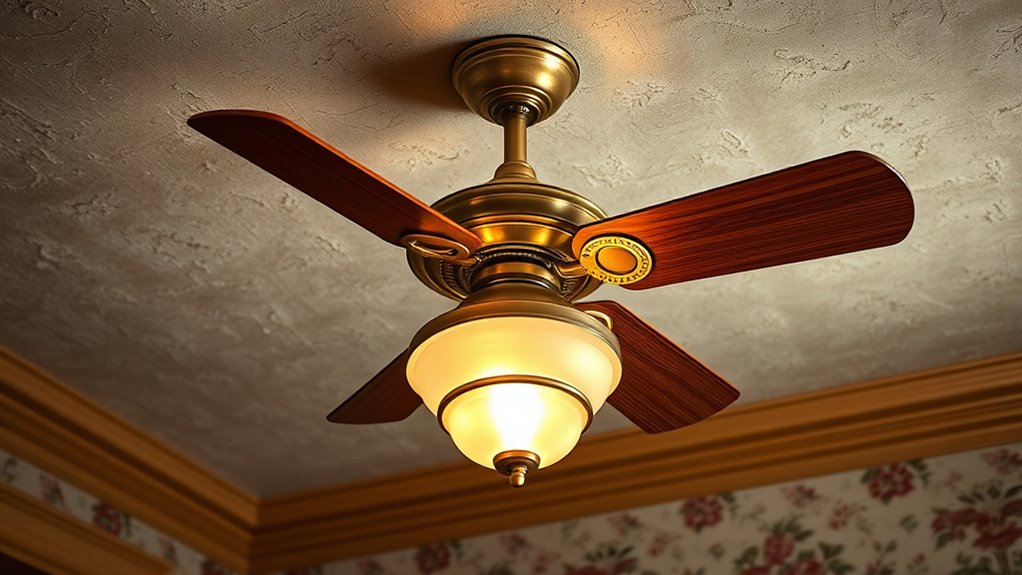

To retrofit a ceiling fan into an older home, first evaluate your electrical system, confirming circuit capacity and upgrading wiring if outdated. Check ceiling joist integrity and replace fixture boxes with UL-rated, fan-compatible boxes. Ascertain proper mounting, possibly using support braces or downrods for high ceilings. Connect the wiring securely, adhering to safety standards, then test the fan’s operation. For detailed procedures, continue exploring how to ensure a safe and efficient retrofit in your space.
Key Takeaways
- Assess ceiling structure and support to ensure it can safely hold a new ceiling fan.
- Upgrade outdated wiring and install UL-listed fan-rated electrical boxes for safety.
- Verify electrical capacity and grounding to match the fan’s power requirements.
- Use appropriate mounting hardware or adapters suited for older ceiling openings.
- Test fan operation thoroughly, checking stability, airflow, and noise levels after installation.
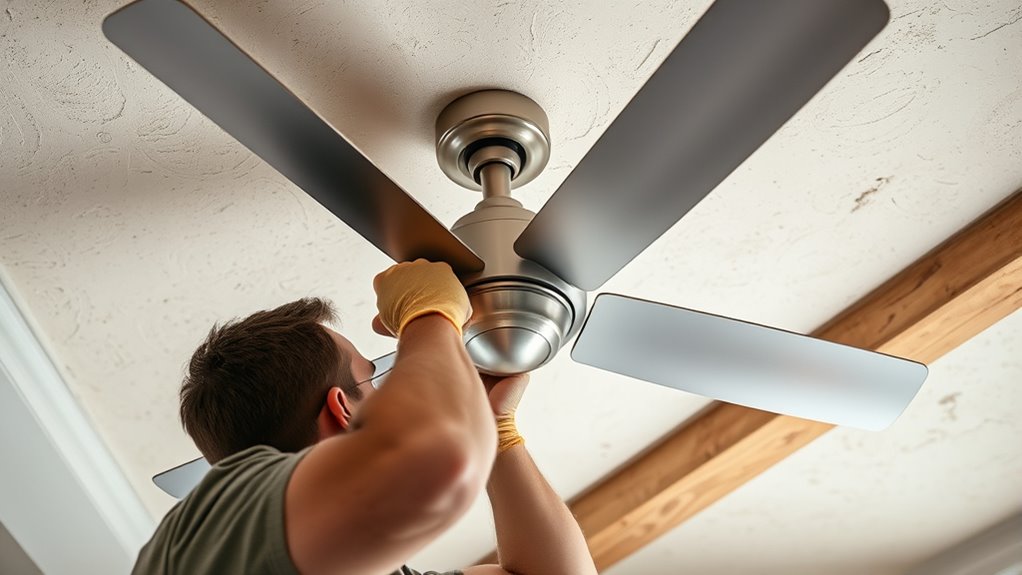
Are you considering upgrading your existing ceiling fan to improve efficiency or functionality? When retrofitting a ceiling fan into an older home, your primary focus should be on compatibility, electrical safety, and minimizing structural impact. Older homes often feature outdated wiring systems, non-standard ceiling heights, and vintage fixtures that may not support modern fan technology. Hence, a systematic approach is essential to guarantee a safe, effective upgrade.
Begin by evaluating the existing electrical infrastructure. Confirm that the circuit can handle the fan’s current draw, especially if you’re replacing an older, less efficient unit. Use a multimeter or circuit tester to verify power availability and check for grounding issues. If the wiring is outdated or non-compliant with current electrical codes, you’ll need to upgrade the wiring and grounding system before installing the new fan. This process involves replacing old cloth-insulated wiring with modern, insulated conductors and ensuring proper grounding to prevent electrical hazards. Additionally, consulting electrical safety standards can help ensure your installation meets all necessary regulations.
Evaluate your home’s electrical system and upgrade outdated wiring for safe ceiling fan installation.
Next, assess the ceiling structure. Older homes often feature ceiling joists built with non-standard dimensions or materials that might not support the weight of a new fan. You should verify the ceiling’s structural integrity and determine whether additional support, such as a fan-rated brace or reinforcement, is necessary. Installing a fan mounting bracket requires a secure attachment point; if the existing fixture box isn’t rated for fan installation, replacing it with a UL-listed fan-rated box is mandatory. This step is critical for safety and compliance with electrical standards.
Proceed to select an appropriate retrofit kit if needed. Many older homes require mounting adapters or canopy covers to conceal new hardware and adapt to existing ceiling openings. Choose a fan with a compatible blade span and motor size to accommodate the room’s dimensions and ceiling height. For ceilings higher than eight feet, consider extending downrods to optimize airflow and ensure the fan operates efficiently.
Finally, during installation, follow precise electrical and mechanical procedures. Connect the fan’s wiring to the house circuit, ensuring correct color code matching and secure connections. Use wire nuts and electrical tape to insulate joints thoroughly. Mount the fan securely using the reinforced bracket and verify its stability. Once installed, test the fan’s operation at different speeds, confirm proper directional airflow, and ensure the fan operates quietly without wobbling. Properly retrofitting a ceiling fan in an older home demands meticulous attention to electrical safety, structural support, and compatibility, but doing so enhances both comfort and energy efficiency while preserving the home’s historic integrity.

BELL PRCF57550BZ Ceiling Fan Electrical Box, Bronze, 4.75 in.
OUTDOOR ELEGANCE: Make your outdoor living spaces as comfy and classy as indoors. Our Hubbell TayMac Outdoor Ceiling…
As an affiliate, we earn on qualifying purchases.
As an affiliate, we earn on qualifying purchases.
Frequently Asked Questions
Can I Retrofit a Ceiling Fan Without Rewiring the Entire Room?
Yes, you can retrofit a ceiling fan without rewiring the entire room. Use a retrofit kit designed for existing fixtures, which typically includes a mounting bracket and a fan-rated electrical box. confirm your current wiring supports a ceiling fan’s load and that the electrical box is rated for fan weight. If necessary, upgrade the box or wiring to meet safety standards, but avoid full rewiring unless absolutely required.
What Is the Average Cost for Retrofitting a Ceiling Fan?
The average cost for retrofitting a ceiling fan ranges from $150 to $350, depending on factors like fan type, mounting requirements, and existing wiring conditions. You should budget for materials such as brackets, electrical boxes, and possible wiring extensions. Labor costs typically fall between $50 and $100 per hour, with installation usually taking 2 to 4 hours. Precise pricing depends on your home’s wiring complexity and specific retrofit needs.
How Long Does the Retrofitting Process Typically Take?
The retrofitting process typically takes between 2 to 4 hours, depending on your home’s existing wiring and ceiling structure. You’ll need to turn off power, remove the old fixture, install mounting brackets, connect wiring, and secure the fan. If your wiring is outdated or complex, expect additional time for troubleshooting. Make certain you follow safety protocols and have the necessary tools to streamline the installation.
Are There Specific Ceiling Fan Models Suitable for Older Homes?
Choosing the right ceiling fan for your older home is like selecting a tailored suit—fit matters. Look for models with flush mounts or low-profile designs, ideal for spaces with low ceilings or limited clearance. Verify compatibility with existing wiring and switch types, and opt for fans with adjustable speeds and quiet motors. Brands like Hunter or Hampton Bay offer models specifically engineered for retrofits, ensuring both functionality and preservation of your home’s character.
Do I Need a Permit to Retrofit a Ceiling Fan in My Home?
You likely need a permit to retrofit a ceiling fan in your home, especially if local building codes specify electrical or structural modifications. Check with your city or county building department before starting the project, as requirements vary by location. Securing a permit guarantees compliance with safety standards and may involve inspections. Failing to obtain one could result in fines or difficulties during property resale.

RACO RETRO-BRACE 936 1.5-in. Deep Ceiling Fan Box for Old Work 2.5-in. Knockouts, Old Work Electrical Box, Adjustable Brace, and Mounting Bracket for Ceiling Light Fixtures & Chandelier Fans
DESIGNED FOR RESTORATIONS: Our Hubbell RACO RETRO-BRACE 1.5-in. Deep Ceiling Fan Box for Old Work is specially designed…
As an affiliate, we earn on qualifying purchases.
As an affiliate, we earn on qualifying purchases.
Conclusion
By retrofitting a ceiling fan into your older home, you breathe new life into its vintage framework, blending timeless charm with modern comfort. This upgrade acts as a technical symphony, harmonizing energy efficiency and aesthetic appeal. With precise installation, you transform your space into a well-orchestrated environment, where cool air flows seamlessly like a finely tuned machine. Embrace this upgrade to guarantee your home’s legacy endures, now enhanced with the elegance of modern engineering.

DPXMYG 24 inch Ceiling Fan Downrod, 2 FT Black Downrod for Ceiling Fan, 1 inch Outside Diameter, Ceiling Fan Boom Suitable for a Wide Range of Fans (Black, Not Threaded)
Ceiling Fan Extension Downrod: The DPXMYG downrod fits most ceiling fans on Amazon (Note: Our downrods are not…
As an affiliate, we earn on qualifying purchases.
As an affiliate, we earn on qualifying purchases.

Ledytech 4 inch LED Retrofit Light Kit for Ceiling Fan Light Replacement Panel PCB 18W 6000K 2200LM 120V CRI90 Dimmable ETL (White 6000K)
1. Compatibility: This LED light replacement kit is compatible with AC120V ceiling fans or ceiling lights. It connects…
As an affiliate, we earn on qualifying purchases.
As an affiliate, we earn on qualifying purchases.