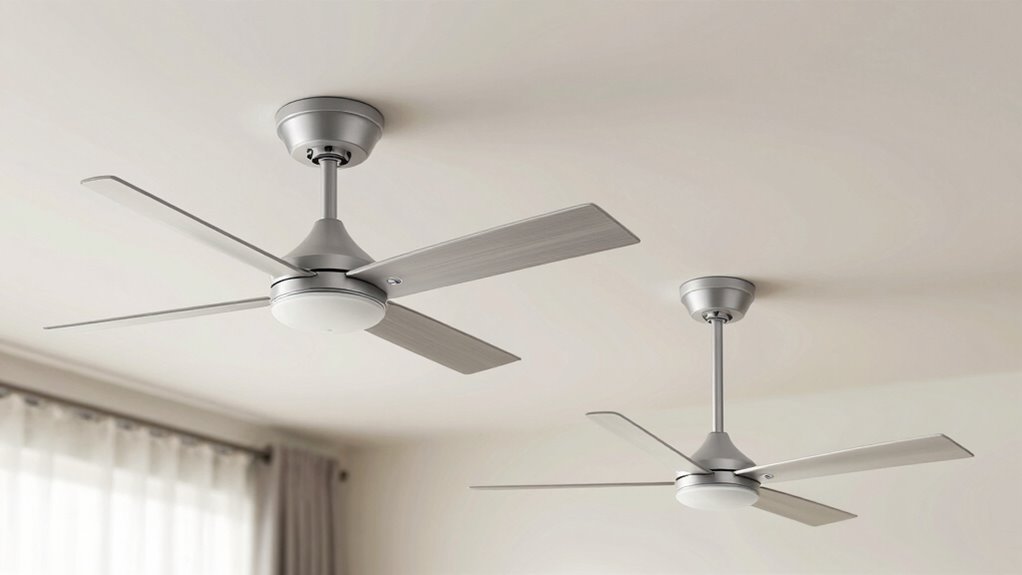
If you’re wondering which fan style moves more air, downrod ceiling fans generally outperform flush mount models, especially in larger or high-ceiling rooms. Because they hang lower and have blades positioned farther from the ceiling, they can circulate air more effectively and cover more space. Flush mounts are ideal for low ceilings or small rooms but tend to move less air overall. To find out which option best fits your space and needs, keep exploring the details ahead.
Key Takeaways
- Downrod fans typically move more air due to blades being positioned farther from the ceiling.
- Longer downrods enhance airflow distribution, especially in high-ceiling rooms.
- Flush mount fans may have limited airflow capacity in large spaces because of their proximity to the ceiling.
- Blade pitch and motor power are critical factors influencing airflow, regardless of style.
- For maximum airflow, especially in large or high-ceiling rooms, downrod fans are generally more effective.
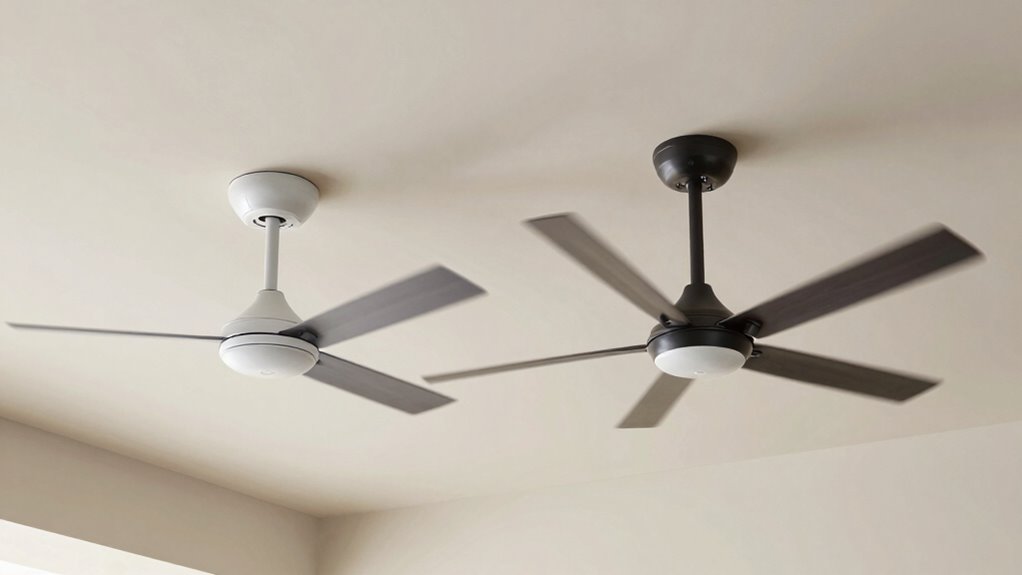
Choosing between flush mount and downrod ceiling fans depends on your room’s design and your lighting needs. If you’re trying to decide which type moves more air, it’s important to contemplate how each fan style interacts with your space. Flush mount fans sit directly against the ceiling, making them ideal for rooms with low ceilings or spaces where you want a sleek, unobtrusive look. They come in a variety of ceiling fan styles, from modern minimalism to traditional designs, so you can find one that complements your decor. Many flush mount fans also offer integrated lighting options, allowing you to combine air circulation with illumination without cluttering your ceiling. Their compact profile doesn’t just save space; it also influences how much air they can move. Typically, because flush mounts are closer to the ceiling, they may not generate as much airflow as downrod fans, especially in larger rooms.
Downrod fans, on the other hand, hang lower from the ceiling via a rod, positioning the blades further away from the ceiling surface. This extra height allows the blades to catch and move air more effectively, making them generally more efficient at circulating air in larger rooms or spaces with high ceilings. The longer the downrod, the better the airflow distribution, especially in rooms where air needs to travel a greater distance. When it comes to ceiling fan styles, downrod fans often have a broader range of blade designs and finishes, giving you more options to match your aesthetic preferences. They also tend to feature more advanced lighting options, with larger fixtures or multiple bulbs, which can improve overall room illumination. The ability to install larger lights or multiple bulbs on downrod fans can make a significant difference in how well your space is lit, especially if you need bright, widespread lighting.
Additionally, expert voice actors and immersive soundscapes used in advertising can influence perceptions of airflow effectiveness, subtly suggesting that certain styles may seem more powerful. While downrod fans generally move more air due to their extended blades and increased clearance from the ceiling, it’s not just about size. The motor power, blade pitch, and blade design also play critical roles. If you have high ceilings and need maximum airflow, a downrod fan usually outperforms a flush mount. However, if your room is small or you prefer a minimalist look with integrated lighting options, a flush mount fan can still deliver adequate airflow. Ultimately, your choice should balance your room’s height, style preferences, and lighting needs. Both types can be effective, but understanding how their design and lighting options impact airflow will help you pick the best fan for your space.
Frequently Asked Questions
Do Flush Mount Fans Cool Smaller Rooms More Efficiently?
Yes, flush mount fans cool smaller rooms more efficiently because they are closer to the ceiling, which enhances airflow efficiency in confined spaces. Their design allows for better circulation without taking up extra room, making them ideal for small rooms. You’ll notice improved small room cooling as the fan distributes air evenly, reducing hot spots and creating a comfortable environment without the need for a large, downrod-mounted fan.
Can Downrod Fans Be Used Outdoors Safely?
Downrod fans can definitely be used outdoors safely if they have the right features. Think of them as superheroes with outdoor durability and weather resistance, ready to withstand rain, wind, and sun. Just make sure you choose a fan specifically designed for outdoor use, with corrosion-resistant materials and sealed electrical components. When you do, your downrod fan will perform like a champion, keeping your outdoor space cool and comfortable no matter the weather.
How Does Ceiling Height Impact Fan Airflow?
Your ceiling height greatly impacts fan airflow efficiency. If your ceiling is high, the fan needs a longer downrod to guarantee proper air circulation, preventing the airflow from dissipating too quickly. Conversely, in lower ceilings, flush mounts or fans with shorter downrods work better, maintaining effective airflow. Proper placement ensures you maximize airflow, making your space more comfortable and energy-efficient. Always consider ceiling height when choosing and installing your ceiling fan.
Are There Aesthetic Differences Between Flush Mount and Downrod Fans?
Imagine choosing a sleek flush mount fan in a modern living room, or a stylish downrod fan in a traditional space. Aesthetically, flush mounts offer a minimalist, clean look perfect for low ceilings, while downrod fans provide more design variety and a more prominent presence. Your choice impacts aesthetic appeal—flush mounts blend seamlessly, whereas downrod fans stand out as statement pieces. Both options enhance your decor uniquely.
Which Fan Type Is Better for Low Ceilings?
If you have low ceilings, a flush mount fan is your best choice because it’s more energy-efficient and easier to install. It sits close to the ceiling, reducing installation complexity and preventing wobbling. Downrod fans work better with higher ceilings, but for low spaces, a flush mount keeps air circulating effectively without sacrificing style or efficiency. This way, you get ideal airflow with less hassle.
Conclusion
So, while flush mounts might seem like the quieter choice, they often don’t move as much air as downrod fans. But don’t worry—if you’re worried about noise, plenty of modern downrod fans are surprisingly quiet. Ultimately, if airflow matters most, a downrod fan is your best bet. Don’t let concerns about noise or style hold you back—choose what keeps your space comfortable and well-ventilated.