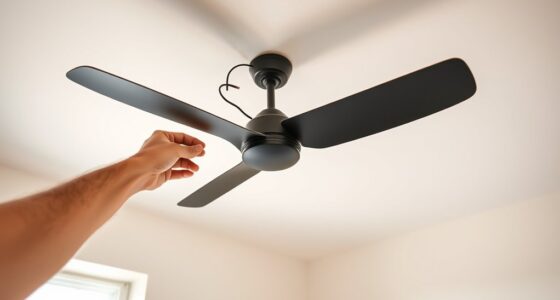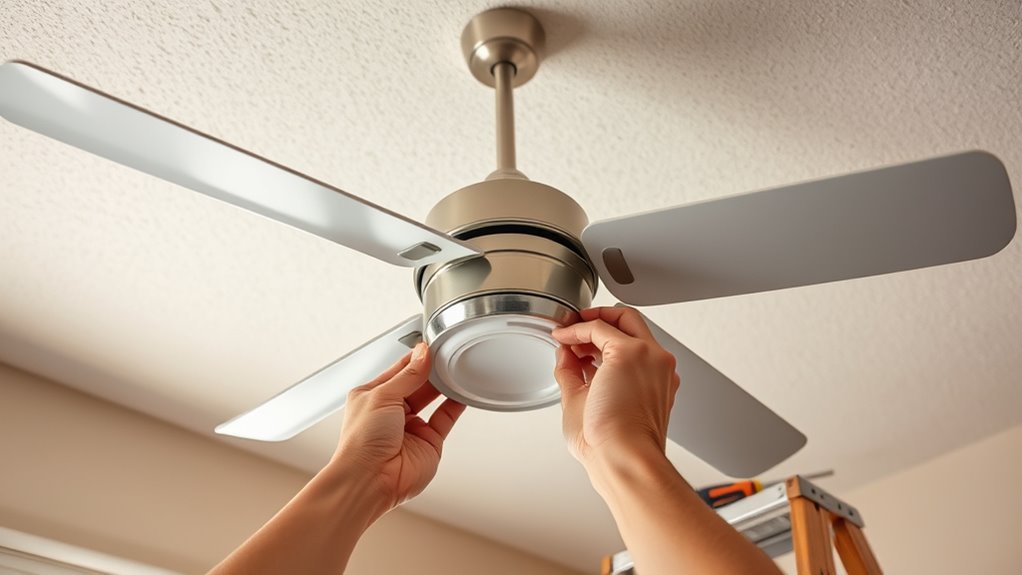

To attach fan blades, position each blade on the motor bracket, aligning pre-drilled holes, then secure with screws or bolts, tightening evenly in a crisscross pattern without overtightening. Use a balancing kit or weights by temporarily attaching them to blades, and test the fan at low speed, repositioning weights to minimize wobble. After achieving balance, tighten all fasteners securely. Proper attachment and balancing guarantee smooth, stable operation—continue your process to master the technique fully.
Key Takeaways
- Confirm all components are undamaged and properly matched before assembly.
- Attach blades securely to the motor arm using screws, tightening evenly in a crisscross pattern.
- Ensure blades are correctly oriented and aligned for smooth operation and proper airflow.
- Balance the fan by adding weights or clips and adjusting until wobble is minimized at various speeds.
- Perform final checks to confirm all fasteners are tight and the fan operates smoothly without vibrations.

Attaching fan blades and balancing a ceiling fan are vital steps to guarantee safe and efficient operation. Proper installation ensures the fan performs at its best, minimizes vibrations, and reduces wear on components. Begin by inspecting all components to confirm that each blade is free of damage and that mounting hardware matches the fan’s specifications. Lay out the blades and hardware in a clean workspace, making certain you have the necessary tools—such as a screwdriver, ladder, and possibly a balancing kit.
Always inspect components and gather the right tools before installing and balancing your ceiling fan.
Next, position the fan motor assembly securely on the mounting bracket, following the manufacturer’s instructions. Attach each blade to its corresponding motor arm or blade bracket, aligning the pre-drilled holes precisely. Use the provided screws or bolts, tightening them evenly in a crisscross pattern to prevent uneven stress distribution. Do not overtighten, as this can cause warping or damage to the blades or mounting points. Confirm each blade’s attachment is firm but not excessively tight, allowing for slight adjustments if necessary.
Once all blades are mounted, rotate the fan manually to check for clearance and smooth movement without interference or wobble. At this stage, it’s vital to verify that each blade is oriented correctly, with the leading edges aligned uniformly. Misaligned blades can cause imbalance during operation, leading to noise and excessive vibration. If the blades feature adjustable brackets, fine-tune their angles to ensure consistent pitch.
Balancing the fan involves identifying any wobble caused by uneven weight distribution. Attach the balancing clips or weights supplied in the kit to the blade edges. Start by placing these weights on the blades closest to the motor, then turn on the fan at low speed. Observe the wobble; if it persists, reposition the weights incrementally to different blades until the wobble diminishes. Alternatively, if your fan includes a balancing kit with adhesive weights, apply them gradually to the blades, ensuring they adhere firmly and are evenly spaced.
After achieving a stable operation at low speed, increase to medium and high speeds, observing for any vibrations or noise. If vibrations continue, repeat the balancing process, adjusting the weights or repositioning them as needed. Proper balancing minimizes strain on the motor, reduces noise, and prolongs the lifespan of the fan. It is also important to regularly maintain the fan by checking for loose screws and cleaning dust buildup on the blades and motor. Once satisfied with the balance, remove any temporary clips or weights, and ensure all screws and fasteners are tight. Confirm the blades are securely attached and that the fan operates smoothly at all speeds, completing the installation process with a focus on safety and performance.
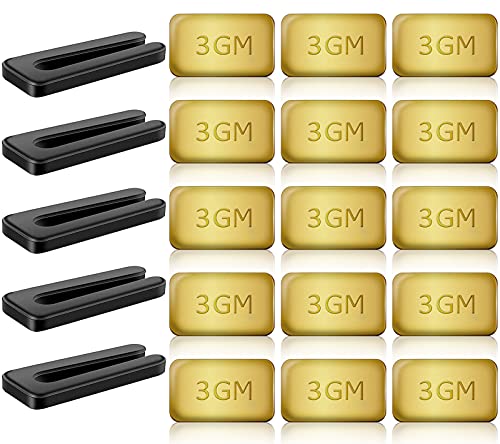
HFYHWT 20PCS Ceiling Fan Balancing Kit, 5 Sets High Calibration Blade Balance Tool Including 5 Pcs Resilient Clips and 15 Pcs Metal Self-Adhesive 3G Weight
PROFESSIONAL RESULTS: Ceiling fan balance kit include balance clip to locate problem area, self-adhesive 3G Weight-Balance helps to…
As an affiliate, we earn on qualifying purchases.
As an affiliate, we earn on qualifying purchases.
Frequently Asked Questions
Can I Attach Fan Blades Without Turning off the Power?
No, you shouldn’t attach fan blades without turning off the power. Working on a ceiling fan while it’s live poses serious electrical shock risks and potential injury from moving parts. Always turn off the circuit breaker before handling fan blades or any electrical components. Confirm power is off using a voltage tester, then proceed carefully to attach and secure the blades. Safety precautions are essential to prevent accidents.
What Tools Are Essential for Balancing a Ceiling Fan?
You need a balancing kit, which typically includes a plastic clip and small weights, to properly balance your ceiling fan. Use the clip to identify unbalanced blades by attaching it to each blade sequentially while the fan runs. Once you find the wobbling blade, attach a small weight from the kit to the blade’s tip or the edge to counteract imbalance. A screwdriver is also essential for securing weights and adjusting blades.
How Often Should I Check the Fan’s Balance?
Think of your ceiling fan as a finely tuned instrument; you should check its balance every 6 to 12 months. Regular inspections prevent wobbling, reduce noise, and extend the fan’s lifespan. Watch for signs like uneven airflow or vibrations, especially after moving furniture or during seasonal changes. Use a balancing kit if needed, and make sure blades are clean and securely fastened, maintaining ideal performance and safety.
Are There Specific Types of Screws for Fan Blade Attachment?
You should use screws specifically designed for ceiling fan blades, typically rated for electrical and structural stability. Most fans require 10-24 or 10-32 machine screws, often made of steel or stainless steel for durability. Guarantee the screws have a washer and match the hole size on the blades. Avoid using generic screws, as improper fasteners can cause imbalance or damage, compromising safety and fan performance.
Can Unbalanced Fans Cause Electrical Issues?
Unbalanced fans can indeed cause electrical issues. Studies show that vibration from imbalance can lead to wear on the fan’s motor and wiring, increasing the risk of shorts or electrical failures over time. When your fan wobbles or makes unusual noises, it’s a sign to check for balance. Properly balancing the blades minimizes vibrations, protecting your electrical components and ensuring efficient operation.

KALIONE Ceiling Fan Blade Balancing Kit Including Fan Balancing Clips and 12pcs Metal Self-Adhesive 3G Weight Practical Fan Balance Kit for Ceiling Fan Weight Balancing 4pcs
Package Content: You will receive 4 sets of fan balancing kit, enough quantity meets all your needs.
As an affiliate, we earn on qualifying purchases.
As an affiliate, we earn on qualifying purchases.
Conclusion
Now that you’ve attached the blades and balanced your ceiling fan, it’s amusing how such a small task can seem so complex. Ironically, a perfectly balanced fan quietly does its job, yet the process often feels like defusing a bomb. Just remember, accurate blade attachment and proper balancing guarantee efficiency and longevity. So, next time you flip the switch, enjoy the silent, smooth operation—proof that precision truly pays off, even in fan installation.
HFYHWT 20PCS Ceiling Fan Balancing Kit, 5 Sets High Calibration Blade Balance Tool Including 5 Pcs Resilient Clips and 15 Pcs Metal Self-Adhesive 3G Weight
PROFESSIONAL RESULTS: Ceiling fan balance kit include balance clip to locate problem area, self-adhesive 3G Weight-Balance helps to…
As an affiliate, we earn on qualifying purchases.
As an affiliate, we earn on qualifying purchases.

20Pcs Ceiling Fan Blade Screws, 1/4-20 x 3/8 Pan Head Phillips Machine Screws Carbon Steel Replacement Fasteners Bolts for Lighting Ceiling Fan, Copper
Product dimensions: Overall dimensions: 8.6 x 13 mm / 0.34 x 0.51 inches (diameter x length). Thread size:…
As an affiliate, we earn on qualifying purchases.
As an affiliate, we earn on qualifying purchases.