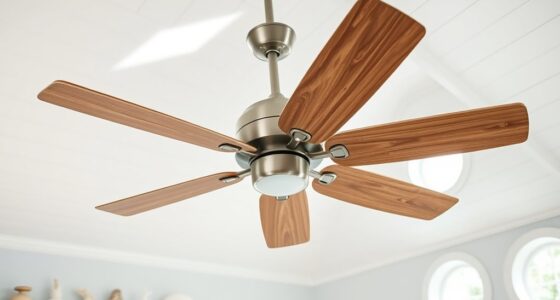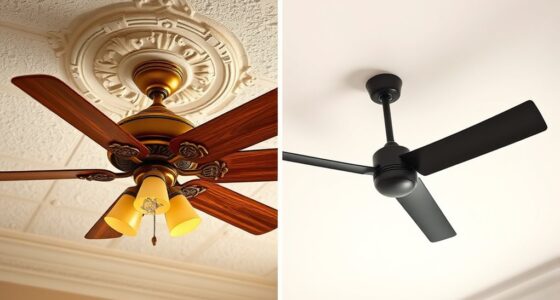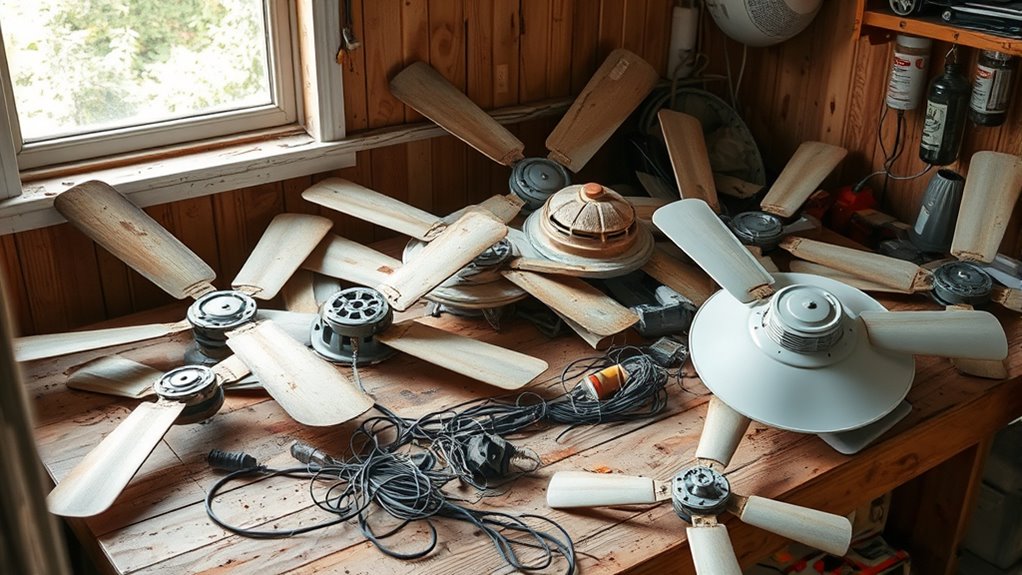

To responsibly recycle your old ceiling fan, turn off the power and disassemble it into blades, motor, and hardware. Metal parts like blades are highly recyclable at scrap metal centers, while plastic components can be taken to specialized recycling facilities. Electronic parts contain hazardous materials and should go through e-waste programs or hazardous waste collection events. Proper separation and disposal prevent pollution and conserve resources. Continuing guarantees you’ll find detailed tips on safe, eco-friendly disposal options.
Key Takeaways
- Turn off power and safely disassemble the fan into blades, motor, and hardware before recycling.
- Identify and separate recyclable materials like metal, plastic, and electronic components.
- Check local recycling centers or e-waste programs for accepted ceiling fan parts and proper disposal methods.
- Handle hazardous electronic components carefully, ensuring they are processed through certified e-waste facilities.
- Avoid trash dumping; always follow local guidelines for appliance disposal to prevent environmental contamination.
When your old ceiling fan no longer functions efficiently or you decide to upgrade, recycling it instead of tossing it in the trash is a responsible choice that benefits the environment. Ceiling fans are composed of various materials—metal, plastic, glass, and sometimes electronic components—that, if improperly disposed of, can contribute to pollution and waste accumulation. Recycling helps recover valuable raw materials, reduces the need for virgin resource extraction, and minimizes landfill overflow. By choosing to recycle, you actively participate in sustainable practices that lessen your ecological footprint and promote a healthier planet.
Before recycling, it’s essential to safely disconnect and prepare the fan. Turn off the power supply at the circuit breaker to prevent accidents. Remove the fan from the ceiling carefully, noting that blades, motor units, and mounting hardware may be heavy or awkward to handle. Once disassembled, check whether your local recycling facilities accept appliances like ceiling fans. Many scrap metal recyclers or electronic waste centers welcome such items because of their metal content and electronic parts. If you’re uncertain, contact your local waste management authority or visit their website to confirm accepted materials and specific drop-off procedures.
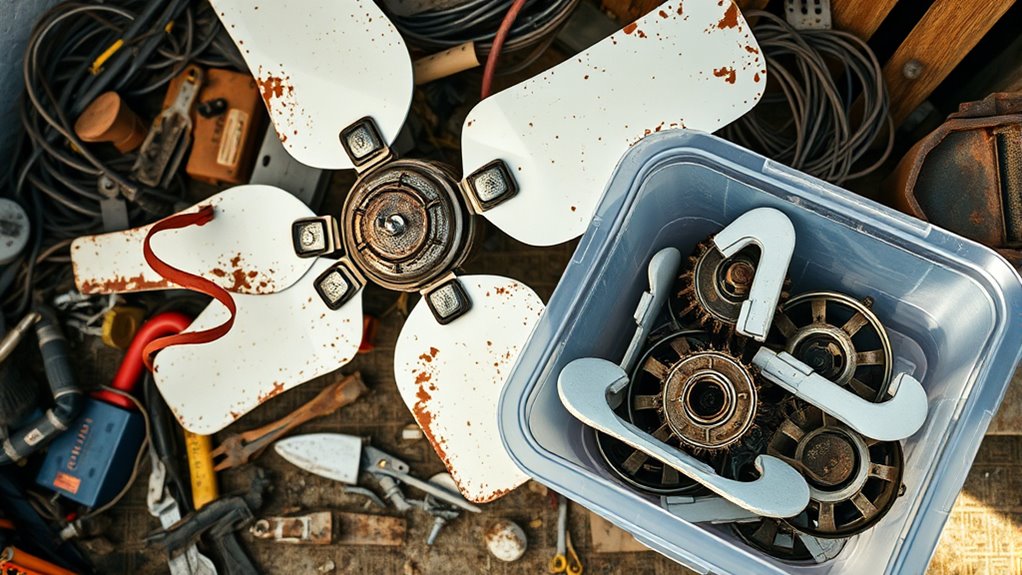
Recycling centers often require that you separate different components. Metal parts, such as the motor housing and fan blades, are highly recyclable and can be sent to scrap metal facilities. Plastic components, like covers and blade guards, may be accepted by specialized recycling centers that process plastics. Electronic components, including capacitors and switches, should be handled carefully, as they may contain hazardous substances like mercury or lead. Some facilities have dedicated e-waste programs that safely dismantle and process these parts, ensuring harmful materials are properly managed. Additionally, increasing awareness of hazardous materials in electronic components can help prevent environmental contamination during disposal.
If your local recycling options are limited, consider donating the functioning parts or the entire unit to organizations that refurbish electronics or repurpose materials. Alternatively, look for community hazardous waste collection events, especially if the fan contains electronic components or batteries. Proper disposal reduces environmental contamination and conserves resources. Remember, never burn or dump parts in regular trash, as broken plastics and electronic waste can release toxic chemicals into the environment.
Top picks for "recycl dispos ceil"
Open Amazon search results for this keyword.
As an affiliate, we earn on qualifying purchases.
Frequently Asked Questions
Can Old Ceiling Fans Be Repurposed Into Other Household Items?
Yes, you can repurpose old ceiling fans into other household items. For example, you can turn the fan blades into unique wall art or coat racks by attaching hooks. The motor can be repurposed into a small generator or a decorative lamp base. Salvaging metal parts for DIY projects helps reduce waste. Just make certain you handle all components carefully and recycle any parts that can’t be reused to stay eco-friendly.
Are There Specific Disposal Regulations for Ceiling Fan Components in My Area?
Think of disposal regulations as the map guiding your eco-friendly journey. You should check with your local waste management authority to see if specific rules apply to ceiling fan components, especially for hazardous parts like motors or blades containing hazardous materials. Many areas require recycling of metal and electronic parts, so follow proper disposal procedures to protect the environment. Being informed guarantees you’re a responsible recycler, turning waste into a sustainable resource.
How Can I Identify if a Ceiling Fan Contains Hazardous Materials?
You can identify hazardous materials in your ceiling fan by checking for components containing mercury, lead, or cadmium, often found in older models or electronic parts. Look for labels indicating hazardous substances or consult the manufacturer’s information. If you’re unsure, avoid dismantling the fan yourself, and instead, contact local recycling centers or professionals trained in hazardous waste disposal. This helps protect the environment and your health.
What Are the Environmental Impacts of Improper Ceiling Fan Disposal?
When you improperly dispose of a ceiling fan, you risk releasing hazardous materials like metals and electronic components into the environment, contaminating soil and water. This can harm wildlife, disrupt ecosystems, and pose health risks to humans. By recycling your fan responsibly, you prevent pollution, conserve resources, and reduce landfill waste. Make sure to follow proper disposal guidelines to minimize your environmental footprint and promote a healthier planet.
Are There Financial Incentives for Recycling Old Ceiling Fans?
Yes, you can find financial incentives for recycling old ceiling fans. Many local recycling programs or scrap yards offer cash for metal components, especially if your fan contains valuable metals like copper. Additionally, some manufacturers or utility companies provide rebates or discounts for eco-friendly disposal. By recycling responsibly, you not only earn potential rewards but also help reduce environmental harm, conserving resources and minimizing landfill waste.
Conclusion
By recycling your old ceiling fan, you’re not just discarding metal and plastic—you’re giving them a second life, like a phoenix rising from the ashes. Imagine the impact of your eco-conscious choice, turning waste into resources and reducing landfill clutter. Every step you take toward proper disposal helps protect our planet’s future. So, embrace sustainable practices and let your actions be a beacon of hope, inspiring others to follow your lead in preserving our precious environment.