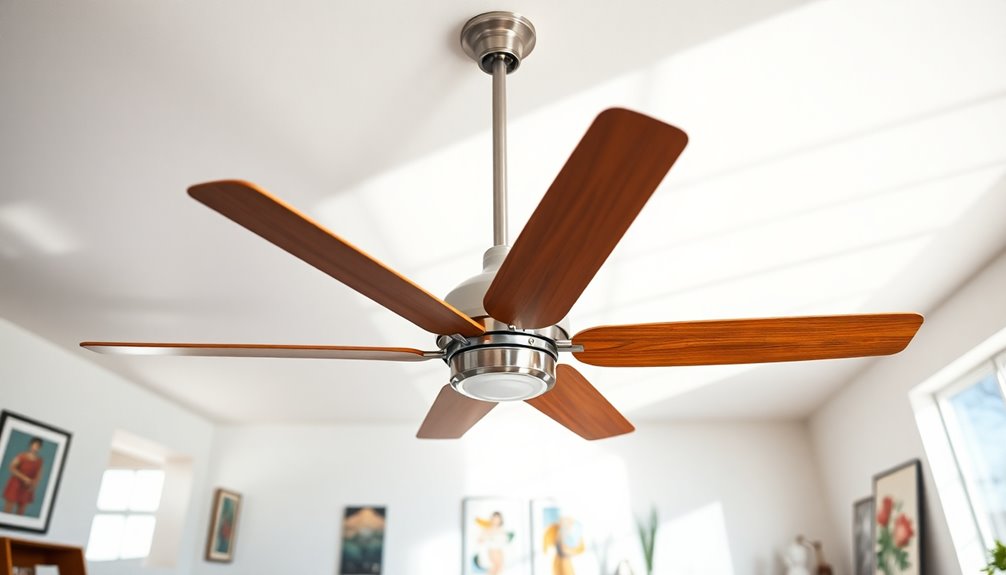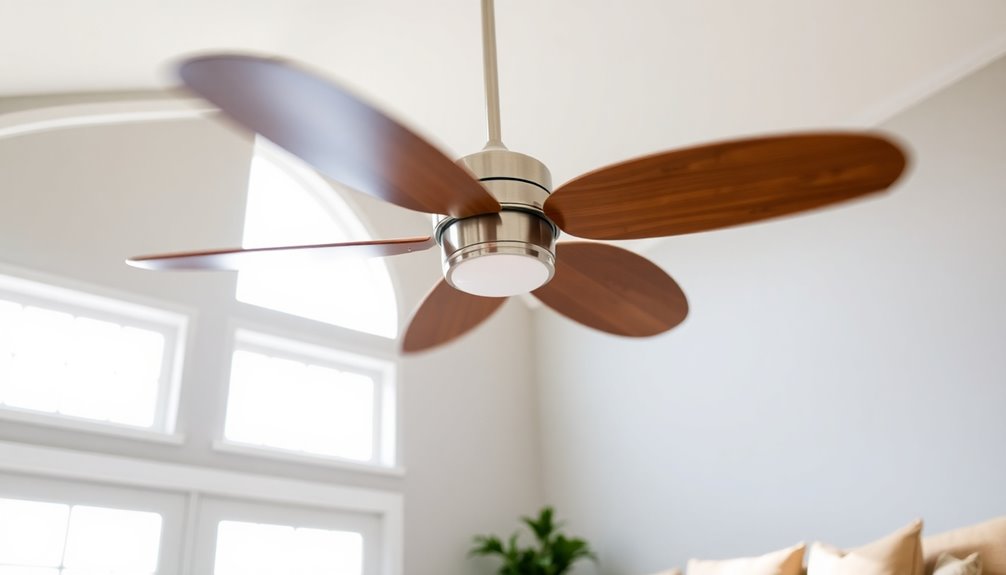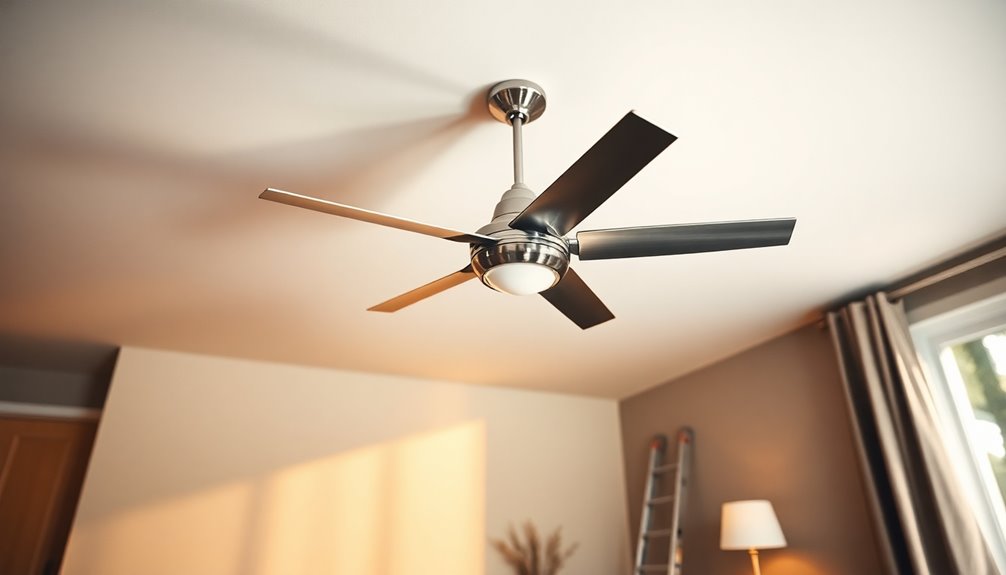

To effectively use multi-fan systems in great rooms and commercial spaces, assess your space’s size, ceiling height, and layout to select appropriate fan capacity and placement. Incorporate advanced controls with sensors for energy-efficient operation and zone-specific airflow. Proper installation ensures ideal airflow, reduces energy consumption, and minimizes conflicts with HVAC systems. Regular maintenance and performance evaluations help sustain system efficiency. For detailed strategies and design considerations, exploring further will provide thorough guidance to maximize your system’s benefits.
Key Takeaways
- Properly assess room size and features to select and position fans for optimal airflow and coverage.
- Integrate advanced controls with sensors for precise, automated management of fan speeds and zones.
- Choose energy-efficient fans with high-quality motors and VFDs to reduce operational costs.
- Ensure strategic placement to promote airflow circulation, avoid obstructions, and complement HVAC systems.
- Regularly maintain and monitor system performance to maximize efficiency and prolong equipment lifespan.
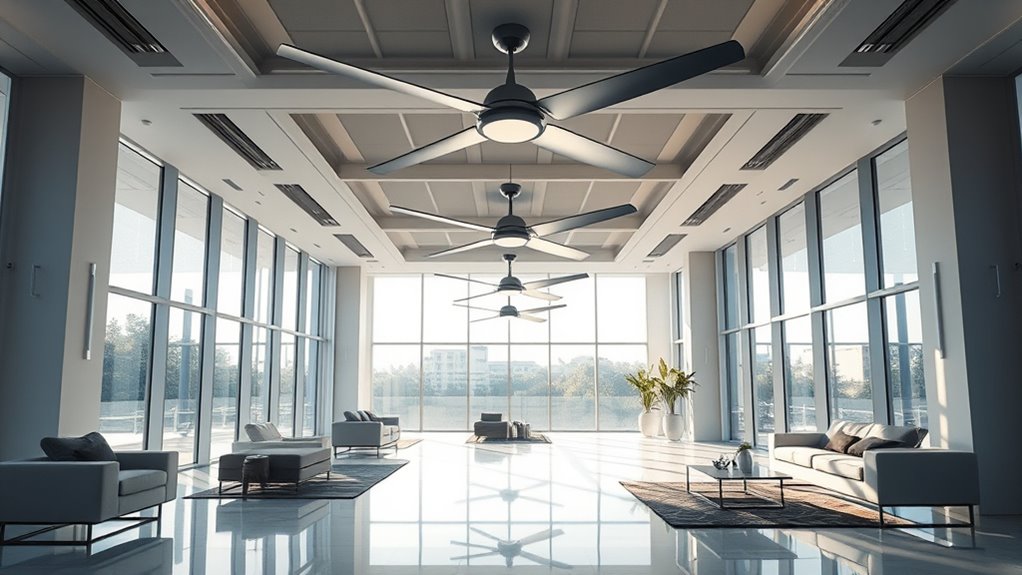
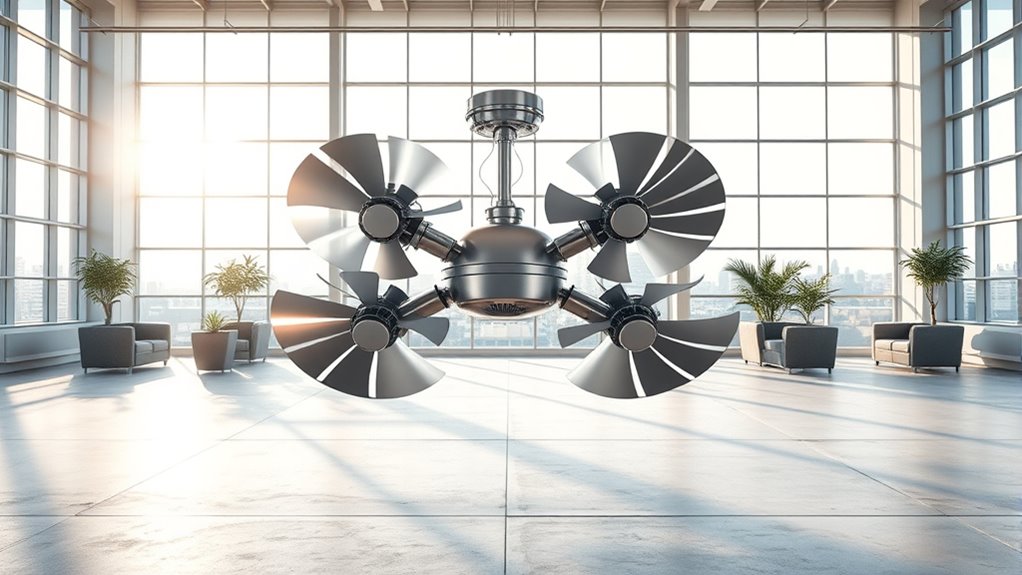
Multi-fan systems are an effective solution for optimizing airflow and maintaining thermal comfort in large rooms and commercial spaces. These systems consist of multiple high-capacity fans strategically installed to create a uniform air distribution, reducing temperature disparities and preventing zones of stagnation. By precisely controlling fan speed, direction, and timing, you can achieve targeted airflow patterns tailored to the specific layout and occupancy patterns of your space. This level of control ensures energy efficiency by avoiding unnecessary overcooling or overheating, thereby reducing operational costs.
Understanding the design considerations of multi-fan systems is vital to their effective deployment. You need to assess the room’s volume, ceiling height, and architectural features to determine the appropriate fan capacity and placement. For example, in spaces with high ceilings, you should select fans with sufficient power to induce downward airflow, promoting mixing and preventing stratification. Additionally, the positioning of fans should facilitate ideal air circulation paths, avoiding obstructions and ensuring thorough coverage. Proper installation includes aligning fans to complement existing HVAC systems, which helps prevent conflicts and enhances overall system performance.
Operational control mechanisms are integral to maximizing the benefits of multi-fan systems. Advanced control systems integrate sensors and automation to adjust fan operation based on real-time environmental conditions. For instance, temperature sensors can trigger fans to operate at varying speeds, maintaining a setpoint without manual intervention. Similarly, occupancy sensors can deactivate fans when spaces are unoccupied, conserving energy. These controls also enable zoning capabilities, allowing different sections of a large room or commercial area to be conditioned independently, thereby improving comfort and efficiency.
Energy consumption considerations are paramount in selecting and operating multi-fan systems. High-efficiency motors and variable frequency drives (VFDs) are standard features that reduce power usage by adjusting fan speed according to demand. You should regularly monitor system performance metrics to identify opportunities for enhancement, such as adjusting fan schedules or recalibrating controls based on seasonal changes and occupancy patterns. Proper maintenance, including cleaning blades and verifying motor performance, ensures sustained efficiency and prolongs equipment lifespan. Additionally, understanding the importance of air circulation can help optimize the overall performance of the system.
Frequently Asked Questions
How Do Multi-Fan Systems Improve Energy Efficiency?
Multi-fan systems improve energy efficiency by optimizing airflow and reducing the need for centralized HVAC systems. They allow you to target specific zones, lowering overall energy consumption. By using variable speed motors, you can adjust fan operation based on demand, avoiding unnecessary energy use. Additionally, multi-fan setups promote better air circulation, which helps maintain consistent temperatures and reduces the workload on heating and cooling units.
Can Multi-Fan Systems Be Automated for Different Room Zones?
Yes, you can automate multi-fan systems for different room zones using smart controllers or building management systems. You’ll set specific parameters like temperature, occupancy, or time schedules for each zone. These systems then adjust fan speeds and operation automatically, optimizing comfort and energy efficiency. Confirm your multi-fan setup supports zone-specific controls and integrate compatible sensors and automation software for seamless operation.
What Maintenance Is Required for Multi-Fan Systems?
You should regularly inspect and clean fan blades and vents to prevent dust buildup, which can impair performance. Lubricate motor bearings as specified by the manufacturer to guarantee smooth operation. Check and tighten electrical connections periodically to prevent malfunctions. Replace filters annually if your system has them, and monitor for unusual noises or vibrations indicating potential issues. Conduct these maintenance steps quarterly to maintain efficiency and extend your system’s lifespan.
Are Multi-Fan Systems Suitable for All Ceiling Heights?
Think of your ceiling as a stage—multi-fan systems perform best when the height aligns with their design. They’re suitable for most ceiling heights, typically from 8 to 20 feet, guaranteeing ideal airflow and efficiency. For very high ceilings, you might need taller or specialized fans to maintain performance. Always evaluate your space’s dimensions and fan specifications to ensure proper airflow, energy efficiency, and safety.
How Do Multi-Fan Systems Impact Indoor Air Quality?
Multi-fan systems improve indoor air quality by promoting consistent air circulation, which helps reduce stagnation and removes airborne pollutants. You’ll notice better ventilation as they facilitate the distribution of fresh air and help prevent the buildup of indoor contaminants. Properly maintained, these systems can also support the reduction of humidity and airborne allergens, enhancing overall indoor environmental health. This makes multi-fan systems an effective solution for maintaining healthier indoor air.
Conclusion
Implementing multi-fan systems in great rooms and commercial spaces enhances airflow efficiency much like a well-orchestrated symphony. By strategically positioning and controlling multiple fans, you can optimize comfort, reduce energy costs, and improve air quality. Proper design and integration guarantee consistent performance across the space, minimizing dead zones and drafts. Investing in a multi-fan system is a smart move—think of it as the heartbeat of your environment, keeping everything balanced and comfortable with precision.