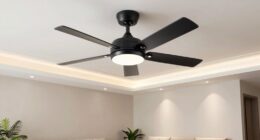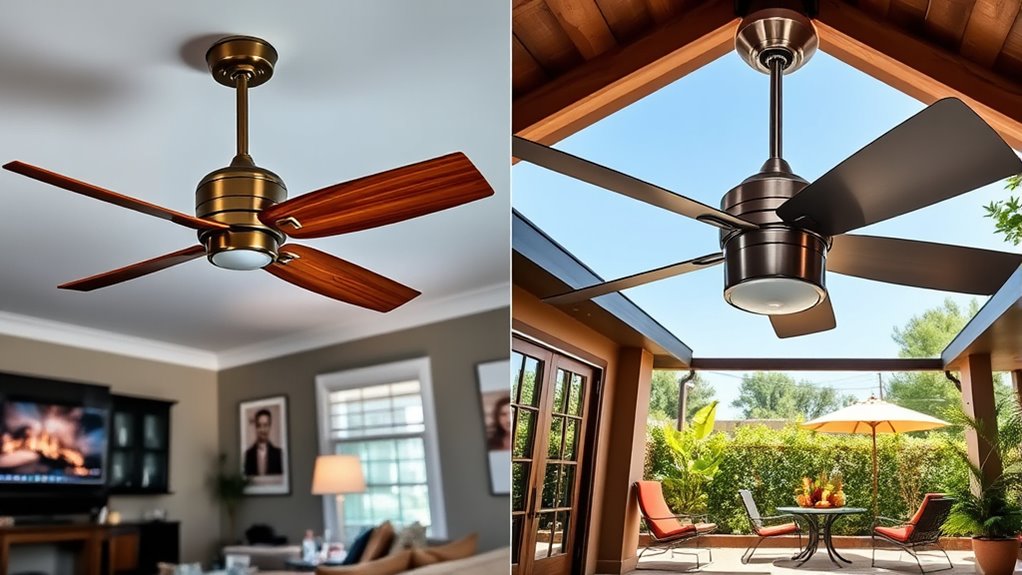

Indoor ceiling fans showcase sleek, minimalist designs with elegant finishes like matte black or brushed nickel, blending seamlessly into modern spaces with subtle lighting and intricate blades. Outdoor fans emphasize durability with weather-resistant materials, bold fixtures, and natural-inspired blades that add personality to patios or gardens. Choosing the right fan reflects your style—whether understated or statement-making. To discover how to perfectly match your space with the ideal fan, explore more about their distinct features and design options.
Key Takeaways
- Indoor fans feature sleek designs with lightweight, non-weatherproof materials, while outdoor fans are built for durability with weather-resistant finishes.
- Outdoor ceiling fans are designed to withstand moisture, UV rays, and harsh weather conditions, unlike indoor fans.
- Indoor fans often include integrated, dimmable lighting to enhance interior decor; outdoor fans may have weatherproof lighting for ambiance.
- Performance-wise, indoor fans operate quietly and optimize airflow for comfort, whereas outdoor fans prioritize durability and weather resistance.
- Aesthetic styles differ: indoor fans complement home decor with minimalist or intricate designs, while outdoor fans add rustic or bold outdoor personality.
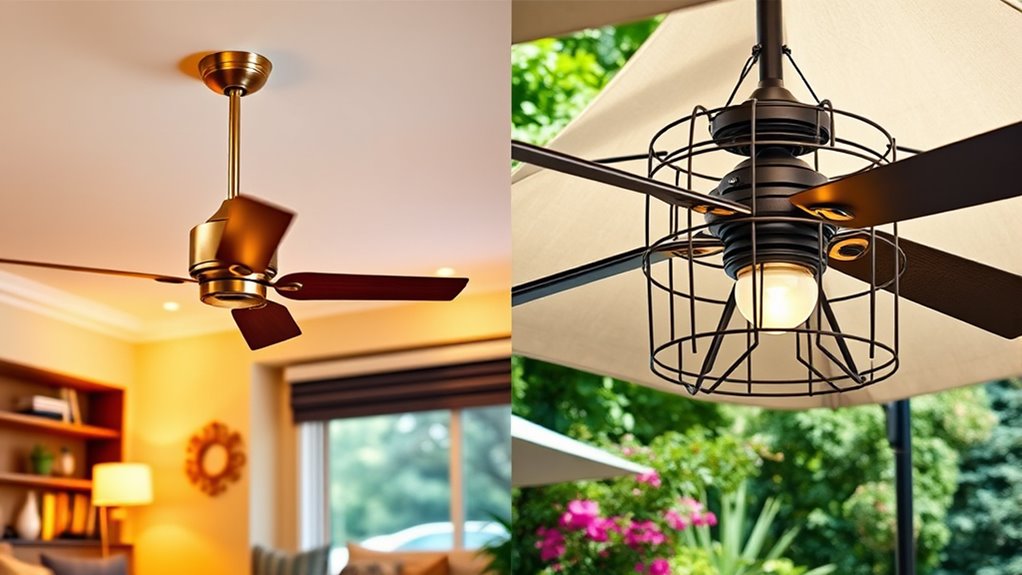
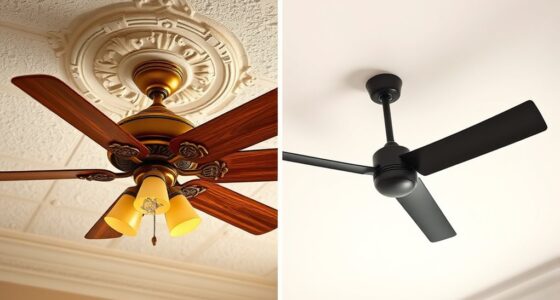
Are you torn between choosing an indoor or outdoor ceiling fan to elevate your space’s style and comfort? The decision hinges on more than just functionality; it’s about creating an aesthetic that complements your environment while ensuring ideal performance. Indoor fans often boast sleek, minimalist designs that blend seamlessly with modern decor, featuring matte finishes, slim profiles, and subtle blades that emphasize elegance. Meanwhile, outdoor fans lean into durability and weather resistance, but today’s designs don’t sacrifice style—expect bold, statement-making fixtures with rustic or industrial touches that add personality to patios or porches.
Indoor fans blend sleek minimalism with elegance; outdoor fans combine durability with bold, stylish statements.
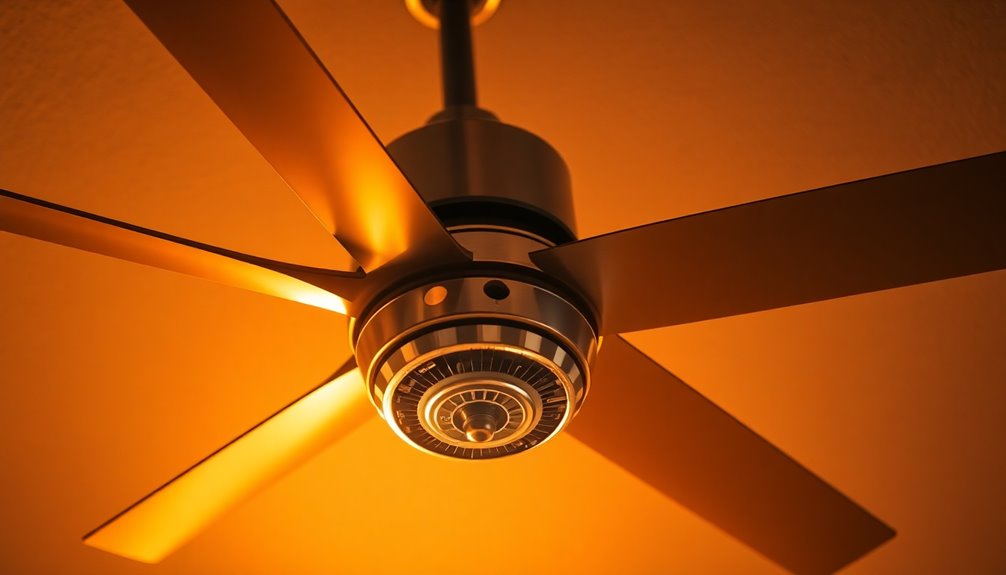
When selecting an indoor ceiling fan, consider the materials and finishes that align with your interior vibe. Matte black, brushed nickel, or antique bronze add a sophisticated touch, while intricate blade designs can serve as focal points in a room. These fans tend to have a quieter operation, emphasizing comfort without distraction, and often come with integrated lighting options that enhance ambient illumination. The aesthetic here is about harmony—complementing your furniture, wall colors, and overall decor to create a cohesive, inviting atmosphere. Additionally, choosing a fan with appropriate blade pitch can improve airflow efficiency and comfort.
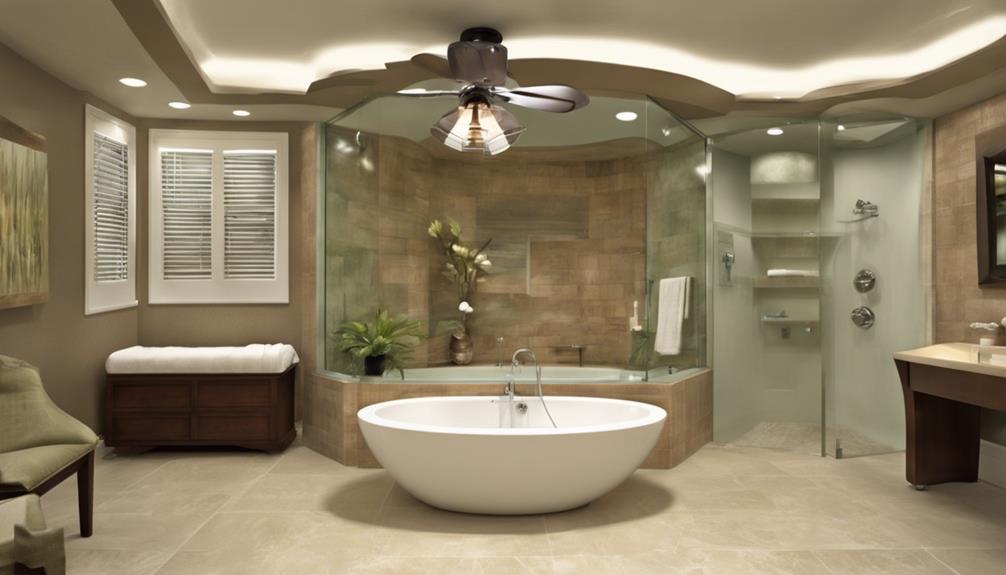
Outdoor ceiling fans, on the other hand, are engineered to withstand the elements, but that doesn’t mean they need to be bulky or uninspired. Today’s outdoor fans feature sleek, stylish designs with durable materials like stainless steel, aluminum, or weather-resistant wood finishes. They add a layer of sophistication to your outdoor living spaces, whether you prefer a coastal, rustic, or contemporary look. Pay attention to the blades’ design—some mimic natural textures like palm leaves or bamboo, adding an organic touch that’s both trendy and functional. The finishes are often vibrant or textured, making them stand out while resisting rust, moisture, and UV damage.
Lighting integration is another detail that can enhance the visual appeal of both indoor and outdoor fans. Indoor fans often have dimmable, energy-efficient LED lights embedded seamlessly into the fixture, emphasizing a clean, modern aesthetic. Outdoor fans also incorporate weatherproof lighting options that cast a warm glow, perfect for evening gatherings or relaxing after sunset. The choice of lighting can dramatically influence the overall vibe, transforming your space into a stylish retreat.
Ultimately, your choice should reflect your personal style and the atmosphere you want to cultivate. Whether you opt for an indoor fan’s understated elegance or an outdoor fan’s rugged sophistication, focus on the details—finishes, blade design, lighting, and materials—that elevate your space’s visual appeal. The right ceiling fan isn’t just a functional addition; it’s a statement piece that complements your aesthetic, making your environment both beautiful and comfortable.
Frequently Asked Questions
Can Outdoor Fans Be Used Indoors Safely?
Yes, outdoor fans can be used indoors safely, but you should consider their design. Outdoor fans are built with rust-resistant materials and sealed motors, making them more durable in humid environments. If you love a sleek, trendy aesthetic, pick models with modern finishes. Just guarantee the fan’s size and style match your space, and check that the motor’s rated for indoor use to avoid any electrical issues.
Which Fan Type Is More Energy-Efficient?
You’ll find that outdoor fans tend to be more energy-efficient because they’re built to withstand weather, often featuring advanced motor technology that conserves power. Indoor fans focus on aesthetic appeal and quiet operation but may lack the energy-saving features of outdoor models. If you prioritize style and eco-friendliness, opt for outdoor fans with modern, sleek designs and energy-efficient ratings—they seamlessly blend function with trendy, minimalist decor.
How Do Maintenance Needs Differ Between Indoor and Outdoor Fans?
You might think outdoor fans are rugged enough for any weather, but their maintenance demands are surprisingly delicate. You’ll need to regularly clean off dirt, dust, and moisture, and check for rust or corrosion that can silently sabotage their beauty and function. Indoor fans, by contrast, stay pristine with minimal effort. So, while outdoor fans dazzle with resilience, they demand a keen eye and routine care to keep their stylish charm alive.
Are Outdoor Fans Quieter Than Indoor Fans?
Outdoor fans generally aren’t quieter than indoor fans because they’re built to withstand weather elements, which can add noise from corrosion-resistant blades and sealed motors. You might notice outdoor fans producing a slightly more robust sound, but many modern designs feature noise-reducing technology. If quiet operation is your priority, look for models specifically designed with sound-dampening features, ensuring a sleek, stylish space without unwanted noise distractions.
What Are the Cost Differences Between Indoor and Outdoor Fans?
Indoor fans typically cost between $50 and $200, while outdoor fans, designed for durability and weather resistance, range from $150 to $400. You’ll notice the price difference due to premium materials like corrosion-resistant blades and sealed motors. If you want a sleek, trend-conscious look that withstands the elements, invest a bit more. Remember, outdoor fans are built to last longer outside, making the higher initial investment worthwhile for stylish, durable design.
Conclusion
Ultimately, choosing between indoor and outdoor ceiling fans is like selecting the perfect accessory for your space — it completes the look and enhances comfort. With their sleek designs and thoughtful features, these fans aren’t just functional; they’re statement pieces that elevate your home’s aesthetic. By matching your fan to your environment, you create a seamless, stylish oasis where comfort flows effortlessly, turning every breeze into a whisper of sophistication that transforms your space into a curated haven.