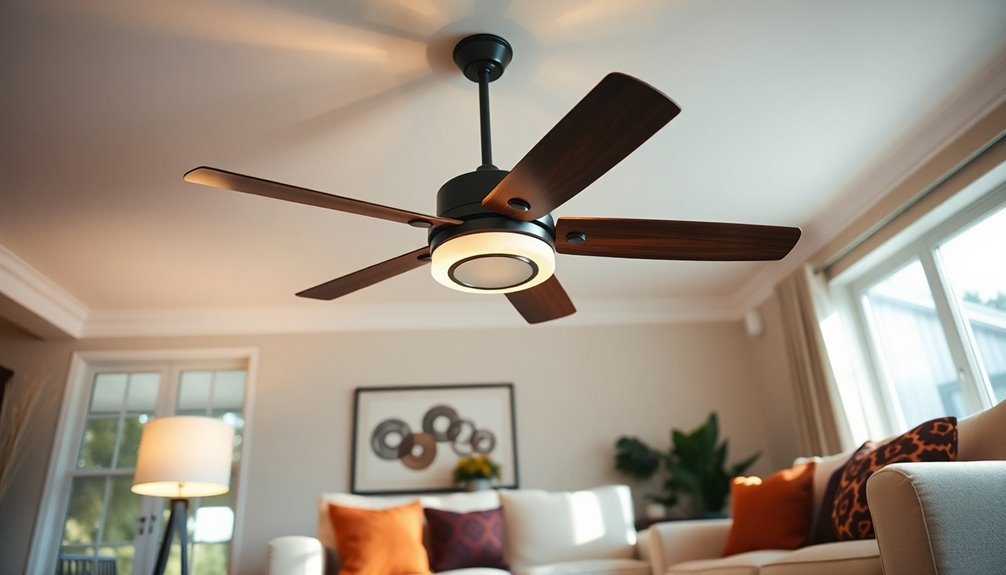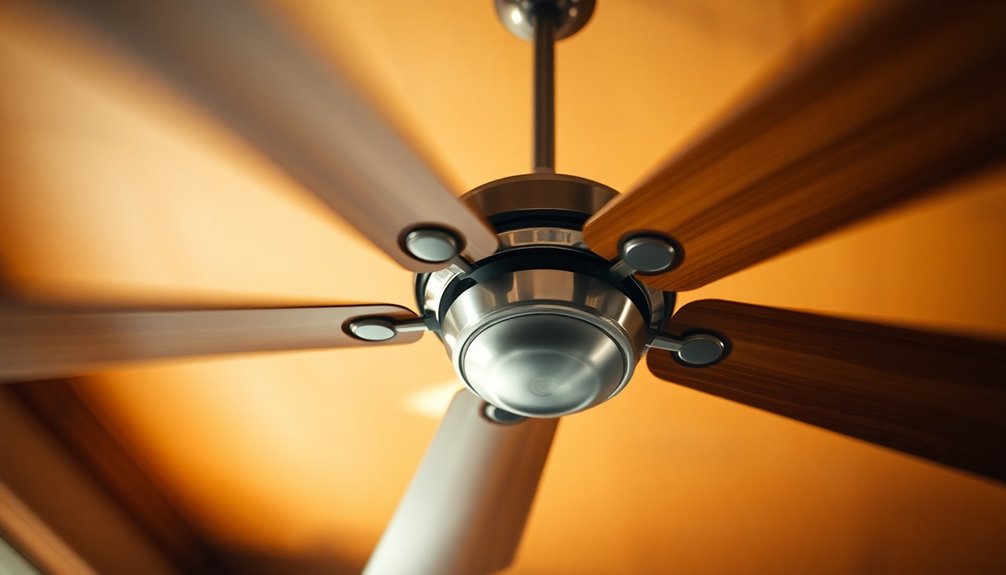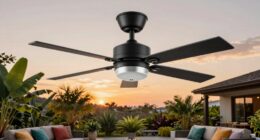
Choosing between indoor and outdoor fans depends on their ratings for weather resistance, durability, and safety. Indoor fans focus on stylish design and quiet operation, while outdoor fans are built to withstand rain, humidity, and wind. Using the wrong type can lead to damage or safety hazards. Make sure you select the right rating for your environment to get ideal performance and longevity. Keep exploring to discover how to make the best choice for your space.
Key Takeaways
- Indoor fans prioritize aesthetics, quiet operation, and interior compatibility, while outdoor fans emphasize weather resistance and durability against elements.
- Using an indoor fan outdoors can lead to damage and safety risks, whereas outdoor fans are unsuitable for indoor environments due to noise and style.
- Proper rating ensures fans are suitable for their environment, maximizing safety, longevity, and performance.
- Outdoor fans feature weatherproof materials like stainless steel and treated wood, unlike indoor fans which use lighter, decorative finishes.
- Matching the fan type to the environment prevents performance issues and extends the lifespan of your fan investment.
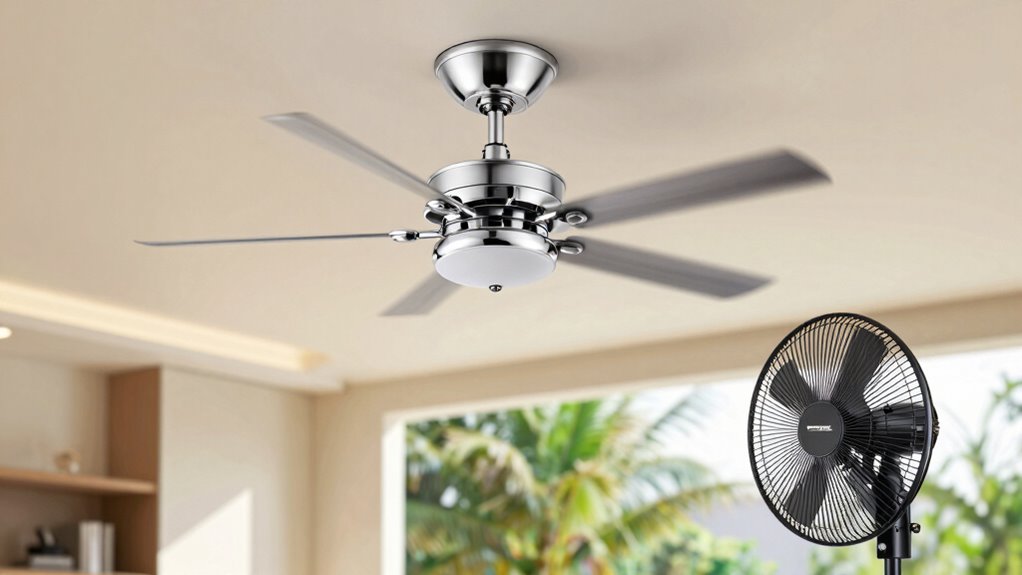
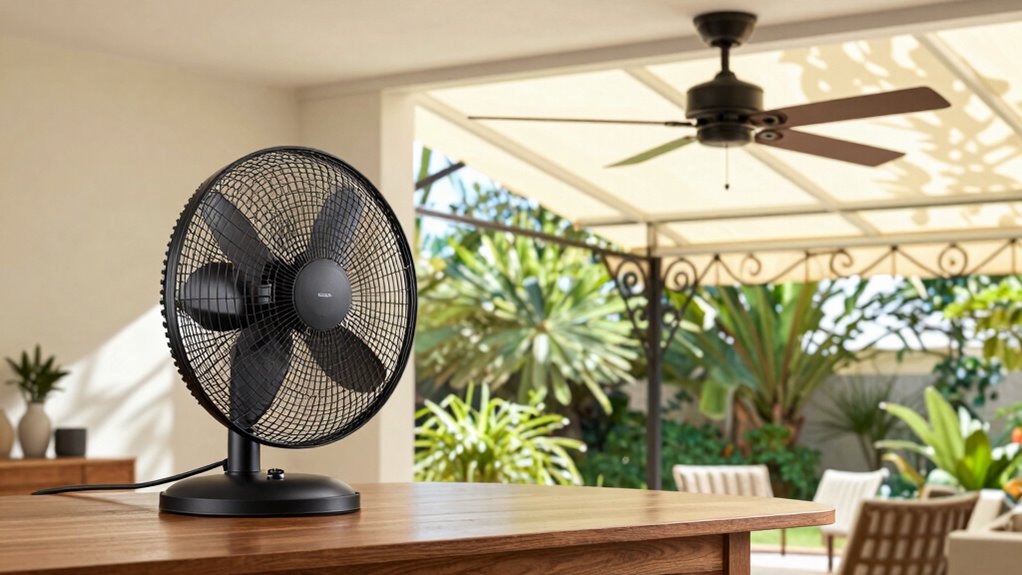
Are indoor and outdoor fans truly interchangeable, or do they serve different purposes? The answer largely depends on what you’re trying to achieve with your space. While both types of fans circulate air and offer relief from heat, they’re designed with distinct features that make each suitable for specific environments. When considering ceiling fan styles, you might notice that indoor fans come in a broad array of designs—from sleek modern looks to traditional chandeliers. These styles are crafted to complement your interior decor, often prioritizing aesthetics just as much as functionality. Outdoor fans, on the other hand, emphasize durability. They’re built to withstand the elements—rain, humidity, and even wind—so their outdoor fan durability is a key factor. You won’t want to use an indoor ceiling fan outside because it simply isn’t made to handle exposure to moisture or harsh weather conditions.
Indoor fans generally feature lighter materials and more refined finishes, aiming to blend seamlessly into your living space. They’re often quieter and designed to complement a cozy or elegant environment. Outdoor fans, however, are constructed with weather-resistant materials like stainless steel, treated wood, or corrosion-proof finishes to ensure they last through the elements. Their blades are typically more robust, sometimes with larger or specially coated surfaces to resist moisture and prevent warping or rust. When choosing between the two, you should consider where you plan to install the fan. Using an indoor fan outdoors could lead to premature wear or failure, especially if exposed to rain or high humidity. Conversely, an outdoor fan isn’t suitable for indoor spaces because it might be noisier and less aesthetically aligned with indoor decor. Additionally, understanding the weather resistance of each fan type helps ensure longevity and safety.
The key distinction is that outdoor fans are engineered for durability and resilience, while indoor fans focus more on style and quiet operation. Not only does this influence how long each will last, but it also impacts the overall safety and effectiveness of your cooling setup. If you try to use an indoor fan outside, you risk damaging it and possibly creating safety hazards. Conversely, selecting an outdoor fan for indoor use might result in unnecessary noise and a style mismatch. As a result, getting the rating right means understanding your environment and matching it with the appropriate fan type. To conclude, indoor and outdoor fans aren’t truly interchangeable—they serve different purposes rooted in their design and construction. Picking the right fan ensures you get maximum comfort, longevity, and style, no matter where you install it.
Indoor ceiling fans with quiet operation
As an affiliate, we earn on qualifying purchases.
As an affiliate, we earn on qualifying purchases.
Frequently Asked Questions
Can Outdoor Fans Be Used Indoors Safely?
Outdoor fans can be used indoors safely if you pay attention to fan safety and placement considerations. Make sure the outdoor fan has a suitable IP rating for indoor use, which indicates resistance to dust and moisture. Proper placement away from water sources and high humidity areas is essential. Always follow the manufacturer’s instructions to guarantee safe operation, and avoid using outdoor fans in enclosed spaces with poor ventilation.
How Do Weather Conditions Affect Outdoor Fan Durability?
Weather conditions considerably impact outdoor fan durability; in fact, harsh weather can reduce lifespan by up to 50%. You should look for fans with high corrosion resistance and wind resistance, especially if you face storms or heavy rain. Strong winds can loosen parts or cause damage, while corrosion from moisture can weaken components. Protect your investment by choosing fans rated for your specific weather conditions, ensuring longevity and reliable performance.
Are There Energy Efficiency Differences Between Indoor and Outdoor Fans?
Indoor fans generally use less power, making them more energy-efficient for everyday use, helping you save on energy costs. Outdoor fans often have higher power consumption due to their robust construction and larger size, which can lead to increased energy use. If you’re aiming for energy savings, choose a fan designed for your specific environment, ensuring it balances power consumption with performance to optimize efficiency and reduce your electricity bills.
What Maintenance Is Required for Outdoor Fans?
You need to regularly clean outdoor fan blades, especially if they’re made of metal or plastic, to prevent dust buildup. Check the motor protection features and make sure vents are clear to avoid overheating. Inspect the blade materials for corrosion or damage, and tighten any loose fittings. Proper maintenance keeps your outdoor fan functioning efficiently and extends its lifespan, especially in harsh weather conditions.
Can Indoor Fans Withstand High Humidity Levels?
Indoor fans generally can’t withstand high humidity levels unless they’re specifically designed for it. Look for fans with good humidity resistance and corrosion protection to guarantee durability in moist environments. If you need a fan for a humid space, choose one labeled for high humidity or with corrosion-resistant parts. This way, you prevent rust and damage, keeping your fan running smoothly and effectively.
Outdoor weatherproof ceiling fans
As an affiliate, we earn on qualifying purchases.
As an affiliate, we earn on qualifying purchases.
Conclusion
So, next time you’re choosing a fan, remember that the right one can unexpectedly make your space feel cooler and more comfortable—almost like it was meant to be. Whether it’s an indoor breeze or an outdoor gust, getting the rating right isn’t just about specs; it’s about coincidence, comfort, and making your environment just right. Sometimes, the perfect fan finds you when you least expect it, turning everyday moments into a gust of fresh air.
Rust-resistant outdoor ceiling fans
As an affiliate, we earn on qualifying purchases.
As an affiliate, we earn on qualifying purchases.
Decorative indoor ceiling fans
As an affiliate, we earn on qualifying purchases.
As an affiliate, we earn on qualifying purchases.