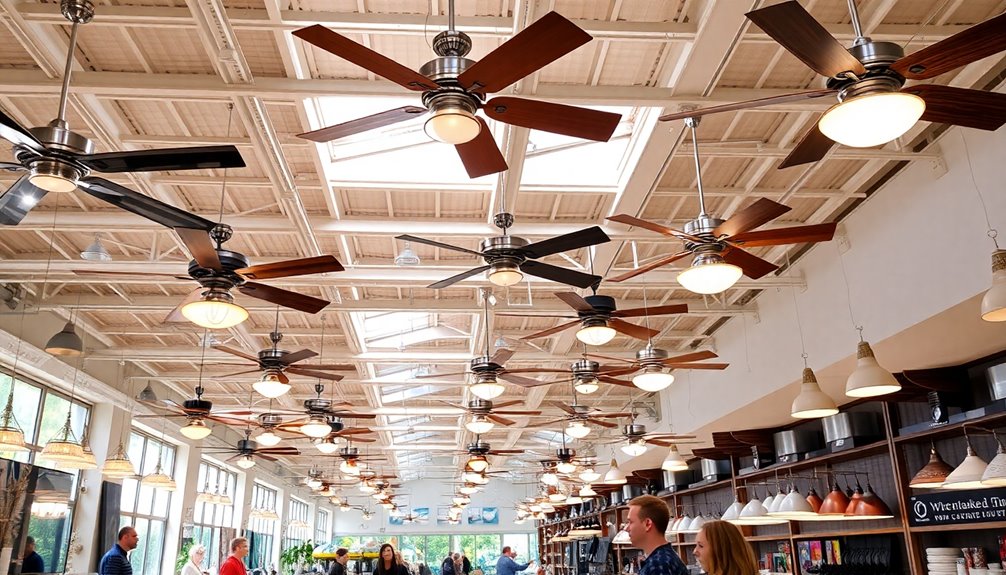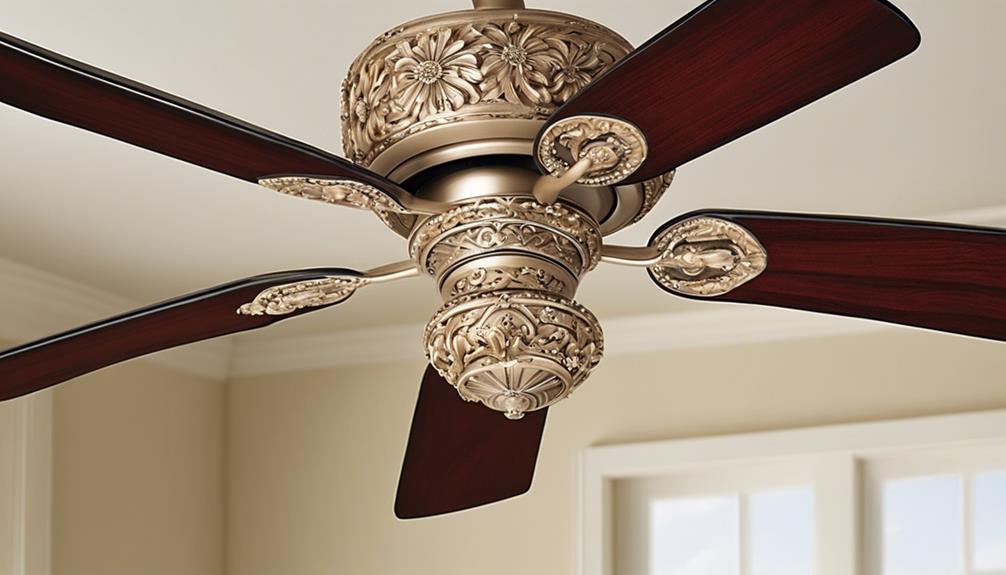
A ceiling fan usually uses between 50 to 100 watts, with an average of 75 watts. When you run a 75-watt fan for about six hours a day, it consumes roughly 0.45 kWh. This amounts to a daily cost of about $0.05, leading to an annual expense of around $18.25. If you choose an energy-efficient fan, like those with BLDC motors, you could cut that wattage down to about 35 watts. By knowing these details, you can better manage your electricity usage. There's plenty more to explore about maximizing efficiency and saving costs.
Key Takeaways
- Ceiling fans typically consume between 50 and 100 watts, with an average wattage of 75 watts.
- Running a 75-watt fan for 6 hours daily results in approximately 0.45 kWh of energy usage.
- The annual cost of operating a 75-watt ceiling fan for 6 hours daily is roughly $18.25.
- Energy-efficient fans with BLDC motors can operate on as little as 35 watts, offering significant savings.
- Factors like fan size, speed settings, and room insulation impact overall energy consumption and efficiency.

Minislak 72 Inch Ceiling Fan with Light,Industrial Ceiling Fan with 8 Black Aluminium Blades,Smart Fan Compatible with Alexa,Garage Outdoor Indoor Fan for Patio and Living Room
Why Choose Minislak Ceiling Fan? With over 20 years of experience in HVLS fan design,Minislak Ceiling Fan uses…
As an affiliate, we earn on qualifying purchases.
As an affiliate, we earn on qualifying purchases.
Ceiling Fan Energy Consumption

When you consider a ceiling fan's energy consumption, you'll find that it typically uses between 50 to 100 watts per hour, with most standard models averaging around 75 watts.
This ceiling fan wattage means that if you run a 75-watt fan for 6 hours daily, your electricity consumption reaches approximately 0.45 kWh, costing around $0.054 each day. Over a year, you'll spend about $18.25 solely on operating that fan.
If you're looking to save on fan costs, consider energy-efficient ceiling fans equipped with BLDC motors.
These models can drastically cut electricity usage, sometimes drawing only 35 watts compared to conventional fans. Running an energy-efficient ceiling fan for 8 hours daily typically results in an annual cost of about $18.77, which is quite economical compared to air conditioners.

Ensenior Ceiling Fans with Lights and Remote, 20'' Low Profile Ceiling Fan Flush Mount, APP Control, 6 Speed, 3CCT, Quiet Reversible DC Motor, Dimmable Modern Ceiling Fan with Light for Bedroom, Black
Designed for Low Ceilings & Bright Illumination – Unlike bulky fans that hang too low, this 20 inch…
As an affiliate, we earn on qualifying purchases.
As an affiliate, we earn on qualifying purchases.
Cost Comparison With Other Appliances

Ceiling fans stand out as a cost-effective cooling solution compared to other appliances.
When you consider the energy usage, a ceiling fan typically consumes around 75 watts, while an air conditioner can use up to a staggering 3,500 watts! This massive difference in power consumption translates directly to your electricity cost. Understanding the refrigeration cycle can help you appreciate how efficient cooling systems work alongside fans to mitigate energy usage. Additionally, using a ceiling fan can help maintain optimal color temperature for better visual comfort during movie nights.
Running a ceiling fan for 8 hours a day costs you about $0.05, whereas an efficient window air conditioner could rack up around $81.50 annually. Additionally, using ceiling fans in conjunction with geothermal heat pumps can further enhance energy efficiency and cost savings during hot weather.
If you opt for an Aeratron fan, known for its energy-efficient design, you'll only spend about $8 per year, thanks to its low power usage of 16.2 watts.
Standard box fans are slightly more expensive, using between 60 to 110 watts, resulting in an annual cost of $30 to $54.
Even tower fans like the Lasko model, which operates at 48 watts, will cost you about $24 per year.

52 Inch Ceiling Fans with Lights, Remote Control, 3CCT, Dimmable&Adjustable Wind Speed, Timer Function, Reversible, Quiet, Energy-Saving Ceiling Fan with Light for Bedroom, Living Room Indoor/Outdoor
Handheld Remote Control: Take full control of your ceiling fan with light using the included handheld remote. Easily…
As an affiliate, we earn on qualifying purchases.
As an affiliate, we earn on qualifying purchases.
Factors Affecting Energy Efficiency

Several factors can greatly impact the energy efficiency of your ceiling fan. Understanding these elements can help you make the most of your fan while minimizing electricity consumption. Here are three key factors to take into account:
- Wattage: The wattage of your ceiling fan typically ranges from 50 to 100 watts. A higher wattage means more power consumption, so choosing a fan with lower wattage can enhance energy efficiency.
- Size: Larger fans often consume more electricity than smaller ones. For instance, a 52-inch fan usually uses about 90 watts, whereas a 30-inch fan might consume around 100 watts. Opt for a fan size that fits your room to guarantee peak performance.
- Speed Settings: The speed settings on your fan can also affect energy usage. Running your fan at higher speeds increases wattage consumption. Think about using lower speeds for energy savings while maintaining comfort.
Additionally, the quality of your fan's components and the insulation of your room play significant roles in overall energy efficiency.

Passky Ceiling Fans with Lights, 52 inch Sleek Ceiling Fan with Light and Remote Control, 3CCT, Dimmable, Reversible, Noiseless, Black Ceiling Fan for Bedroom, Living Room
Ceiling Fan with Light: Passky ceiling fan with light, pass the breeze, light you sky. Our 52 inch…
As an affiliate, we earn on qualifying purchases.
As an affiliate, we earn on qualifying purchases.
Calculating Your Fan's Power Usage

Understanding how to calculate your ceiling fan's power usage can help you manage energy costs effectively. To start, identify your fan's wattage, which typically ranges from 50 to 100 watts, with an average around 75 watts.
Once you have that number, you can calculate energy usage by multiplying the wattage by the number of hours you use the fan each day. Then, divide that total by 1,000 to convert it to kilowatt-hours (kWh).
For example, if you run a 75-watt ceiling fan for 6 hours a day, you'd calculate: 75 watts × 6 hours = 450 watt-hours, which converts to 0.45 kWh.
With an average electricity rate of $0.10 per kWh, this costs you about $0.045 per day. Over a year, operating your fan for 6 hours daily would result in an annual cost of roughly $18.25.
This makes your ceiling fan a cost-effective cooling option compared to air conditioning. Always check your fan's labeling or user manual for precise wattage to guarantee accurate calculations of your energy usage and costs.
Tips for Reducing Energy Costs

Reducing energy costs while using your ceiling fan is both simple and effective. By implementing a few strategies, you can maximize your fan's efficiency and enjoy significant savings on your electricity bills.
- Choose Energy Star-rated models: These ceiling fans are 60% more efficient than standard ones, meaning lower energy usage and reduced costs over time. This increased efficiency is comparable to the benefits of energy-efficient heat pumps that lower operational costs. Additionally, using an energy-efficient system can ensure a more sustainable approach to home heating and cooling. HEPA filters can also improve indoor air quality, making your home more comfortable while using cost-effective cooling solutions. Furthermore, selecting energy-efficient appliances promotes sustainable living by reducing overall household energy consumption.
- Turn off the fan when you leave: It may seem small, but turning off your fan can save you about $0.09 daily. That adds up to nearly $32.85 a year!
- Adjust your thermostat: By raising your thermostat by just 4°F while your fan is running, you can stay comfortable and save even more on cooling costs. This is similar to how heat pumps utilize the refrigeration cycle to maintain comfortable temperatures efficiently.
Regular maintenance is essential for peak performance. Clean your fan blades and check for balance to guarantee efficient operation. Routine maintenance, just like with heat pumps, can significantly enhance overall system performance.
Finally, selecting the right size fan for your room can minimize energy usage while maximizing airflow. Larger fans generally consume more watts, so pick one that fits your space well.
With these tips, you'll effectively reduce energy costs and enjoy the benefits of your ceiling fan.
Frequently Asked Questions
How Much Does It Cost to Run a Ceiling Fan 24 Hours a Day?
If you run a ceiling fan for 24 hours a day, it'll cost you about $0.18 daily, based on an average electricity rate of $0.10 per kWh.
Over a month, that adds up to around $5.40.
Annually, you're looking at approximately $65.70.
Compared to an air conditioner, which can run you $1.20 or more hourly, using a ceiling fan is a much more economical choice for cooling your space.
Do Ceiling Fans Use a Lot of Electricity?
You might be surprised to learn that ceiling fans don't use a lot of electricity. Typically, they consume between 50 to 100 watts per hour, with an average of around 75 watts.
This means running a ceiling fan for several hours each day costs you only a few dollars a month.
Compared to air conditioners, which can drain up to 3,500 watts, ceiling fans are a much more energy-efficient way to stay cool.
Can Ceiling Fans Cause a High Electric Bill?
Ceiling fans are like a gentle breeze on a hot day, but can they inflate your electric bill? The answer's no, not greatly.
They typically consume between 50 to 100 watts, making them far more energy-efficient than air conditioners. If you run yours regularly, it'll add only a modest amount to your bill.
Are Ceiling Fans Expensive to Run?
No, ceiling fans aren't expensive to run. They typically use between 50 to 100 watts per hour, which is much less than air conditioners.
For just $0.09 a day, you can keep your fan running for 12 hours. If you choose an energy-efficient model, you could even save more.
In comparison to other appliances, fans are one of the most economical options for keeping your space comfortable without breaking the bank.
Conclusion
To sum up, understanding how much electricity your ceiling fan uses can save you money and keep you comfortable. Think of it this way: a ceiling fan typically costs less to run than a light bulb! By being mindful of its energy consumption and implementing a few simple tips, you can enjoy a breezy atmosphere without breaking the bank. So, why not give your ceiling fan the attention it deserves and watch your energy bills drop?