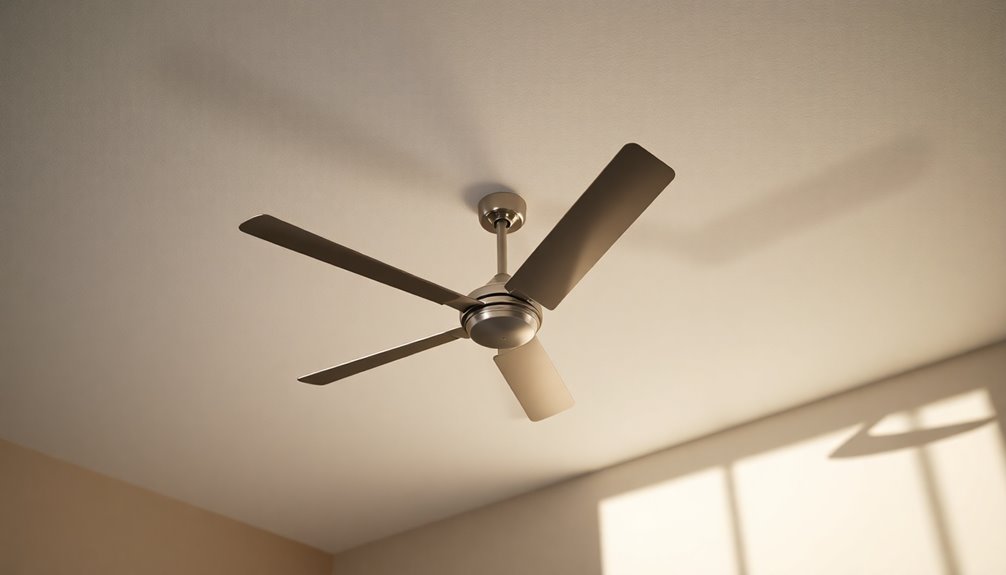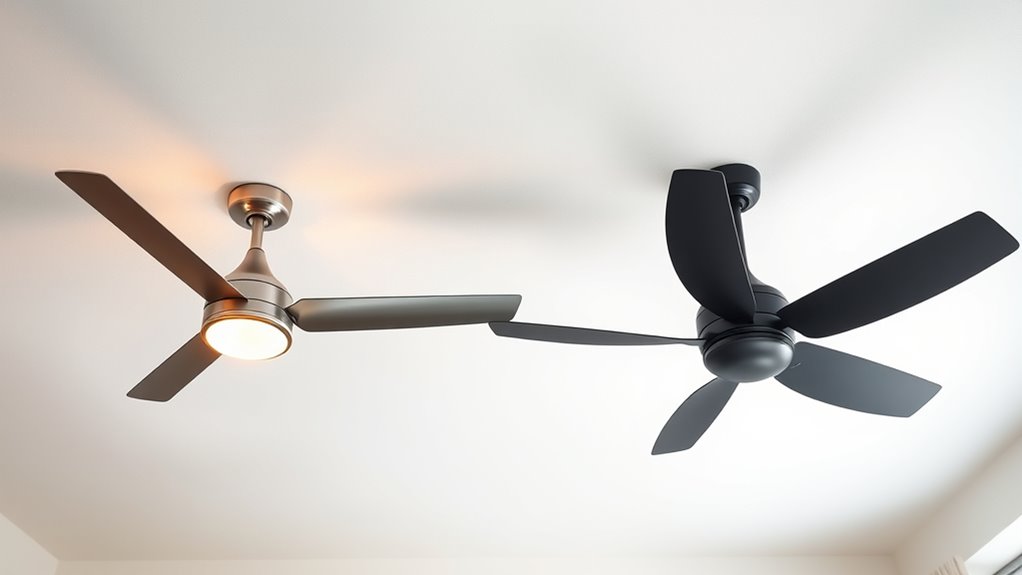

DC motor ceiling fans use direct current with electronic control, offering higher efficiency, variable speeds, and smoother operation, which can save energy and extend lifespan. AC motor fans rely on alternating current with simpler design, making them more affordable and durable but less efficient and less flexible in control. Understanding these technical differences helps you choose a fan that balances cost, energy savings, and performance. Exploring further reveals how each type suits different needs and environments.
Key Takeaways
- DC motor fans are more energy-efficient, consuming 30-50% less power than AC motor fans for similar airflow.
- DC fans offer precise speed control and smoother operation, ideal for customized airflow management.
- AC motor fans are generally cheaper, simpler, and more durable, suitable for basic cooling needs.
- DC motors involve higher initial costs and maintenance due to electronic components, unlike the straightforward design of AC motors.
- The choice depends on prioritizing energy savings and advanced control (DC) versus affordability and robustness (AC).

When choosing a ceiling fan, understanding the differences between DC and AC motors is essential for making an informed decision. The core distinction lies in how each motor type converts electrical energy into mechanical motion. AC motors operate using alternating current supplied directly from the power grid, which creates a magnetic field oscillating at a fixed frequency. In contrast, DC motors utilize direct current, often derived from an internal power supply or battery, and employ electronic commutation to produce a rotating magnetic field. This fundamental difference influences not only the design but also the efficiency, control, and overall performance of the fan.
DC motors are known for their high efficiency and energy conservation. They typically consume about 30-50% less power than AC motors for the same airflow, primarily because of their more precise control over motor speed and torque. The electronic circuitry in DC fans allows for variable speed settings and smoother operation, which translates into less energy waste. This efficiency benefit becomes particularly evident over prolonged usage, where the savings on electricity can be significant. Additionally, DC motors generate less heat during operation, contributing to their longevity and reducing the risk of overheating-related failures.
DC motors consume 30-50% less power, offering greater efficiency and longer lifespan.
From a control perspective, DC motors offer superior flexibility. They can be easily integrated with advanced control systems, including remote controls and smart home interfaces, facilitating seamless regulation of fan speed and oscillation. This level of control is less straightforward with AC motors, which typically rely on mechanical or simpler electronic switches for speed adjustments. As a result, users experience more precise and consistent airflow management with DC-powered fans, enhancing comfort and energy efficiency.
However, the electronic components required for DC motors introduce a higher initial cost and increased complexity in manufacturing and repair. The power electronics and control modules tend to be more sensitive to voltage fluctuations and power surges, necessitating higher-quality wiring and potentially more maintenance over time. Conversely, AC motors are simpler in design, with fewer electronic parts, which generally makes them more affordable upfront and easier to service. They tend to be more robust in environments with unstable power supplies but lack the fine-tuned control and efficiency advantages offered by DC motors.
In essence, when evaluating these two motor types, you need to weigh your priorities—whether you value energy savings, advanced control, and longevity, which favor DC motors, or prefer a more straightforward, cost-effective solution with proven reliability, which aligns with AC motors. Understanding these technical nuances will help you select a ceiling fan that best fits your needs, balancing performance, cost, and long-term value.
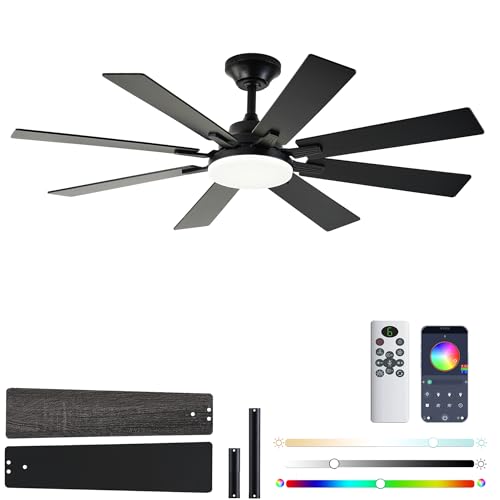
LSPMKE Ceiling Fans with Lights, 52 Inch Ceiling Fan with Light and Remote Control, Reversible DC Motor, 3CCT, Dimmable, Timer, Noiseless, Black Ceiling Fan for Bedroom Living Room, Indoor/Outdoor Use
Practical meets decorative – 52 inch ceiling fan with light and 8 double-sided fan blades, greater airflow. Acrylic…
As an affiliate, we earn on qualifying purchases.
As an affiliate, we earn on qualifying purchases.
Frequently Asked Questions
Which Motor Type Is More Environmentally Friendly?
You’ll find DC motors more environmentally friendly because they consume less energy, reducing your carbon footprint. Their higher efficiency means they convert more electrical energy into mechanical power with less waste heat. Additionally, DC fan motors often have longer lifespans and require fewer replacements, decreasing electronic waste. This combination of energy savings and durability makes DC motor ceiling fans a sustainable choice, aligning with eco-conscious values and reducing overall environmental impact.
How Does Motor Type Affect Noise Levels?
When it comes to noise levels, the motor type makes a noticeable difference. You’ll find that DC motors operate more quietly because they use advanced electronics for smoother starts and stops, reducing vibrations. In contrast, AC motors tend to produce more noise due to their mechanical components and higher operational vibrations. To keep noise at bay, opting for a DC motor ceiling fan is like hitting two birds with one stone—quiet and efficient.
Are DC Fans Safer Than AC Fans?
Yes, DC fans are generally safer than AC fans due to their lower voltage operation, reducing electrical shock risks. They also incorporate advanced electronic controls, minimizing potential malfunctions. However, proper installation and adherence to electrical standards are vital for both types. While DC fans often have better safety features, neither is inherently dangerous if installed correctly. Always guarantee professional installation and regular maintenance for maximum safety.
Can DC Fans Be Used Outdoors?
Yes, DC fans can be used outdoors if they’re specifically rated for outdoor environments. You need to affirm they have proper weatherproofing, such as sealed motors and corrosion-resistant materials, to withstand moisture and temperature changes. Outdoor-rated DC fans offer energy efficiency and quiet operation. However, using indoor models outdoors may pose safety risks and reduce lifespan due to exposure to elements. Always verify the product’s IP rating before installation.
Do Motor Types Influence Fan Lifespan?
Yes, motor types influence fan lifespan. DC motors typically last longer due to their brushless design, reducing wear and tear over time. Conversely, AC motors may have a shorter lifespan because of brushes and slip rings that experience more friction and degradation. Your choice of motor impacts durability, maintenance needs, and efficiency, so selecting a high-quality DC motor can extend your fan’s operational life and reduce replacement costs.

Ohniyou Ceiling Fans with Lights, 52'' Low Profile Ceiling Fan with Light and Remote/APP Control, Modern Flush Mount Ceiling Fan for Indoor Bedroom Living Room, Dimmable, Qiuet DC Motor, Black
Smart Ceiling Fans with APP & Remote Control: This modern ceiling fan with lights has all functions controllable…
As an affiliate, we earn on qualifying purchases.
As an affiliate, we earn on qualifying purchases.
Conclusion
Ultimately, choosing between a DC and AC motor ceiling fan profoundly impacts your comfort and energy efficiency. A DC motor fan delivers astonishingly lower power consumption while providing near-silent operation, transforming your space into a blissful oasis. Conversely, an AC motor fan, though reliable, consumes markedly more energy and produces noticeable noise. Making the right choice isn’t just a decision—it’s a strategic move towards maximum efficiency and unparalleled comfort, revolutionizing your indoor environment in ways you never imagined possible.
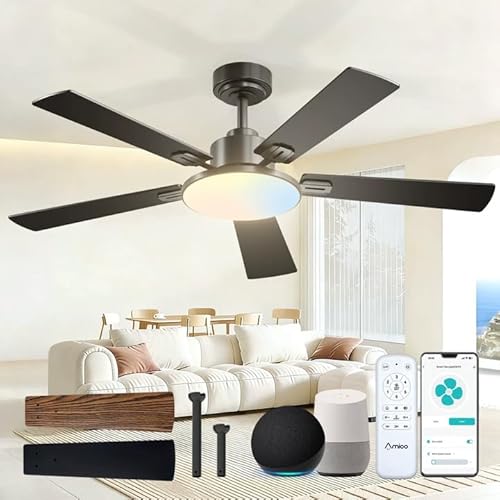
Amico Ceiling Fans with Lights, 52 inch Smart Ceiling Fan with Remote/APP/Alexa Control, Downrod Mount, Reversible DC Motor, 5 Blades, 6 Speeds, 3CCT, Dimmable, Noiseless, Bedroom, Living Room, Black
Smart Ceiling Fan with Lights and remote: This 52 inch ceiling fan with light features a downrod ceiling…
As an affiliate, we earn on qualifying purchases.
As an affiliate, we earn on qualifying purchases.
Ohniyou Ceiling Fans with Lights, 52'' Low Profile Ceiling Fan with Light and Remote/APP Control, Modern Flush Mount Ceiling Fan for Indoor Bedroom Living Room, Dimmable, Qiuet DC Motor, Black
Smart Ceiling Fans with APP & Remote Control: This modern ceiling fan with lights has all functions controllable…
As an affiliate, we earn on qualifying purchases.
As an affiliate, we earn on qualifying purchases.