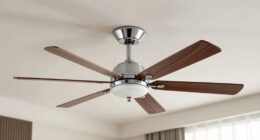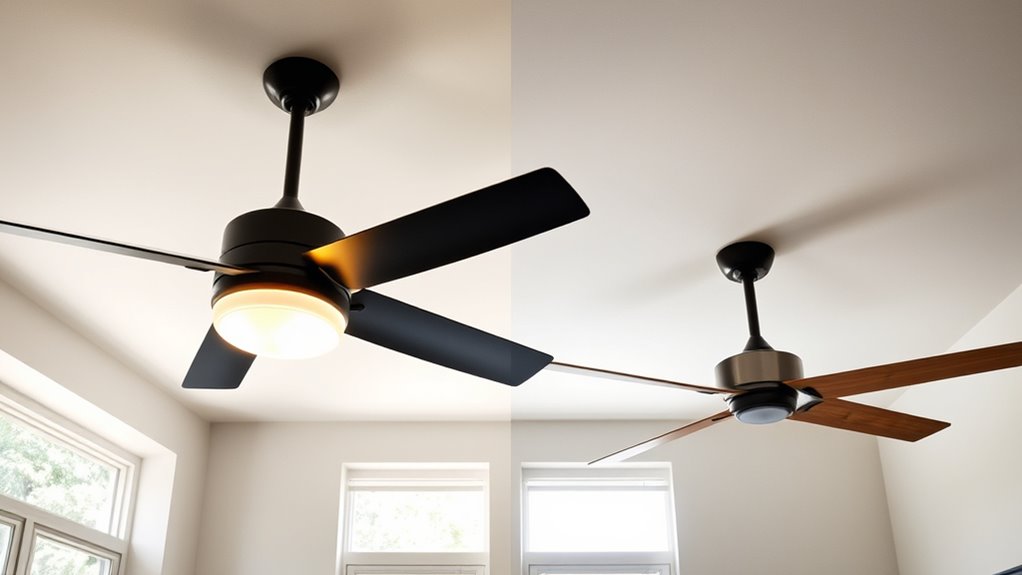

When selecting between ceiling fans with or without lights, consider your wiring capabilities and aesthetic preferences. Integrated lighting requires precise electrical wiring, compatible fixtures, and may limit future upgrades, while fans without lights offer simplicity and ease of maintenance. Evaluate your primary need for illumination and whether a dedicated fixture better suits your decor. Understanding these technical factors ensures ideal function and style; exploring further reveals how to balance current needs with long-term flexibility.
Key Takeaways
- Consider if integrated lighting meets your primary lighting needs or if separate fixtures offer better flexibility.
- Evaluate the installation complexity and compatibility with your existing electrical system.
- Decide if aesthetic harmony and space constraints favor a fan with integrated lighting or a separate fixture.
- Think about maintenance ease; standalone lights are typically easier to replace or upgrade.
- Assess your long-term preferences for lighting style, brightness, and potential future upgrades.
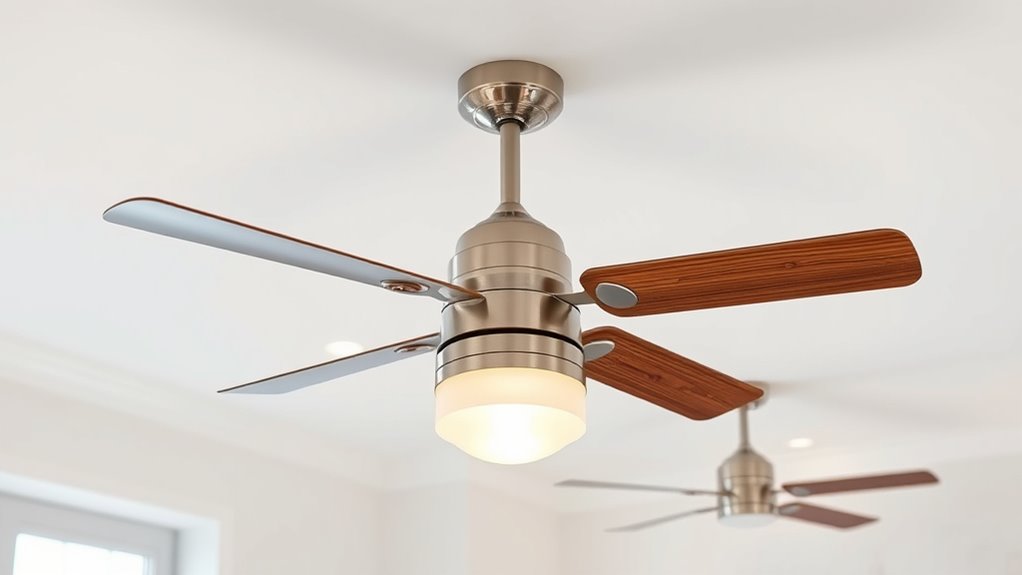
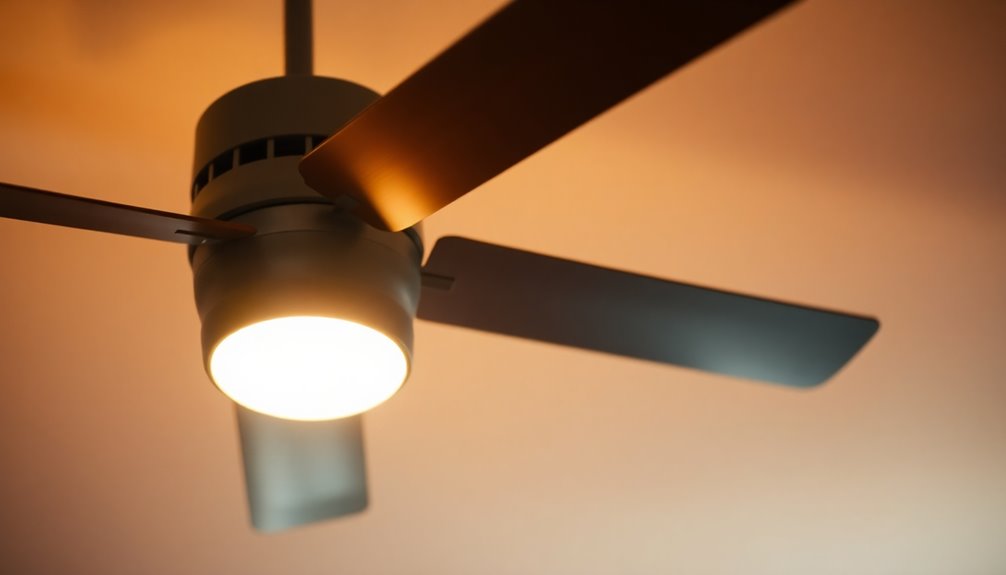
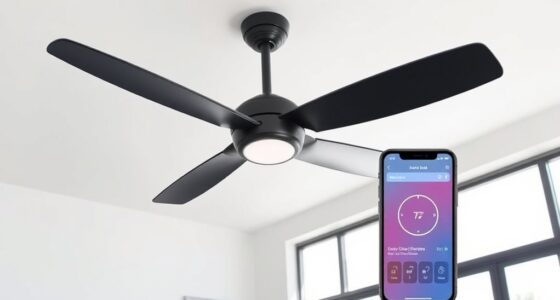
When selecting a ceiling fan, deciding whether to opt for a model with integrated lighting or a standalone unit without lights hinges on both functional requirements and aesthetic preferences. From a technical perspective, integrating lighting into a ceiling fan necessitates careful consideration of electrical wiring, fixture placement, and compatibility with existing electrical systems. Fans with built-in lights typically include a dedicated wiring harness that connects to the main power supply, often requiring a separate switch or control module to manage the fan and light functions independently or simultaneously. Confirm your electrical system can accommodate these connections, especially if retrofitting an existing fixture. The lighting component itself usually employs LED, incandescent, or CFL bulbs, with LED options preferred for energy efficiency and longevity. The fixture’s design must also account for heat dissipation, especially with enclosed or semi-enclosed light housings, to prevent overheating and ensure safety. Additionally, it’s important to verify that the lighting fixture is compatible with your preferred bulbs and meets your brightness requirements.
Integrating lighting into ceiling fans requires careful wiring, fixture design, and compatibility with existing electrical systems.
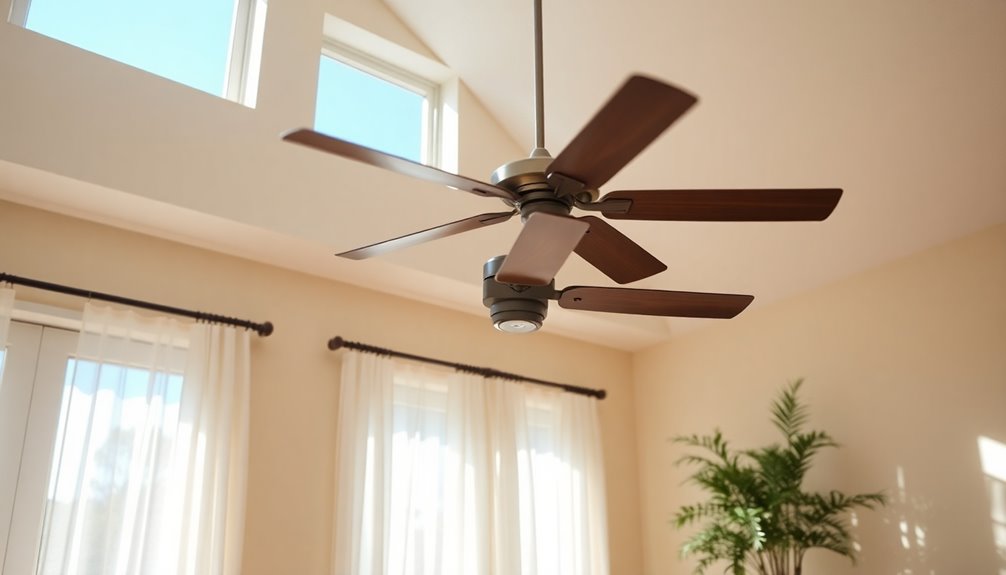
From an aesthetic and functional standpoint, integrated lighting units influence the overall visual harmony of a space. Their design should complement the ceiling fan’s blades, motor housing, and room decor. Pay attention to the fixture’s size, shape, and finish, ensuring they align with your interior style without overwhelming the space. A well-designed integrated light can serve as both a functional illumination source and a decorative element, but it may also limit future lighting flexibility. If your lighting needs evolve or if you prefer different bulbs or fixtures, a standalone fan with a separate light fixture offers greater customization. You can select a fan that suits your airflow requirements independently of your lighting choices, allowing for more precise control over light distribution and ambiance.
In terms of maintenance, integrated lighting units are generally more streamlined but can complicate bulb replacement or repairs. Access to the light fixture may require removing the fan housing, and some models include sealed or integrated LED modules that are not user-serviceable. Conversely, standalone light fixtures are often easier to replace or upgrade, providing longevity and adaptability. When considering energy consumption, integrated lighting can add to the overall power draw, especially if the lighting isn’t energy-efficient. You should evaluate the lumen output, bulb efficiency, and whether the integrated lighting meets your room’s illumination needs. If lighting is secondary to airflow, a fan without lights might be a more practical choice, reducing complexity and potential points of failure.
Ultimately, your decision should balance these technical considerations with your aesthetic desires and functional priorities, ensuring you select a ceiling fan that integrates seamlessly into your space while fulfilling your lighting and airflow needs effectively.

Amico Ceiling Fans with Lights, 42 inch Low Profile Ceiling fan with Light and Remote Control, Flush Mount, Reversible, 3CCT, Dimmable, Noiseless, Black Ceiling Fan for Bedroom, Indoor/Outdoor Use
Ceiling Fan with Light: Decorate your home with Amico ceiling fan! While bringing you coolness and comfort, it...
As an affiliate, we earn on qualifying purchases.
Frequently Asked Questions
Are Ceiling Fans With Lights More Energy-Efficient Than Those Without?
Ceiling fans with lights are generally less energy-efficient than those without, as the lighting component adds extra electrical load. While LED fixtures minimize energy use, they still consume power, increasing overall energy consumption during operation. If you prioritize efficiency, opt for a fan without lights or choose energy-efficient LED fixtures. Properly rated models and energy-saving bulbs can mitigate additional energy use, but the fan’s motor remains the primary energy consumer.
Can a Ceiling Fan Be Installed Without Affecting Existing Lighting Fixtures?
Yes, you can install a ceiling fan without affecting existing lighting fixtures. To do so, you’ll typically need to use a fan-rated electrical box and ensure the wiring is properly separated from the fixture circuit. Turn off the power, disconnect the fixture, and connect the fan’s wiring directly to the ceiling’s supply line. Proper grounding and adherence to local electrical codes are essential for safe, seamless integration.
Do Ceiling Fans With Lights Require More Maintenance?
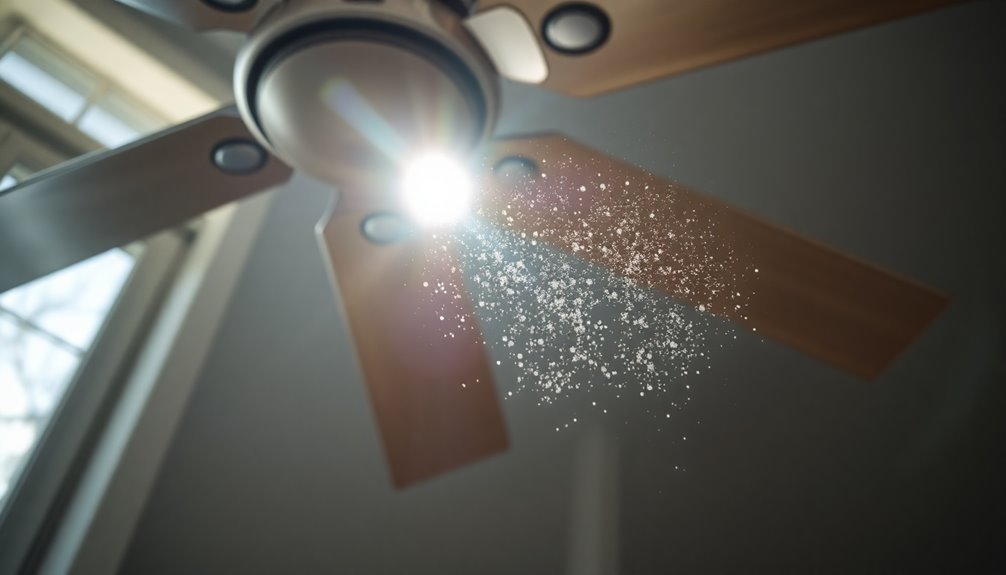
Ceiling fans with lights typically require more maintenance due to additional components like bulbs, wiring, and glass fixtures that need cleaning and periodic replacement. You’ll need to check for dust accumulation, guarantee electrical connections remain secure, and replace bulbs when burned out. Unlike fans without lights, these fixtures demand extra attention to maintain best performance and aesthetic appeal. Regular inspections and cleaning are essential to prevent dust buildup and electrical issues.
Are There Safety Concerns With Ceiling Fans That Have Integrated Lighting?
Yes, ceiling fans with integrated lighting pose safety concerns, mainly due to electrical risks like short circuits or faulty wiring, which can cause fires or shocks. You should guarantee proper installation by a qualified electrician and use fixtures rated for fan use. Additionally, consider the weight and balance, as improper mounting can lead to wobbling or detachment. Regular inspections and maintenance mitigate these hazards, ensuring safe operation.
How Does the Price Typically Compare Between Fans With and Without Lights?
Fans with integrated lighting generally cost more upfront than those without, often by 20-30%. This price difference reflects the added complexity of installing electrical components and the aesthetic value of built-in lighting. Higher-end models with LED or dimmable features may increase costs further. When budgeting, consider installation expenses, as fans with lights may require additional wiring or professional setup, impacting overall project costs.

addlon Ceiling Fans with Lights, 42 Inch Low Profile Ceiling Fan with Light and Remote Control, Flush Mount, Reversible, 3CCT, Dimmable, Quiet, Black Small Ceiling Fan for Bedroom Indoor/Outdoor Use
Ceiling Fan with Light: Bring more than just wind and light, but comfort! addlon modern ceiling fan, with...
As an affiliate, we earn on qualifying purchases.
Conclusion
Ultimately, whether you opt for a ceiling fan with or without lights depends on your aesthetic priorities and functional needs. If you crave a centerpiece that doubles as a luminary, a fan with integrated lighting is your best bet—just don’t forget to contemplate bulb compatibility and energy efficiency. On the other hand, a minimalist fan sans lights offers streamlined airflow without the risk of accidental disco lighting. Choose wisely; your ceiling fan is about to become your room’s most influential decor piece.

72 inch Ceiling Fans with Lights,Large Ceiling Fan with Light and Remote Control, Dimmable, 3CCT, Quiet, Black Modern Ceiling fan For Living Room, Bedroom, Kitchen, Patio, Farmhouse, Indoor/Outdoor
Ceiling Fan with Light: Decorate your home with Amico ceiling fan! While bringing you coolness and comfort, it...
As an affiliate, we earn on qualifying purchases.

PHORUS 52 Inch Tropical Ceiling Fans with Lights and Remote,Outdoor Palm Leaf Ceiling Fan for Patios Porch Bedroom, Dimmable, 6 Speeds, Reversible, Dark Brown
[Tropical style Ceiling Fan]: 52"outdoor ceiling fan features 5 unique palm leaf blades with exquisite craft, attractive appearance...
As an affiliate, we earn on qualifying purchases.