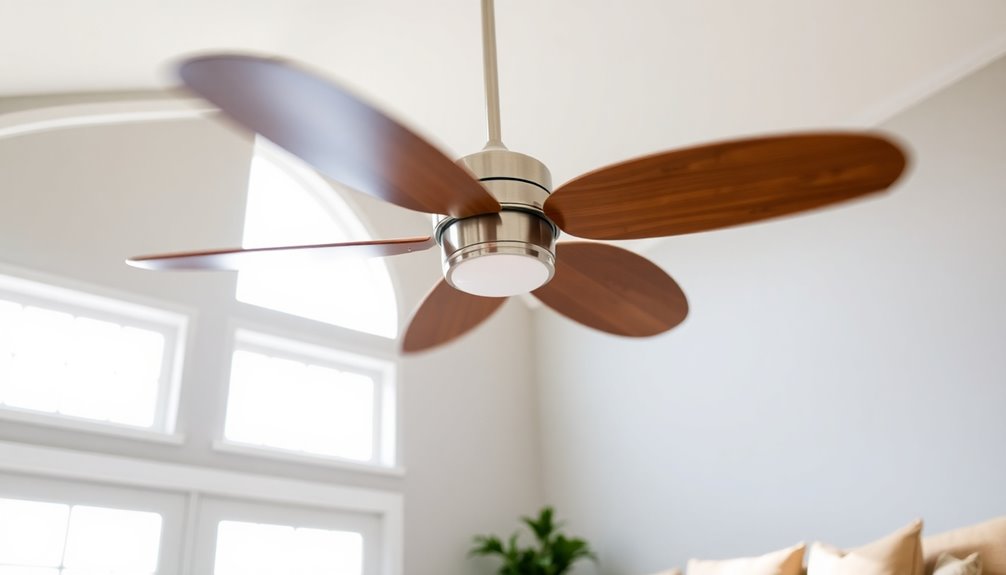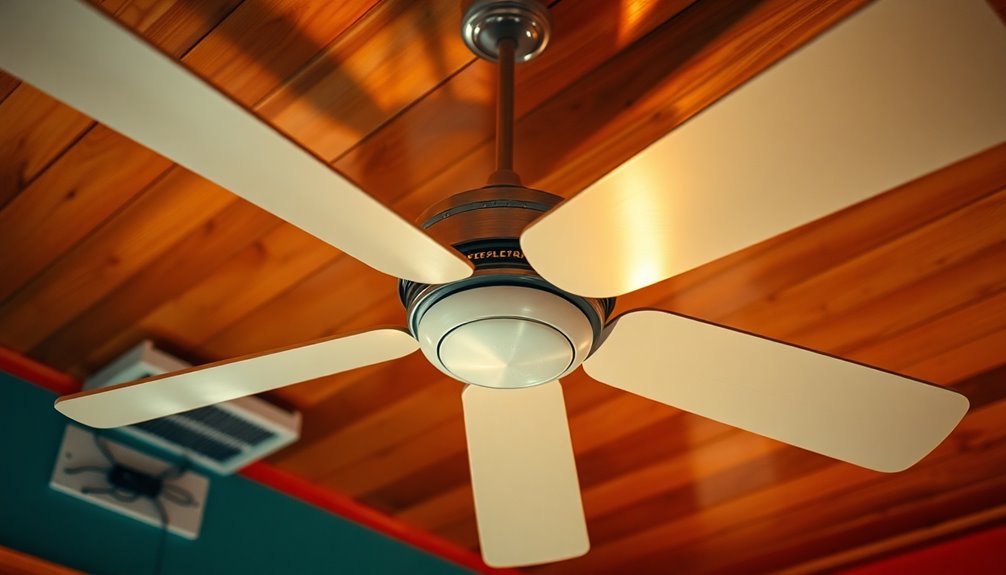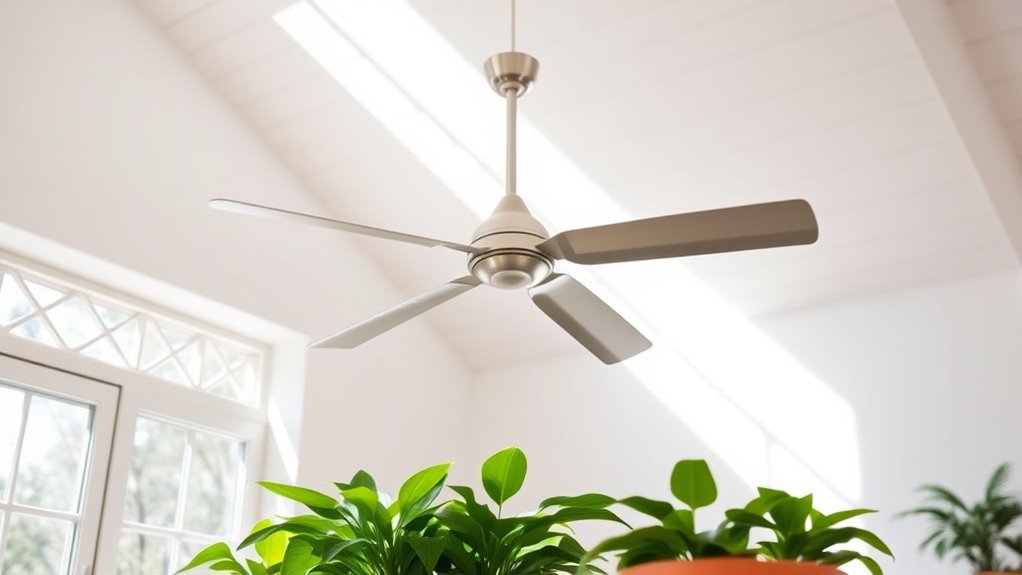

To improve indoor air quality with ceiling fans, position them centrally for ideal circulation and set them to high speed during periods of increased pollutant levels. Use the fan to promote continuous airflow, pairing it with exhaust or air purifiers for better contaminant removal. Adjust the direction seasonally: counterclockwise in summer for a cooling breeze and clockwise in winter to circulate warm air. Proper placement and operation maximize their benefits—continuing will reveal more ways to optimize your ventilation system effectively.
Key Takeaways
- Position ceiling fans centrally to maximize airflow and prevent dead zones where pollutants can accumulate.
- Use high-speed settings during high pollution periods to enhance air circulation and reduce contaminant buildup.
- Rotate fans counterclockwise in summer to create a cooling breeze and promote air movement.
- Pair ceiling fans with air purifiers or exhaust systems for combined removal of airborne contaminants.
- Maintain continuous operation during occupancy to ensure consistent air turnover and improved indoor air quality.

Have you considered how ceiling fans can actively enhance indoor air quality? When properly utilized, ceiling fans serve as an effective tool for controlling air circulation, reducing airborne contaminants, and improving overall ventilation within enclosed spaces. Unlike static ventilation systems, ceiling fans create a continuous flow of air that prevents stagnation, thereby minimizing the buildup of pollutants such as dust, allergens, and microbial particles. Their ability to promote uniform air distribution makes them indispensable components of a comprehensive indoor air quality strategy.
To maximize the efficacy of ceiling fans in improving air quality, you must first understand their operational mechanics. Ceiling fans generate airflow by rotating blades, which displace air vertically and horizontally. When configured correctly, they facilitate a steady exchange between indoor and outdoor air, especially when paired with exhaust fans or ventilation systems. For instance, setting a ceiling fan to rotate counterclockwise during warmer months produces a breeze effect that enhances evaporative cooling, while a clockwise rotation in cooler months gently circulates warm air trapped near ceilings. This dynamic airflow prevents the stratification of temperature and pollutants, maintaining a more consistent and healthier environment.
Another critical aspect involves fan placement and speed settings. Positioning ceiling fans centrally in a room ensures ideal air coverage, avoiding dead zones where pollutants can accumulate. Adjusting the speed to a high setting during periods of heightened indoor pollution—such as after cleaning or during high occupancy—amplifies air movement and accelerates the removal of airborne allergens. Conversely, reducing speed minimizes noise and drafts that could disturb sensitive occupants, yet still maintains adequate circulation. It’s essential to calibrate these settings based on room size, occupancy, and pollutant levels to maximize benefits.
Integrating ceiling fans with other ventilation mechanisms further enhances indoor air quality. For example, pairing fans with air purifiers or exhaust fans ensures that contaminated air is actively expelled, while fresh air is circulated efficiently. Continuous operation of ceiling fans during occupancy promotes ongoing air turnover, preventing stagnation and the accumulation of harmful particles. Additionally, employing ceiling fans with integrated filters or using them in spaces equipped with high-efficiency particulate air (HEPA) filtration can considerably reduce airborne contaminants, offering a dual approach to air quality management. Moreover, selecting ceiling fans with energy-efficient motors can help reduce energy consumption while maintaining optimal airflow.

Forrovenco Ceiling Fans with Lights and Remote, 52 Inch Outdoor Ceiling Fan for Patios Indoor with 3 Downrods, 3 Blades Modern Ceiling Fan, 6 Speed Reversible Quiet DC Motor Solid Wood Fan,52in,Walnut
Modern Ceiling Fan with Light: Our 3 blade ceiling fan with light features unique, planet-friendly, and renewable high-quality...
As an affiliate, we earn on qualifying purchases.
Frequently Asked Questions
Can Ceiling Fans Reduce Indoor Humidity Levels Effectively?
Yes, ceiling fans can effectively reduce indoor humidity levels by promoting air circulation and enhancing evaporation of moisture from surfaces. When set to rotate counterclockwise, they create a breeze that helps dry damp areas and decrease humidity. To maximize this effect, pair fans with dehumidifiers or proper ventilation, especially in humid climates. Regular use of ceiling fans ensures consistent air movement, which aids in maintaining ideal indoor humidity levels.
Are Ceiling Fans Safe for Allergy Sufferers?
Ceiling fans are generally safe for allergy sufferers, provided they are maintained properly. Regularly clean fan blades and motor components to prevent dust accumulation, which can circulate allergens. Use fans in conjunction with air purifiers to reduce airborne particles. Avoid oscillating or excessively fast settings that can stir up dust. Proper maintenance and strategic use help minimize allergen spread, making ceiling fans a safe addition to allergy-conscious indoor environments.
How Often Should Ceiling Fans Be Cleaned for Optimal Air Quality?
You should clean your ceiling fans at least once every two to four weeks to keep indoor air quality ideal. Dust and allergens tend to cling to blades, acting like magnets for airborne particles. Turn off the fan, use a microfiber cloth or vacuum attachment to remove debris, and wipe down the blades thoroughly. Regular maintenance prevents dust buildup, ensuring efficient operation and healthier indoor air for you and your family.
Do Ceiling Fans Help in Removing Indoor Airborne Pollutants?
Ceiling fans do not directly remove airborne pollutants but can improve indoor air quality indirectly. By increasing air circulation, they help disperse airborne particles and reduce stagnant air, which can lower pollutant concentrations. However, they do not filter or trap pollutants themselves. To effectively reduce airborne pollutants, combine ceiling fan use with air purifiers and regular cleaning. Proper ventilation enhances overall indoor air quality, complementing ceiling fan benefits.
Can Ceiling Fans Improve Air Quality in Large Open Spaces?
Yes, ceiling fans can improve air quality in large open spaces, but only if you understand their limitations. They circulate air efficiently, reducing stagnant zones and promoting ventilation, but they don’t filter pollutants. To maximize benefits, pair fans with air purifiers and proper ventilation systems. Properly positioned, fans help disperse airborne particles and maintain airflow, but don’t rely solely on them for extensive indoor air quality management.

addlon Ceiling Fans with Lights, 42 Inch Low Profile Ceiling Fan with Light and Remote Control, Flush Mount, Reversible, 3CCT, Dimmable, Quiet, Black Small Ceiling Fan for Bedroom Indoor/Outdoor Use
Ceiling Fan with Light: Bring more than just wind and light, but comfort! addlon modern ceiling fan, with...
As an affiliate, we earn on qualifying purchases.
Conclusion
By properly utilizing your ceiling fan, you can greatly enhance indoor air quality through improved circulation and ventilation. Regularly adjusting fan direction and speed ensures pollutants are dispersed and fresh air is circulated efficiently. Remember, neglecting these practices is akin to relying on a quill in the age of digital communication—ineffective. Incorporate these techniques into your routine to maintain a healthier environment, leveraging the full potential of your ceiling fan as a modern air quality tool.
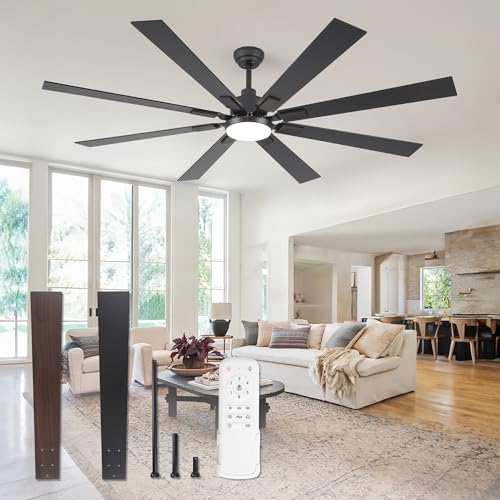
ZMISHIBO 72 inch Large Ceiling Fans with Lights and Remote, Indoor/Outdoor Black Modern Ceiling Fan for Kitchen Living Room Patio, 6 Speed Reversible Quiet DC Motor, 3 CCT, Dual Finish 8 Blades
72 Inch Ceiling Fan: This large ceiling fan includes 4“, 8”, and 24“ down rods, making it a...
As an affiliate, we earn on qualifying purchases.

ZMISHIBO 2 Pack 52 Inch Outdoor Ceiling Fans with Remote, Black Ceiling Fan No light with Quiet Reversible DC Motor, 6 Speeds, 3 Blade Modern Ceiling Fans for Patio Living Room Bedroom Indoor
Indoor and Outdoor Use: The 2 pack black ceiling fans come with 4'' and 8'' downrods, so you...
As an affiliate, we earn on qualifying purchases.