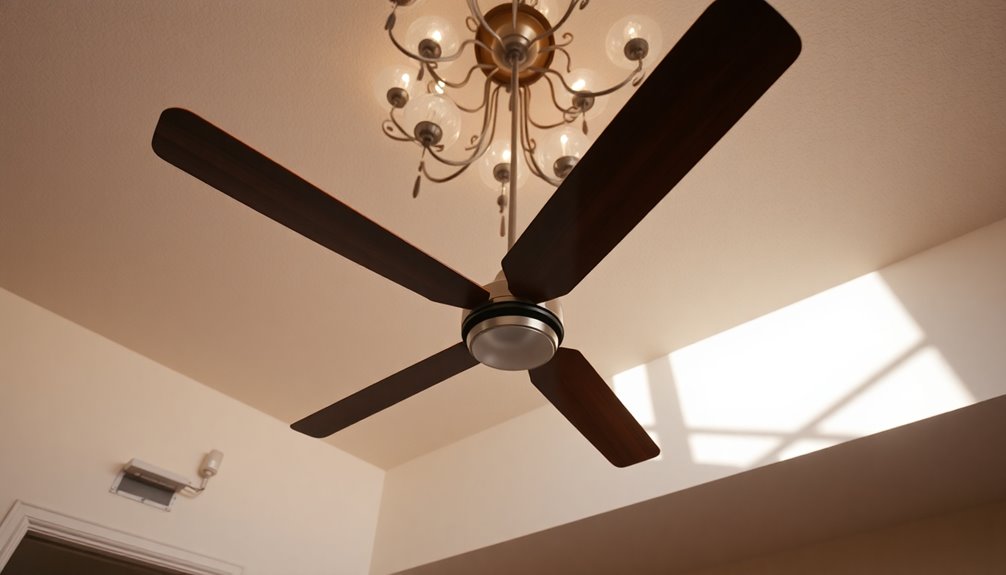
To optimize airflow in large or irregular rooms, position your ceiling fan slightly off-center in the main activity zone or focal point to complement your space’s architectural features. For bigger spaces, consider installing multiple fans in separate zones for even circulation. Use downrods for high or sloped ceilings to maintain ideal blade height. Focus on balanced placement that highlights your room’s style, and discover further tips to achieve seamless airflow and aesthetic harmony.
Key Takeaways
- Position fans near focal points or main activity zones to ensure effective air circulation in large or irregular spaces.
- Use multiple fans strategically placed in different zones to prevent stagnant air and promote even airflow.
- Install fans slightly off-center or in key architectural areas, especially in large rooms, for optimal coverage.
- Adjust fan height with downrods for vaulted or sloped ceilings to achieve proper blade clearance and airflow.
- Ensure fans are accessible for maintenance while blending seamlessly with room design for aesthetic appeal.
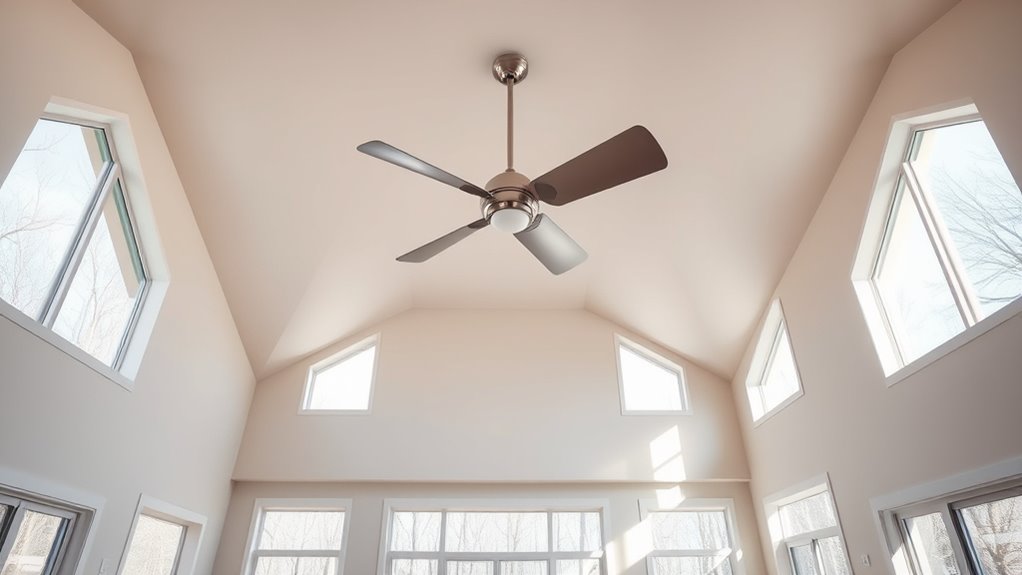
Choosing the right ceiling fan placement enhances both the aesthetic appeal and the comfort of your space. When dealing with large or irregularly shaped rooms, this becomes especially important because improper positioning can disrupt the visual harmony and diminish the fan’s effectiveness. To maximize both style and function, you’ll want to focus on the fan’s placement relative to architectural features, furniture arrangements, and the room’s natural flow.
Start by identifying the room’s focal points—whether that’s a seating area, a decorative centerpiece, or a specific architectural element like a vaulted ceiling or a corner nook. The goal is to position the fan so it complements these features without overwhelming them. For large rooms, installing the fan slightly off-center or toward the middle of the main activity zone helps distribute airflow evenly, preventing hot spots or stagnant air pockets. If your space has irregular dimensions, consider dividing the room mentally into zones and placing fans strategically in each area to ensure no corner feels left out.
Identify focal points and strategically position fans to optimize airflow and complement your room’s unique features.
In rooms with high or sloped ceilings, hanging the fan at the ideal height becomes vital. You should aim for the blades to be approximately 8 to 9 feet above the floor, but with vaulted ceilings, a downrod can help you achieve this perfect height while maintaining a balanced aesthetic. The downrod’s length should be proportional to the ceiling’s pitch—longer for steeper slopes—to ensure the fan remains visually grounded and doesn’t look out of place. When you select a fan for such spaces, opt for a model with an adjustable or multi-directional motor, so you can fine-tune airflow patterns for the room’s unique geometry. Additionally, incorporating proper lighting fixtures can enhance both the functionality and style of your ceiling fan setup.
In terms of visual appeal, choose a fan that aligns with your room’s overall style. For large, open spaces, a statement piece—like a vintage-inspired or oversized modern fan—can anchor the room’s design. Keep in mind that the fan’s finish and blade design should complement your color palette and architectural details. For irregular shapes, asymmetric blades or fans with directional airflow can add a dynamic visual element that enhances the room’s character.
Finally, consider accessibility and maintenance. Proper placement isn’t just about aesthetics—it’s also about ensuring you can easily access the fan for cleaning or adjustments without disrupting your decor. With careful planning, you’ll create a harmonious balance between form and function, transforming your large or irregular room into a stylish, comfortable sanctuary.
Frequently Asked Questions
How Do I Choose the Right Ceiling Fan Size for My Room?
To choose the right ceiling fan size, measure your room’s square footage and select a fan with a blade span that complements it. For larger spaces, opt for fans with at least 52 inches or more, ensuring they fill the room aesthetically and circulate air effectively. Consider the room’s shape and ceiling height, and aim for a balanced look where the fan enhances your decor while maintaining ideal airflow.
Can Ceiling Fans Be Installed in Sloped or Vaulted Ceilings?
Yes, you can install ceiling fans in sloped or vaulted ceilings. Use a mounting kit with an adjustable angle to make certain the fan hangs level and functions efficiently. For vaulted ceilings, consider a longer downrod to position the fan at the ideal height, usually around 8 to 9 feet from the floor. This setup enhances airflow and complements the room’s architectural beauty, creating a sleek, aesthetic focal point.
What Safety Precautions Are Necessary for Installing Ceiling Fans in Large Rooms?
Think of installing a ceiling fan in a large room as crafting a delicate sculpture—you must handle each detail with care. Secure the mounting bracket firmly to a ceiling joist or support beam, ensuring it can bear the weight. Turn off power at the breaker to prevent shocks, and double-check all wiring connections. Use proper tools and follow manufacturer instructions meticulously to guarantee safety and flawless operation.
How Can I Improve Airflow in Irregularly Shaped Spaces?
To improve airflow in irregularly shaped spaces, you should position multiple fans at strategic points to cover all areas evenly. Opt for fans with adjustable angles and blades that promote a gentle, sweeping breeze. Consider installing fans at different heights or angles to navigate unique corners and nooks. Use ceiling fans with contemporary designs that complement your room’s aesthetic, ensuring both functionality and visual harmony.
Are There Specific Ceiling Fan Features Suitable for Large or Awkward Rooms?
Think of a ceiling fan as a tailored dance partner for your space; specific features make it a perfect fit. Look for models with large blades or adjustable angles to navigate irregular corners gracefully. A multi-speed motor and reversible blades help customize airflow, while integrated lighting adds ambiance. Choose fans with a sleek, aesthetic design that complements your room’s character, turning function into an artful expression of your style and comfort.
Conclusion
When you carefully consider ceiling fan placement in large or irregular rooms, you’ll notice how the right positioning effortlessly enhances airflow and aesthetic harmony. It’s no coincidence that a well-placed fan can transform the entire space, creating a balanced, inviting atmosphere. Pay attention to the room’s natural flow and architectural features—your eye and comfort will thank you, reflecting how thoughtful design seamlessly elevates your environment, turning everyday comfort into an artful experience.