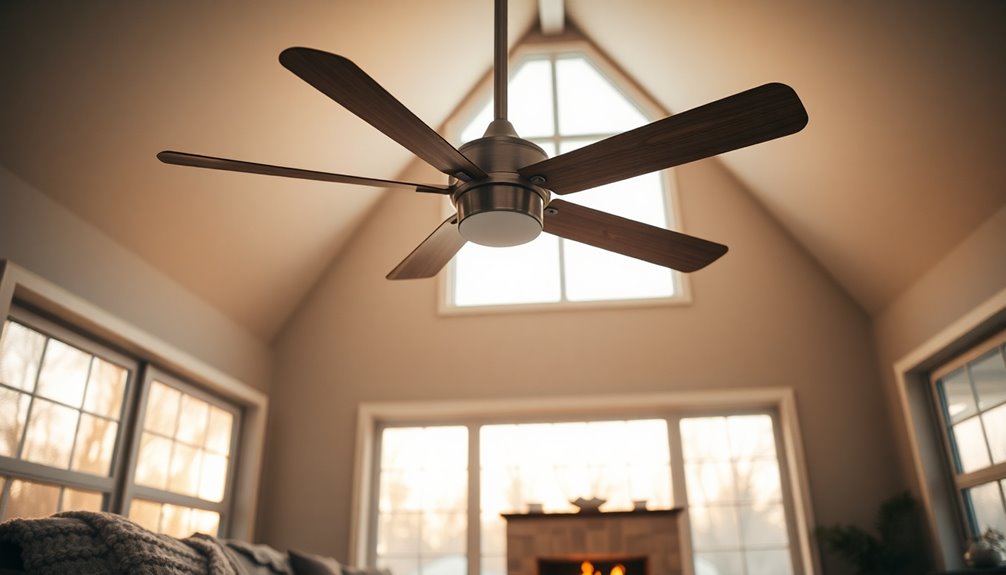
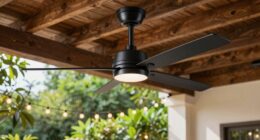
Understanding ceiling fan myths versus facts is vital for ideal use and energy savings. Many believe fans cool rooms or should run continuously, but they mainly create a wind-chill effect and waste energy when unneeded. Proper rotation direction, size, and maintenance improve efficiency and lifespan. Clarifying these misconceptions helps you make informed decisions, enhance comfort, and reduce costs. Exploring these technical insights further will equip you with the knowledge to maximize your ceiling fan‘s performance.
Key Takeaways
- Ceiling fans do not lower room temperature; they create a wind-chill effect for personal cooling.
- Fan rotation direction affects comfort; counterclockwise in summer and clockwise in winter optimize airflow.
- Larger fans are not necessarily more energy-efficient; efficiency depends on motor design and blade pitch.
- Proper maintenance, like cleaning blades, extends fan lifespan and maintains optimal performance.
- Understanding technical specs and dispelling myths enhances energy savings and effective fan use.
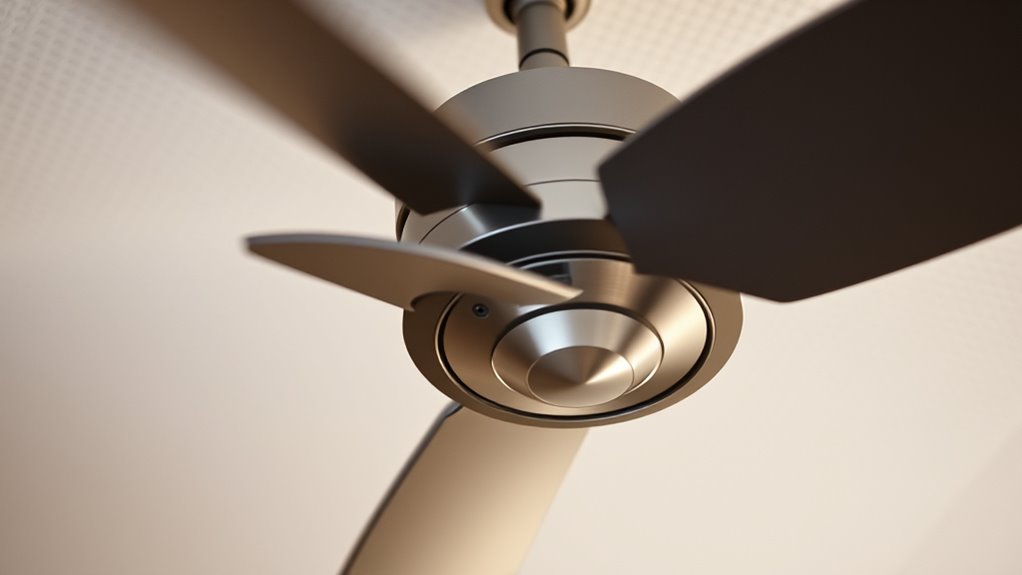
Many common beliefs about ceiling fans persist despite limited scientific validation, leading to misconceptions that can impact their effective use and maintenance. Understanding the distinctions between myths and facts is essential for optimizing performance, energy efficiency, and longevity. For example, a widespread misconception is that ceiling fans cool a room by lowering the air temperature. In reality, fans create a wind-chill effect that makes you feel cooler without changing the ambient temperature. This distinction is vital because it influences how you operate the fan; running it continuously in an unoccupied room offers no benefit and wastes energy. Proper use involves turning the fan off when the room is empty, as its primary function is to improve personal comfort rather than alter room temperature.
Ceiling fans cool by creating a wind-chill effect, not lowering room temperature. Turn them off when unoccupied to save energy.
Another common myth concerns the direction of ceiling fan rotation. Many believe that a fan should run clockwise in summer and counterclockwise in winter, but the actual effectiveness depends on the design of the fan and the specific airflow pattern. In summer, the fan should rotate counterclockwise to generate a downward airflow that enhances evaporation and cooling on your skin. Conversely, in winter, running the fan clockwise on a low speed creates an updraft that circulates warm air trapped near the ceiling without creating a draft. However, the myth persists that changing directions dramatically impacts energy savings, whereas the primary goal is comfort adjustment. Proper understanding ensures you select the correct rotation based on seasonal needs rather than relying on assumptions.
Furthermore, many assume that larger fans are inherently more energy-efficient than smaller ones. In fact, efficiency depends on the fan’s motor design, blade pitch, and overall aerodynamics, not just size. An oversized fan running at a low speed can consume more energy without providing proportional comfort, while a well-designed smaller fan can deliver comparable airflow efficiently. This misconception can lead to overspending on oversized units without realizing the importance of selecting models with high efficiencies and appropriate capacities for your space. Technical specifications such as airflow (measured in CFM) and motor efficiency ratings should guide your choice rather than size alone.
Additionally, misconceptions about the lifespan of ceiling fans can lead some to believe they require frequent replacement, when in reality, most modern fans are built for durability with proper maintenance. While regular cleaning of blades and motor components can prolong lifespan, most modern ceiling fans are engineered for durability with minimal upkeep. Understanding the actual maintenance needs allows you to allocate resources effectively and avoid unnecessary replacements. In summary, challenging these prevalent myths with factual, technical insights enables you to operate and maintain ceiling fans more efficiently, saving energy and extending their service life. Proper awareness of fan efficiency and maintenance can significantly enhance your fan’s performance and longevity.

Ceiling Fans with Lights, 42 Inch Ceiling Fan with Light And Remote, 3CCT Flush Moun Low Profile Ceiling Fans, 6 Speed Noiseless LED Ceiling Fan, Black Ceilings Fan with Remote for Bedroom Living Room
【Easy Installation & Included Paper Manual】Each ceiling fans with lights come with an English paper manual; you can...
As an affiliate, we earn on qualifying purchases.
Frequently Asked Questions
Do Ceiling Fans Really Save Energy Compared to Air Conditioning?
Yes, ceiling fans save energy compared to air conditioning. They use markedly less electricity because they circulate air rather than cool it directly. By enabling you to set your thermostat higher while still feeling comfortable, fans reduce the workload on your AC unit. This combination cuts overall energy consumption and lowers utility bills. Properly used, ceiling fans provide an energy-efficient cooling method that complements your air conditioning system.
Can Ceiling Fans Be Used Safely Outdoors or in Humid Environments?
You can safely use ceiling fans outdoors and in humid environments if they’re specifically rated for such conditions. Outdoor-rated fans feature corrosion-resistant materials like stainless steel or special coatings that prevent moisture damage. guarantee proper installation and regular maintenance to avoid electrical hazards. Avoid using indoor fans outdoors, as exposure to moisture can compromise wiring and motor components, increasing safety risks and reducing lifespan.
Are All Ceiling Fans Equally Effective Regardless of Size or Blade Count?
Not all ceiling fans are equally effective; size and blade count substantially impact performance. Larger fans with more blades move more air, ideal for bigger rooms, while smaller fans suit compact spaces. Higher blade counts generally provide smoother airflow but may reduce speed. You should select a fan based on room size and purpose, ensuring ideal air circulation. Proper installation and motor efficiency also influence overall effectiveness, making a tailored choice essential.
Do Ceiling Fans Consume Significant Electricity When Turned Off?
Ceiling fans do not consume significant electricity when turned off, as most models only draw a small standby power, typically less than 1 watt. This minimal energy use is often negligible compared to the power they consume when operating. To optimize energy efficiency, it’s advisable to turn fans off completely when not in use, especially if you’re aiming to reduce electricity costs over time.
Can Ceiling Fans Help Reduce Allergy Symptoms?
Ceiling fans can help reduce allergy symptoms by improving air circulation and preventing the buildup of dust and allergens. When used with proper filtration and regular cleaning, they help maintain cleaner indoor air. The movement prevents stagnation, reducing mold and dust accumulation. However, fans do not filter allergens directly; combining their use with air purifiers and regular dusting enhances allergy relief and improves overall indoor air quality.

KNUN 52 Inch Ceiling Fan with Light,Low profile Ceiling Fans with Remote Control or App Control, 8 Blades, Noiseless, DC Motor, Flush Mount Ceiling Fan for Bedroom,Living Room, Indoor/Outdoor Black
【8 Double-sided blades】This 52 inch ceiling fan is equipped with 8 blades, which not only provides high air...
As an affiliate, we earn on qualifying purchases.
Conclusion
By debunking common ceiling fan myths, you gain a clearer understanding of their true functionality. The theory that fans cool rooms by lowering air temperature is false; they actually create a cooling sensation through air circulation. Recognizing these facts allows you to optimize energy efficiency and comfort. Don’t rely on misconceptions—analyzing the facts guarantees informed decisions, maximizing your ceiling fan’s benefits. Accurate knowledge ultimately enhances both performance and savings in your space.

52" Ceiling Fans with Lights and Remote, Black Modern Ceiling Fan with 8 Dual Finish Blades,Quiet Reversible Motor,Farmhouse Ceiling Fan with RGB Lights for Bedroom,Living Room,Patios
52 INCH CEILING FAN: The 52“ ceiling fan with lights offers flat and inclined(<15°)mounting options, as well as...
As an affiliate, we earn on qualifying purchases.

ZMISHIBO 52 Inch Ceiling Fan with Light, App&Remote Control, Flush Mount Low Profile, Dimmable 20W LED Light, Quiet Reversible Motor for Bedroom, Living Room, Apartment, Black
Perfect Size for Rooms: This 52-inch ceiling fan is ideal for cooling and illuminating spacious areas like living...
As an affiliate, we earn on qualifying purchases.