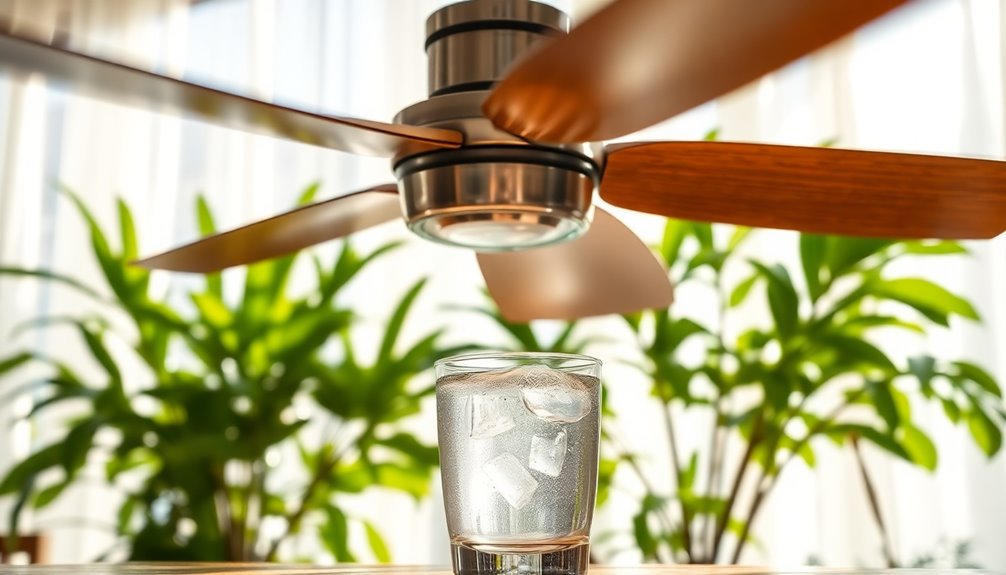
The feeling of two fans of the same size being different mainly comes down to blade pitch. A steeper pitch pushes more air with each rotation, creating a stronger, more direct breeze, while a shallower pitch offers gentler, more widespread airflow. This difference affects how cool and comfortable the air feels, even if the fans are identical in size. To understand how blade angles influence performance further, keep exploring these details.
Key Takeaways
- Steeper blade pitch moves more air per rotation, making fans feel more powerful even if they are the same size.
- Shallow blade pitch produces gentler airflow, resulting in a softer, more widespread breeze.
- Higher blade angles often require higher speeds, increasing noise and perceived strength differences.
- Blade design and shape, combined with pitch, influence airflow pattern and efficiency.
- Small adjustments in blade pitch can significantly alter how strong and focused the airflow feels.
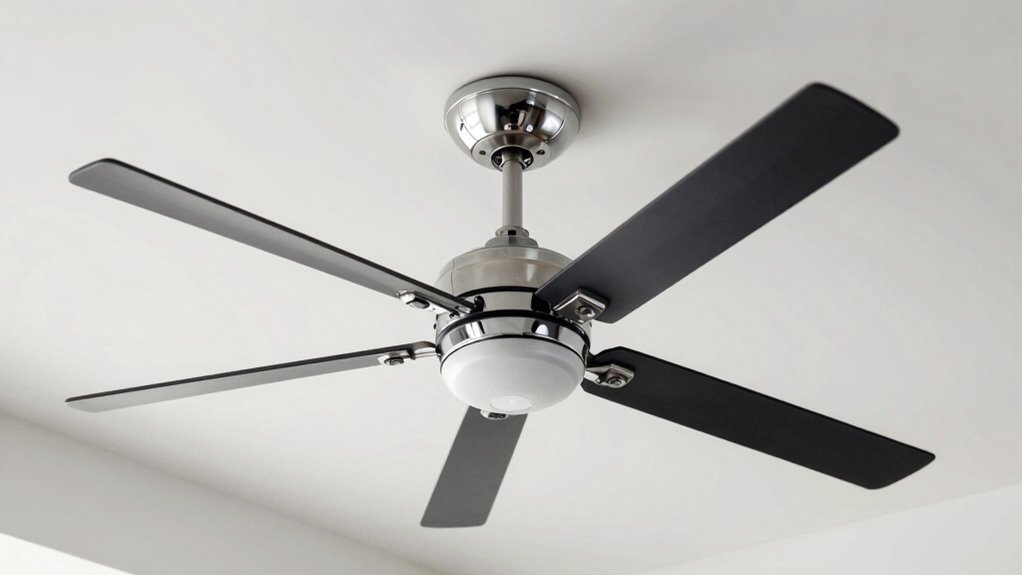
Have you ever noticed how two fans of the same size can feel completely different in the same room? The key factor isn’t just the size of the blades but something more subtle: blade pitch. Blade pitch refers to the angle at which the blades are set, and it directly impacts how air moves through your space. When you turn on a fan, its blades cut through the air, creating airflow patterns that determine not only how cool you feel but also how quietly the fan operates. A higher blade pitch generally pushes more air with each rotation, leading to a stronger breeze. Conversely, a lower pitch produces a gentler airflow, which can be preferable if you’re sensitive to noise or prefer a more subtle circulation.
Understanding airflow patterns is essential here. Fans with different blade pitches generate distinct airflow behaviors within a room. A fan with a steeper pitch tends to produce a more direct and forceful airflow, which can help cool a space quickly but might create drafts or uneven air circulation. On the other hand, fans with a shallower pitch tend to promote more gentle, widespread airflow, circulating air more evenly without creating strong drafts. This difference can make one fan feel noticeably more effective than another, even if they are the same size. It’s not just about how much air a fan moves but also how that air moves around the room, affecting comfort levels.
Blade pitch determines airflow patterns, with steeper angles creating direct, forceful breezes and shallower angles promoting gentle, widespread circulation.
Noise levels are another important consideration influenced by blade pitch. Fans with a steeper pitch often operate at higher speeds to generate their stronger airflow, which can lead to increased noise. If you’re sensitive to sound or use your fan in a quiet environment, a fan with a lower blade pitch might be more suitable because it tends to run more quietly at lower speeds. The angle of the blades affects how smoothly the motor runs and how much vibration is produced, both of which contribute to noise. So, even if two fans are the same size and wattage, differences in blade pitch can make one noticeably louder than the other.
Additionally, the type of fan technology—such as blade design—can influence how effectively air is moved, further affecting your comfort and energy efficiency. Ultimately, the choice of blade pitch impacts how you experience your fan. It influences the airflow patterns, dictating whether you get a focused, powerful breeze or a gentle, widespread circulation. It also affects noise levels, determining whether your fan hums softly or produces a louder sound during operation. When selecting a fan, consider what kind of airflow and noise environment suits your space and comfort preferences. Small adjustments to blade pitch can make a big difference in how effective and comfortable your fan feels, even if they’re both the same size.
adjustable blade pitch ceiling fan
As an affiliate, we earn on qualifying purchases.
As an affiliate, we earn on qualifying purchases.
Frequently Asked Questions
How Does Blade Pitch Affect Noise Levels?
Blade pitch considerably impacts noise levels by changing the blade angle. A steeper blade pitch increases airflow but also creates more turbulence, leading to higher noise. Conversely, a gentler pitch reduces turbulence, which helps with noise reduction. You’ll notice that fans with adjustable blade angles let you find a balance between airflow and noise, so you can customize your comfort while keeping noise levels down.
Can Changing Blade Pitch Improve Fan Efficiency?
Think of blade pitch as the tune of a song — it can make your fan sing more efficiently. Changing the blade pitch improves fan efficiency by optimizing airflow, especially when considering blade material and shape. A carefully adjusted pitch aligns the fan’s design with your space, reducing energy use and noise. So, tweaking blade pitch becomes your secret weapon for a quieter, more effective fan performance.
Does Blade Pitch Influence Energy Consumption?
Yes, blade pitch influences energy consumption because it directly impacts fan performance. When you adjust the pitch, you change how much air the fan moves, which can lead to energy savings if optimized correctly. A higher pitch may require more power, but it can improve airflow efficiency. Conversely, a lower pitch might reduce energy use but could compromise performance. Finding the right blade pitch helps you balance energy savings with effective airflow.
How Does Blade Pitch Impact Airflow Direction?
Imagine a conductor guiding an orchestra—that’s your blade angle controlling airflow direction. When you adjust the blade pitch, you’re fine-tuning airflow control, directing the breeze where you want it. A steeper blade angle pushes air forward, creating a strong, focused flow, while a shallower angle disperses air gently. Your choice influences not just comfort but how effectively the fan moves air, making the environment feel just right.
Is Blade Pitch Adjustable on All Fan Models?
Not all fan models have adjustable blade pitch; many come with fixed blades. If you want to change the pitch, you’ll need to check the fan’s design during installation or blade maintenance. Adjustable pitch fans are often used in industrial settings, but for most home fans, the pitch is fixed. Always follow the manufacturer’s instructions to guarantee proper fan installation and avoid damaging the blades.
quiet fan with low blade pitch
As an affiliate, we earn on qualifying purchases.
As an affiliate, we earn on qualifying purchases.
Conclusion
So, next time you’re puzzled by two fans of the same size feeling worlds apart, remember it’s all about blade pitch. It’s like comparing two vintage radios—both look similar, but their sound, or in this case, airflow, can be wildly different. Understanding blade pitch helps you choose the right fan for your space. As they say, knowledge is power—like having your own personal JARVIS to decode airflow mysteries.

60 in Ceiling Fan of 7400+CFM High Airflow with Light & Mute Remote Control,Outdoor/Indoor Ceiling Fan with 3 Blades Noiseless Reversible DC Motor 6 Speeds with 3 CCT and Timer for Living Room Patios
Quiet DC Motor:Our ceiling fan with light and remote use quiet DC motor,quiet DC Motor is more energy-efficient…
As an affiliate, we earn on qualifying purchases.
As an affiliate, we earn on qualifying purchases.
widespread airflow oscillating fan
As an affiliate, we earn on qualifying purchases.
As an affiliate, we earn on qualifying purchases.