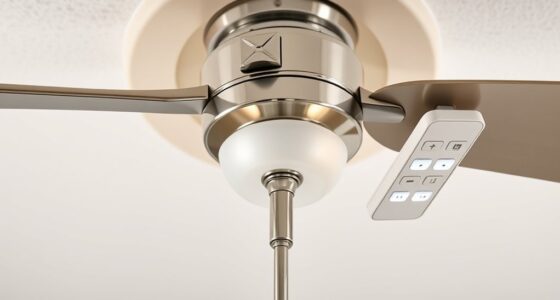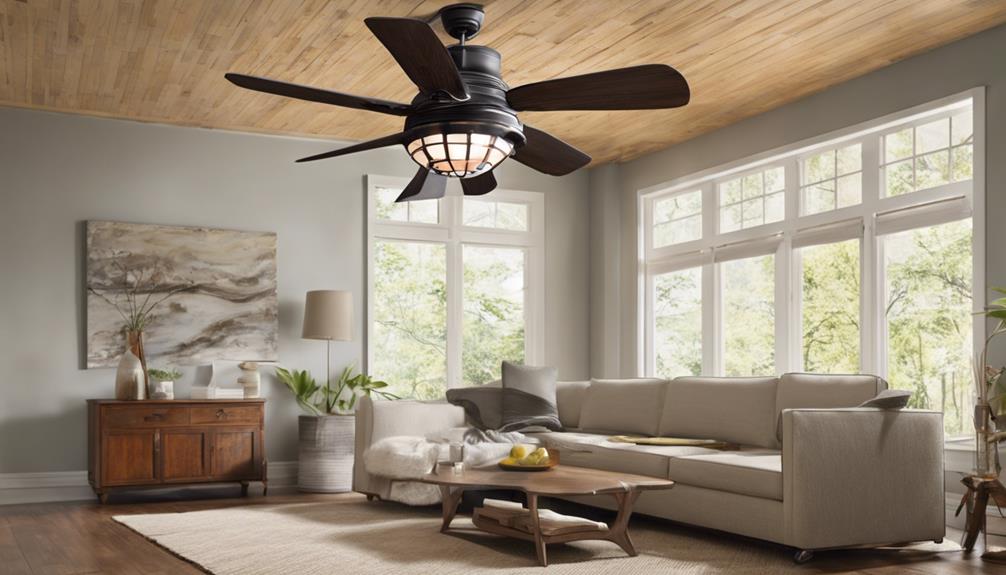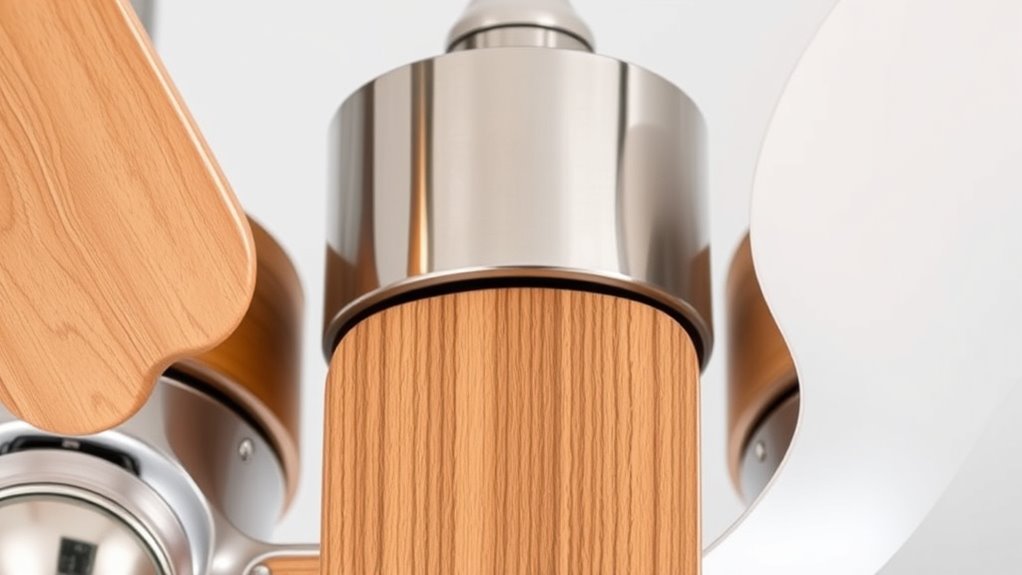

Choosing a ceiling fan with wood, metal, or plastic blades depends on your style and needs. Wood blades add warmth and elegance but require more upkeep and are heavier, resulting in quieter operation. Metal blades give a sleek, modern look, are highly durable, but can be noisier if unbalanced. Plastic blades are budget-friendly, lightweight, and resistant to moisture, making maintenance easier. To make the best choice for your space, you’ll find valuable insights if you explore further.
Key Takeaways
- Wood blades add warmth and elegance, ideal for traditional or rustic interiors, but require more maintenance and are heavier.
- Metal blades are durable, lightweight, and suited for modern or outdoor spaces, often producing more noise if not balanced.
- Plastic blades are versatile, low-cost, moisture-resistant, and available in various colors, suitable for humid environments.
- Heavier wood blades tend to operate quietly, while metal and plastic blades may generate more noise if unbalanced.
- The choice depends on aesthetics, environment, durability, maintenance, and budget considerations.
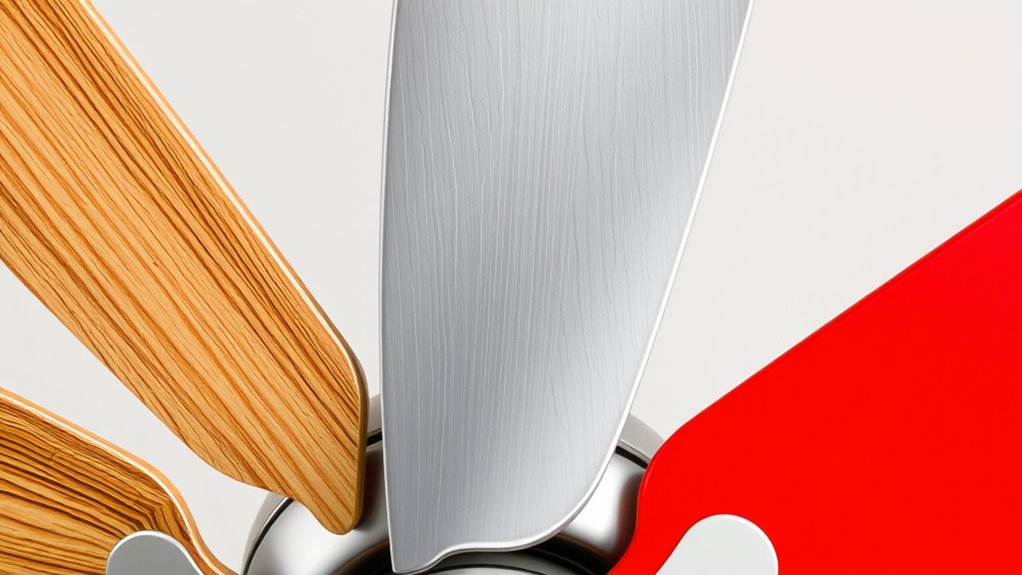
Are you wondering which ceiling fan blade material best suits your space and style? Choosing the right material is essential because it influences not just the aesthetic appeal but also the durability, noise level, and overall performance of your fan. Among the most common options, wood, metal, and plastic each have distinct advantages and considerations that can help you make an informed decision.
Wood blades are a classic choice, offering warmth, elegance, and a timeless appeal that complements traditional or rustic interiors. They tend to be heavier than other materials, which can result in a more substantial, high-quality feel. If you prioritize natural aesthetics, wood blades come in various finishes and grains, allowing you to customize the look to match your decor. However, they require more maintenance; over time, they can be susceptible to warping, cracking, or staining if not properly cared for. Despite this, they generally operate quietly because their weight dampens vibrations, making them ideal for bedrooms or quiet spaces. Creativity in design can also be explored with wood, as artists often craft custom patterns or finishes to enhance visual appeal.
Wood blades add warmth and elegance, perfect for traditional or rustic interiors, and operate quietly due to their weight.
Metal blades, on the other hand, are known for their durability and sleek modern appearance. If you want a contemporary, industrial vibe, metal blades are an excellent choice. They are highly resistant to damage, moisture, and pests, which makes them suitable for outdoor or humid environments like patios or kitchens. Metal blades are often lighter than wood, allowing for faster fan speeds and more efficient airflow. However, they can generate more noise due to vibrations, especially if not properly balanced, and may produce a more industrial or minimalist aesthetic that doesn’t blend well with traditional decor. They also tend to show fingerprints and smudges more readily, requiring regular cleaning to maintain their appearance.
Plastic blades are the most versatile and budget-friendly option, offering a broad range of colors, shapes, and finishes. They are lightweight, which makes installation easier and reduces strain on the fan motor. Plastic blades are often highly resistant to moisture and corrosion, making them suitable for bathrooms, outdoor spaces, or areas where humidity fluctuates. While they may not have the same refined look as wood or metal, modern manufacturing techniques have improved their appearance markedly. Some plastic blades may produce more noise during operation, especially if they are low-quality or unbalanced. Nonetheless, their affordability and ease of maintenance make them appealing for many homeowners seeking functional, low-cost solutions.
Ultimately, your choice depends on your priorities—whether you value natural beauty, durability, or affordability. Each material offers a unique combination of style and function, so consider your space’s environment, your aesthetic preferences, and maintenance expectations. By understanding the strengths and limitations of wood, metal, and plastic blades, you’ll be better equipped to select a ceiling fan that not only cools effectively but also enhances your home’s overall look and feel.

Westinghouse 22-Inch Replacement Fan Blades for 52-Inch Ceiling Fans
Compatible with 52" Fans: Designed to fit most standard 52-inch ceiling fans, ensuring a seamless replacement
As an affiliate, we earn on qualifying purchases.
As an affiliate, we earn on qualifying purchases.
Frequently Asked Questions
Which Ceiling Fan Blade Material Is Most Eco-Friendly?
You’ll find wood blades are the most eco-friendly choice because they’re renewable and biodegradable, especially if sourced sustainably. They have a lower energy footprint during manufacturing compared to metal and plastic. Choosing fans with responsibly harvested wood supports sustainable forestry. Plus, wood blades often provide a natural aesthetic that enhances your space. So, if eco-consciousness matters, opt for ceiling fans with wood blades to reduce environmental impact and promote sustainability.
How Do Different Materials Affect Fan Noise Levels?
Different materials considerably impact your fan’s noise levels. Wooden blades tend to produce softer, quieter sounds because of their natural damping properties, making them ideal for bedrooms or quiet spaces. Metal blades generate more noise due to their rigidity and resonance, which can be disruptive. Plastic blades usually fall somewhere in between but can vary based on thickness and design. Choosing the right material guarantees you enjoy a quiet, comfortable environment.
Are Certain Materials Better for Outdoor Ceiling Fans?
You’ll want metal or weather-resistant plastic blades for outdoor ceiling fans, as they withstand moisture, humidity, and temperature fluctuations better than wood. Metal blades are durable and resist warping, making them ideal for outdoor use. Plastic blades are lightweight, corrosion-resistant, and easy to clean, providing reliable performance in harsh environments. Avoid wood, as it can warp, crack, or rot when exposed to outdoor elements, reducing your fan’s lifespan and efficiency.
How Does Blade Material Impact Energy Efficiency?
Your choice of blade material considerably impacts energy efficiency. Metal blades are usually more aerodynamic, reducing drag and allowing the fan to operate with less energy. Plastic blades are lightweight, minimizing motor strain, but may not be as durable, possibly leading to inefficiency over time. Wooden blades offer a balance of efficiency and aesthetics, but their weight can slightly increase motor workload. Selecting the right material guarantees the best airflow with less energy consumption.
Can Blade Materials Influence the Overall Lifespan of a Ceiling Fan?
Yes, blade materials influence your ceiling fan’s lifespan. Wood blades tend to be durable if well-maintained but can warp or crack over time. Metal blades are strong but may corrode without proper coating, reducing longevity. Plastic blades are lightweight and resistant to moisture but often wear out faster due to brittleness. Choosing high-quality materials and proper maintenance can extend your fan’s lifespan, ensuring reliable comfort for years.

Lineshading 5Pcs Replacement Fan Blades for 42 52 Ceiling Fan Waterproof Weatherproof Blades Replacement for Broken Substitution Indoor Outdoor Summer(Black,42 Inch)
Bundle of Convenience: our package comes with 5 fan replacement blades for 42" ceiling fan, providing a convenient…
As an affiliate, we earn on qualifying purchases.
As an affiliate, we earn on qualifying purchases.
Conclusion
Choosing the right ceiling fan blade material truly impacts both style and performance. Did you know that metal blades can last up to 20 years with proper care, making them a durable choice? Wood offers timeless elegance, while plastic provides affordability and versatility. By understanding these options, you can select a material that enhances your space and meets your needs for longevity and aesthetics. Make an informed decision today and enjoy supreme comfort for years to come.

Westinghouse 20.63-Inch Replacement Fan Blades for 52-Inch Ceiling Fans
Compatible with 52" Outdoor Fans: Designed to fit most standard 52-inch outdoor ceiling fans, ensuring a seamless replacement
As an affiliate, we earn on qualifying purchases.
As an affiliate, we earn on qualifying purchases.

Ohniyou 60" Industrial Ceiling Fan with Lights – Remote & APP Control, Dimmable, DC Motor, Outdoor Fan with Aluminum Blades for Patio Living Room, Black
Smart Ceiling Fan: Easily control our 60" Modern Ceiling Fan with Light via Remote/App. Crafted from premium aluminum…
As an affiliate, we earn on qualifying purchases.
As an affiliate, we earn on qualifying purchases.