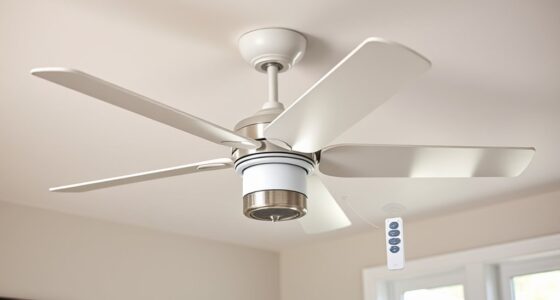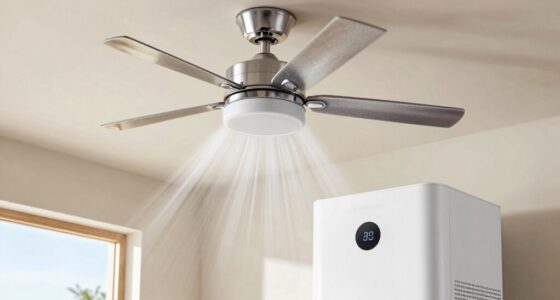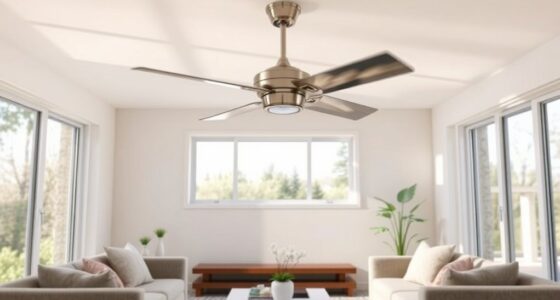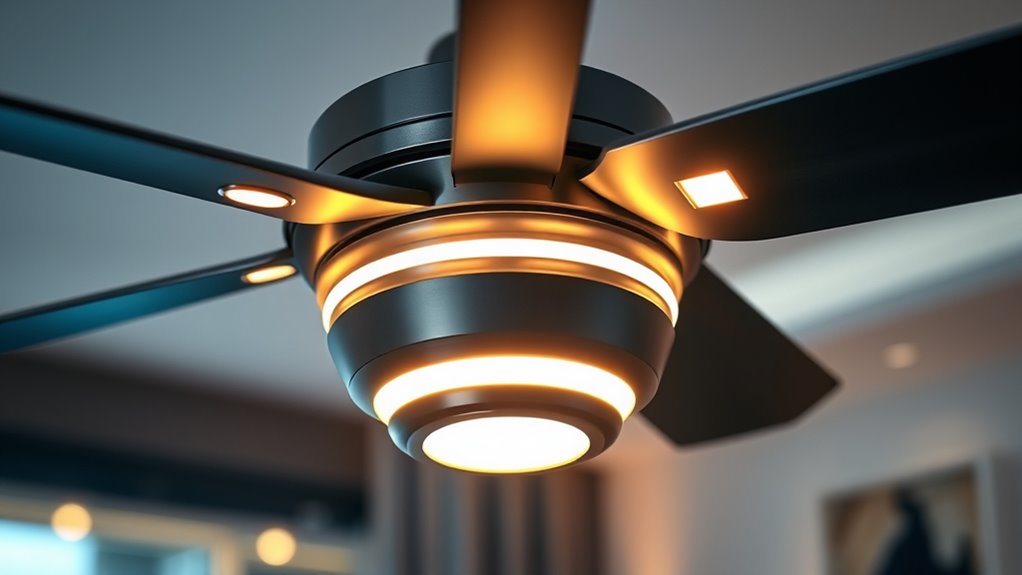

When selecting LED lighting for your ceiling fan, make certain the bulbs match your fixture’s socket type, voltage, and size to avoid interference with blades or motor components. Opt for LEDs with a brightness of 800–1,600 lumens, depending on your room size, and choose a color temperature suitable for your space’s atmosphere, such as warm white or cool white. Prioritize energy-efficient, dimmable options and verify compatibility with your dimmer switch. More details will guide you to a perfect fit.
Key Takeaways
- Verify LED fixture compatibility with your fan’s socket type, size, and electrical specifications.
- Choose the appropriate lumen output based on room size and lighting needs, typically 800–1,600 lumens.
- Select a color temperature that matches your desired ambiance, such as 2700K for warm light or 5000K for cooler light.
- Ensure the LED is dimmable if your fan has dimming features, and confirm compatibility to prevent flickering.
- Opt for energy-efficient LEDs with high lumen efficacy and long lifespan, preferably ENERGY STAR certified.
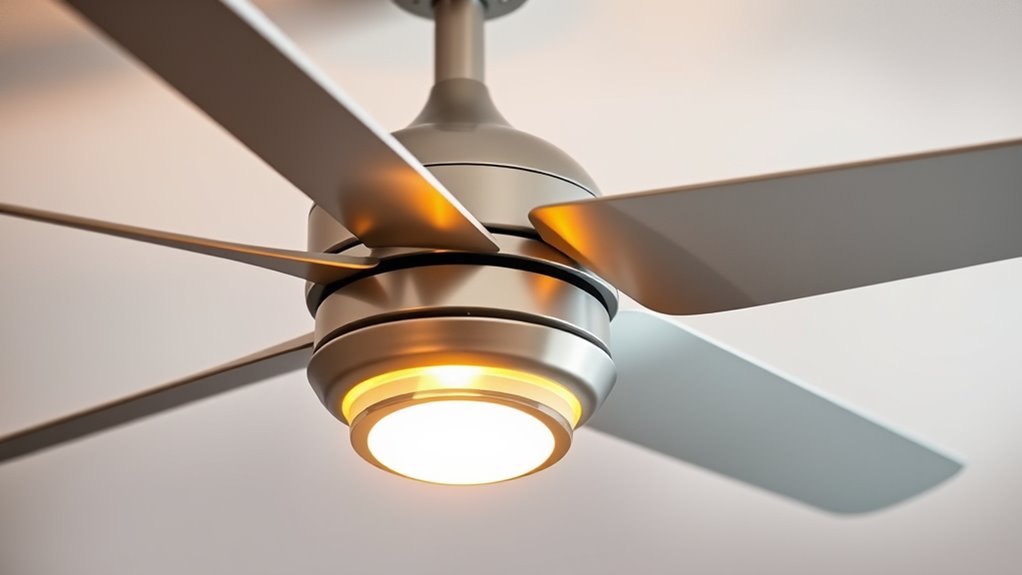
Selecting LED lighting for your ceiling fan involves evaluating compatibility, brightness, color temperature, and energy efficiency. Ensuring compatibility requires verifying that the LED fixture or bulb fits the fan’s existing socket type, whether it’s E26, E12, or a specialized connector. Confirm that the LED light is rated for fan use and that the fixture’s dimensions align with the fan’s design to prevent interference with blades or motor components. Compatibility also extends to electrical specifications; check that the LED’s voltage and wattage ratings match your fan’s electrical system to prevent overloads or insufficient power delivery. Additionally, consider the benefits of LED lighting, which include longevity and lower heat emission, making them ideal for enclosed fan fixtures.
Brightness is a critical factor, and you should quantify it in lumens rather than watts, as LEDs produce different lumen outputs compared to traditional bulbs. For general ambient lighting in a standard room, aim for a brightness level between 800 and 1,600 lumens, which equates roughly to a 60- to 100-watt incandescent bulb. Consider the size of your space and the purpose of the lighting; larger rooms or areas requiring more illumination may need higher lumen outputs. Keep in mind that some LED fixtures are dimmable, but only if your ceiling fan supports compatible dimming controls. Verify that the LED lighting you select explicitly states compatibility with dimmer switches to avoid flickering or reduced lifespan.
Color temperature influences the ambiance created by the lighting. Measured in Kelvin (K), it determines whether the light appears warm, neutral, or cool. Selecting a color temperature around 2700K to 3000K yields warm, inviting illumination suitable for living rooms and bedrooms. For task-oriented areas like kitchens or workspaces, opt for higher Kelvin ratings between 4000K and 5000K, which produce cooler, more focused light. Ensure that the LED’s color temperature aligns with your aesthetic preferences and functional needs, as mismatched lighting can disrupt the visual comfort and overall harmony of the space.
Energy efficiency is paramount in modern lighting choices. LEDs consume substantially less power than incandescent or halogen bulbs, resulting in lower utility bills and reduced environmental impact. When evaluating LED options, review the luminous efficacy, expressed in lumens per watt (lm/W), and select products with higher efficacy ratings for maximum energy savings. Additionally, consider the lifespan of the LED, often rated in hours, to assess long-term durability and maintenance costs. Incorporate LEDs with ENERGY STAR certification when possible, as these meet strict efficiency and performance standards, ensuring you maximize both energy savings and lighting quality.

hansang A15 LED E26 Small Light Bulb, Daylight 5000K, 60Watt Equivalent Ceiling Fan Light Bulbs, E26 Standard Base Appliance Light Bulb, 600 Lumen, CRI85+, Eye Protection, 120V, Non-Dimmable 6 Pack
Ceiling Fan Light Bulbs 5000K Bright Daylight: A higher color temperature emits a cooler, more energizing light. If…
As an affiliate, we earn on qualifying purchases.
As an affiliate, we earn on qualifying purchases.
Frequently Asked Questions
Can LED Lights Be Dimmed on Ceiling Fans?
Yes, LED lights can be dimmed on ceiling fans if they are compatible with dimmer switches. You need to verify the LED bulbs are labeled “dimmable” and that your ceiling fan’s wiring supports dimming functionality. Using a compatible dimmer switch designed for LED lights prevents flickering and guarantees smooth dimming. Always check compatibility before installation to avoid electrical issues and to attain ideal dimming performance.
Are LED Lights Compatible With All Ceiling Fan Models?
Think of your ceiling fan like a finely tuned orchestra—each component must harmonize perfectly. Not all LED lights are compatible with every fan model; some require specific dimmer switches or wiring. Before installation, verify your fan’s specifications and the LED bulb’s compatibility. Doing so guarantees reliable performance, prevents flickering, and maintains safety. Always consult your fan’s manufacturer or a professional electrician to confirm compatibility, ensuring your setup works flawlessly.
What Is the Lifespan of LED Lights in Ceiling Fans?
LED lights in ceiling fans typically last between 25,000 to 50,000 hours of operation, depending on quality and usage patterns. You can expect them to function reliably for 8 to 15 years with regular use, reducing the need for frequent replacements. Proper ventilation and avoiding excessive heat can extend their lifespan. High-quality LEDs with good thermal management are vital for maximizing longevity and maintaining consistent brightness over time.
Do LED Lights Generate Heat When Used in Ceiling Fans?
Like a quiet stream flowing beneath a bridge, LED lights in ceiling fans emit minimal heat. They convert most electrical energy into light, not warmth, making them highly energy-efficient. While some heat is generated, it’s negligible compared to incandescent bulbs. This low heat output prevents overheating and prolongs fixture longevity, ensuring safe operation and energy savings. So, you won’t worry about excessive heat when using LED lights in your ceiling fan.
How Energy-Efficient Are LED Lights Compared to Traditional Bulbs?
LED lights are notably more energy-efficient than traditional incandescent bulbs, consuming up to 80% less power for the same lumen output. They convert most of the electrical energy into visible light rather than heat, reducing energy waste. This efficiency translates into lower electricity bills and less heat emission, making LED lighting an ideal choice for ceiling fans. Your investment in LEDs results in savings and improved environmental sustainability.

TORCHSTAR A19 LED Light Bulbs 60W Equivalent, UL Listed, 5000K Daylight, Dimmable, 9W, 800lm, Flicker Free, E26 Standard Base LED Bulb for Ceiling Fan, Lamp, 15,000hrs, Pack of 6
💡Clear white light, not blueish and proper bright
As an affiliate, we earn on qualifying purchases.
As an affiliate, we earn on qualifying purchases.
Conclusion
So, now that you’re armed with all the technical jargon and LED specs, it’s clear you’re ready to make the obvious choice—because who wouldn’t want energy-efficient, long-lasting lighting for their ceiling fan? Just remember, selecting the right LED isn’t rocket science, but it’s close. Fail to choose wisely, and you might end up with flickering bulbs or higher bills. But hey, at least you’ll have the latest tech, even if it’s just lighting your ceiling fan.

evelor 6-Pack A19 LED Light Bulbs,60 Watt Equivalent Daylight 5000K with E26 Base,Efficient 9W,800 Lumens Non-Dimmable LED Bulbs,15000 Hours, Ideal for Bedroom Living Room
【Energy Efficiency】: EVELOR A19 LED light bulb is an energy-saving 9W (60W equivalent) bulb, saving up to 90%…
As an affiliate, we earn on qualifying purchases.
As an affiliate, we earn on qualifying purchases.

hansang 6 watt (60w Equivalent) LED Bulbs, E12 Small Base Candelabra Round Light Bulb, 600 Lumen, Warm White 2700K Ceiling Fan Light Bulbs, A15 LED Bulb Globe Shape, Non dimmable (6 Pack)
High Efficiency: In the 120V environment, cooperate with 600LM, CRI more than 83
As an affiliate, we earn on qualifying purchases.
As an affiliate, we earn on qualifying purchases.