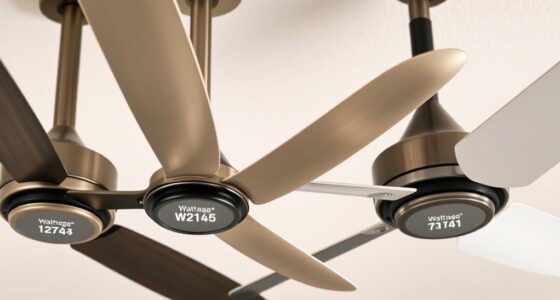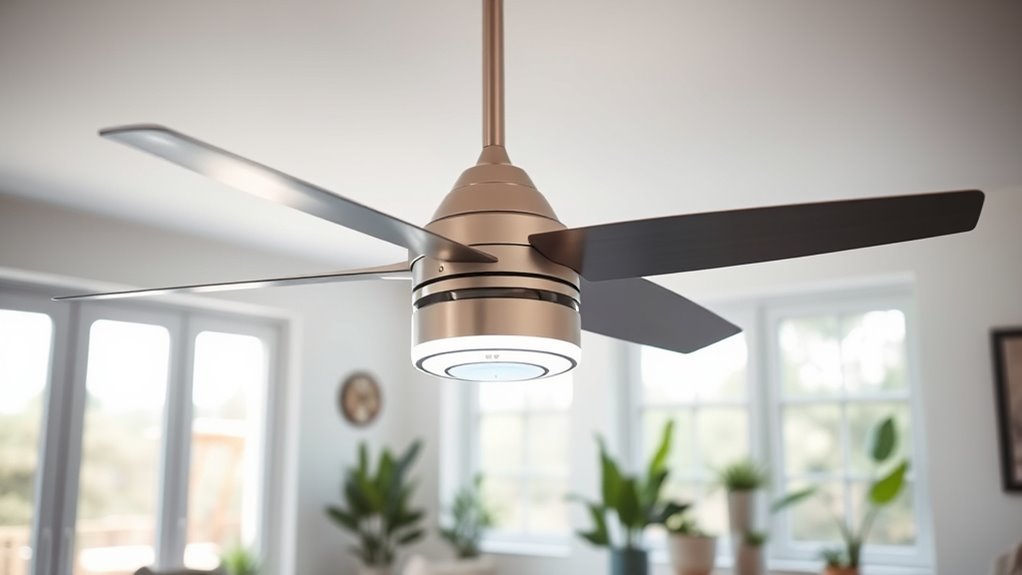

To evaluate the energy efficiency of smart ceiling fans, focus on airflow per watt ratio, which indicates how well a fan delivers air relative to power use. Assess motor design—brushless DC motors with high efficiency ratings and power factors enhance performance. Consider sensor integration, such as motion and temperature sensors, that optimize operation and reduce waste. Advanced control features like scheduling and automation further improve efficiency. Exploring these factors in detail reveals how to choose the most energy-efficient smart ceiling fan.
Key Takeaways
- Assess airflow per watt ratio to compare airflow efficiency relative to energy consumption.
- Examine motor type (e.g., BLDC) and ratings like power factor for optimal energy use.
- Check for sensor features such as occupancy and temperature sensors that enhance adaptive energy savings.
- Review control options like scheduling, timers, and integration with automation systems for efficiency.
- Consider component quality and overall design to ensure reliable, low-loss operation and long-term energy savings.
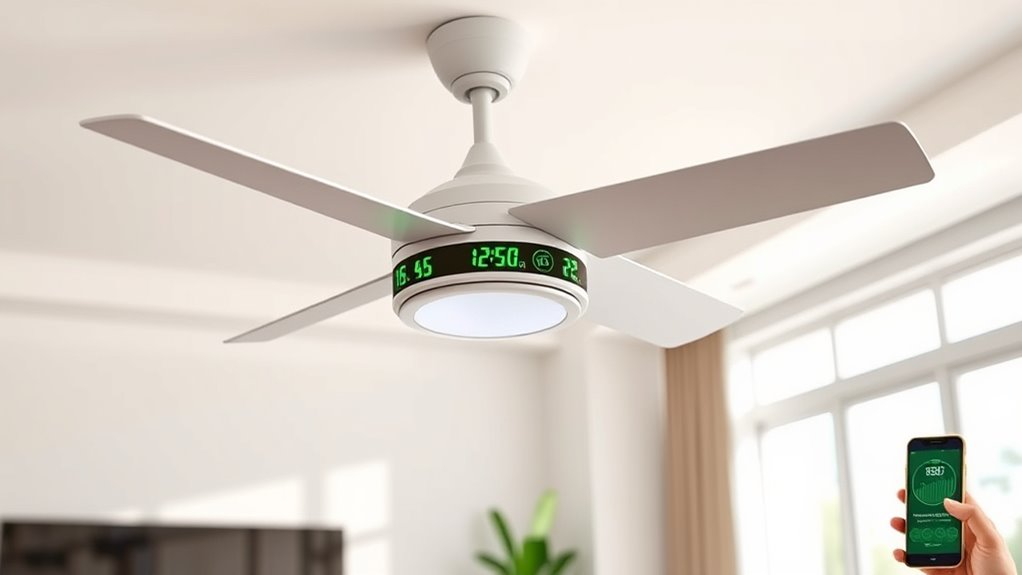
Smart ceiling fans are increasingly integrated with energy-efficient features, making them essential components in modern sustainable homes. These devices leverage advanced motor technology, sensor integration, and smart controls to optimize energy consumption while maintaining effective airflow. When evaluating their energy efficiency, it’s vital to consider how these elements interact and contribute to overall performance. The core metric used is often the airflow per watt ratio, which measures how much air a fan moves relative to its power consumption. A higher ratio indicates better efficiency, allowing you to identify models that deliver optimal airflow with minimal energy use.
One of the primary factors influencing efficiency is motor design. Brushless DC motors (BLDC) are prevalent in smart ceiling fans because they deliver high torque with considerably reduced power draw compared to traditional AC motors. They also exhibit better speed regulation and less heat generation, which enhances longevity and reduces energy loss. When assessing a fan, it’s essential to look at the motor’s efficiency rating, often expressed as the motor’s power factor and total harmonic distortion (THD). A high power factor (close to 1) indicates that the motor uses electrical energy more effectively, converting more into mechanical energy rather than wasting it as heat.
Brushless DC motors improve efficiency with high torque, reduced power use, and better speed regulation.
Sensor integration is another critical component that impacts energy efficiency. Smart fans equipped with motion sensors, temperature sensors, or humidity detectors adjust their operation based on environmental conditions. For example, motion sensors can turn the fan off when a room is unoccupied, preventing unnecessary energy use. Temperature sensors enable precise control, activating or modulating fan speed only when needed. This adaptive operation minimizes wasted energy, which traditional fans often waste in continuous operation or at fixed speeds. The responsiveness and calibration of these sensors directly influence the fan’s overall efficiency and energy savings.
Moreover, smart controls and connectivity features enhance efficiency by allowing remote operation and scheduling. You can set timers or automate fan activity based on occupancy patterns, reducing idle running times. Integration with home automation systems further refines energy management, enabling the fan to coordinate with other devices such as HVAC systems, thereby optimizing overall energy use within the household. The effectiveness of these controls depends on their algorithm sophistication, user interface, and reliability, all of which contribute to real-world energy savings. Additionally, considerations like motor efficiency and the quality of components play a significant role in overall energy performance.

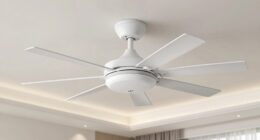
52in Smart Low Profile Ceiling Fans with Lights Remote,Quiet DC Motor,Outdoor Indoor Flush Mount Ceiling Fan,Control with WIFI Alexa App,Dimmable,6-speed,3 White Wood blades,for Modern Bedroom Patio
【Voice &APP &Remote Control】52 inch Ceiling fan with lights and remote (handheld and wall mounted), still in control…
As an affiliate, we earn on qualifying purchases.
As an affiliate, we earn on qualifying purchases.
Frequently Asked Questions
How Do Smart Ceiling Fans Compare to Traditional Fans in Energy Savings?
Smart ceiling fans typically consume less energy than traditional fans due to advanced motor technology and variable speed controls, allowing you to adjust airflow precisely. They often feature programmable timers and remote controls, which help you optimize usage and reduce waste. Additionally, their integration with smart home systems enables automation and energy monitoring, leading to more efficient operation and cost savings over time. Overall, smart fans offer significant energy efficiency advantages.
What Features Influence the Energy Efficiency of Smart Ceiling Fans?
You can boost a smart ceiling fan’s energy efficiency by focusing on features like variable speed control, which optimizes power use, and sensors that adjust operation based on room occupancy or temperature. Additionally, look for energy-efficient motors, programmable timers, and smart connectivity that allows remote control and scheduling. These features collectively reduce unnecessary energy consumption, ensuring you maximize efficiency while maintaining comfort.
Are There Specific Brands Known for the Most Energy-Efficient Smart Fans?
Brands like Hunter, Haiku by Big Ass Fans, and Minka-Aire are renowned for their energy-efficient smart ceiling fans. These manufacturers integrate advanced motor technology, intelligent controls, and eco-friendly materials, ensuring ideal airflow with minimal power consumption. Their products often feature energy-saving modes and smart sensors, making them ideal choices for efficiency-conscious consumers. Choosing these brands means aligning with innovation and sustainability, much like the steady, unyielding flow of a dependable breeze.
How Does Room Size Impact the Energy Consumption of Smart Ceiling Fans?
Room size directly influences the energy consumption of your smart ceiling fan. Larger spaces require higher airflow, prompting the fan to operate at increased speeds or longer durations, which elevates energy use. Conversely, smaller rooms need less airflow, allowing you to set the fan at lower speeds, conserving energy. To optimize efficiency, select a fan with adjustable speed settings and smart controls tailored to your room’s dimensions, reducing unnecessary power consumption.
Can Smart Ceiling Fans Reduce Overall Household Energy Bills Significantly?
Smart ceiling fans can cut your household energy bills by up to 30%, thanks to their optimized motor efficiency and adaptive speed settings. By reducing reliance on HVAC systems, they lower overall energy consumption, especially in moderate climates. Their intelligent automation adjusts fan speed based on room occupancy and temperature, ensuring energy savings without sacrificing comfort. This targeted approach makes smart fans a cost-effective upgrade for energy-conscious households.

53T Smart Wi-Fi Ceiling Fan Remote Control Kit, 3 Fan Speed & Light Dimmer,Compatible with Alexa & Google Home Smart Life APP
【Smart Wi-Fi Version】: Remote / Smart Life APP / Voice – 3 ways to control your ceiling fan…
As an affiliate, we earn on qualifying purchases.
As an affiliate, we earn on qualifying purchases.
Conclusion
By evaluating energy consumption patterns and integrating advanced sensor technologies, you can optimize smart ceiling fans for peak efficiency. Visualize these devices as silent guardians, seamlessly adjusting airflow with minimal power draw, ensuring comfort without waste. This analytical approach reveals that thoughtful design and real-time data lead to significant energy savings, transforming your space into a showcase of technological precision. Ultimately, intelligent assessment empowers you to make informed choices, maximizing both performance and sustainability in your environment.
53T Smart Wi-Fi Ceiling Fan Remote Control Kit, 3 Fan Speed & Light Dimmer,Compatible with Alexa & Google Home Smart Life APP
【Smart Wi-Fi Version】: Remote / Smart Life APP / Voice – 3 ways to control your ceiling fan…
As an affiliate, we earn on qualifying purchases.
As an affiliate, we earn on qualifying purchases.
53T Smart Wi-Fi Ceiling Fan Remote Control Kit, 3 Fan Speed & Light Dimmer,Compatible with Alexa & Google Home Smart Life APP
【Smart Wi-Fi Version】: Remote / Smart Life APP / Voice – 3 ways to control your ceiling fan…
As an affiliate, we earn on qualifying purchases.
As an affiliate, we earn on qualifying purchases.