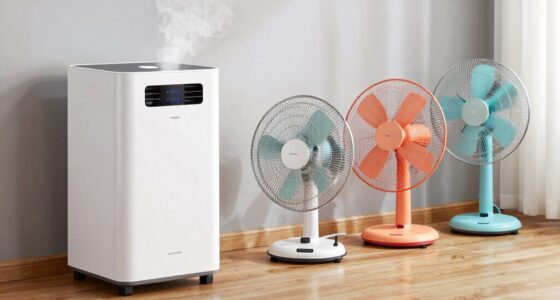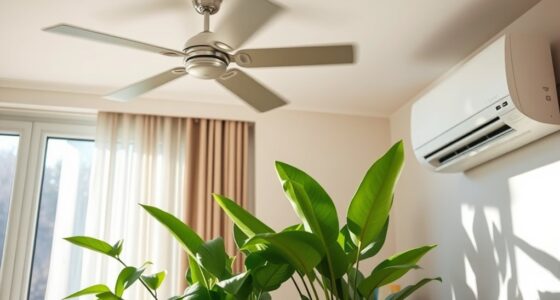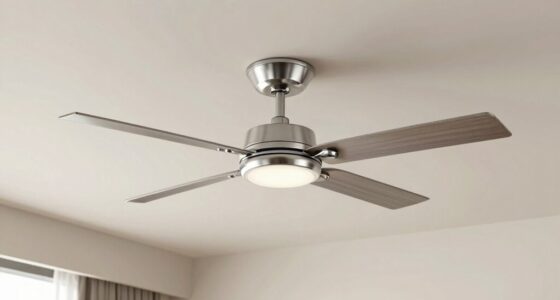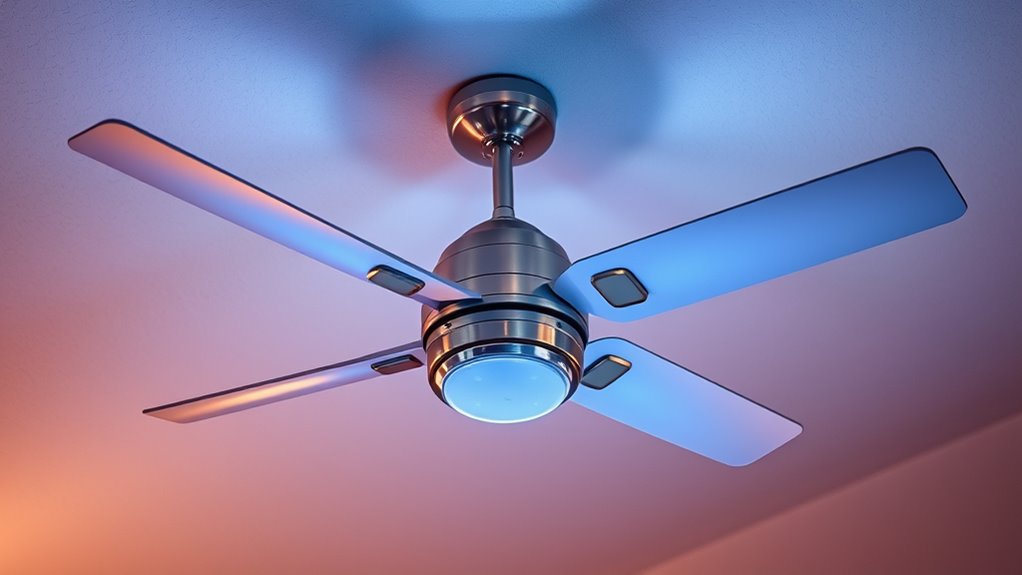

Using ceiling fans with thermostats and sensors allows you to automate airflow adjustments based on real-time temperature data. These systems monitor ambient conditions continuously, activating or deactivating the fan to maintain your desired comfort level efficiently. You can customize temperature settings, control airflow directions, and set schedules for ideal energy savings. Implementing such advanced controls helps stabilize indoor climates effortlessly—if you explore further, you’ll discover how to maximize their potential for comfort and efficiency.
Key Takeaways
- Thermostats and sensors automatically adjust ceiling fan speed based on ambient temperature for optimal comfort.
- They help maintain consistent indoor climate by activating or deactivating the fan as needed.
- Users can configure temperature settings and schedules for energy-efficient operation.
- Reversible fan direction and automatic speed adjustments optimize seasonal comfort.
- These systems reduce energy waste and extend fan lifespan by preventing unnecessary operation.
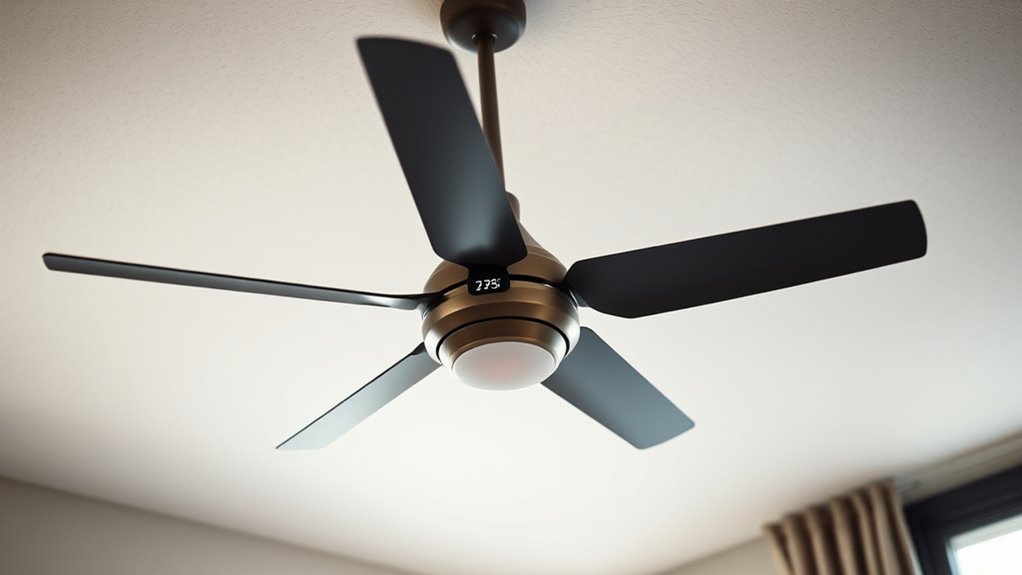
Ceiling fans equipped with thermostats and sensors offer an efficient means to refine indoor climate control by automatically adjusting airflow based on temperature readings. These integrated systems enable precise regulation of room temperature, reducing reliance on traditional HVAC systems and enhancing energy efficiency. The thermostat component continuously monitors ambient temperature, providing real-time data that guides the fan’s operation. Sensors detect fluctuations in temperature, activating or deactivating the fan as necessary to maintain a set comfort level. This automation eliminates the need for manual adjustments, guaranteeing consistent indoor conditions and minimizing energy waste.
Ceiling fans with thermostats and sensors automatically adjust airflow for optimal, energy-efficient indoor climate control.
The core functionality hinges on the integration of thermostats and sensors with the fan’s control system. When the temperature rises above a predetermined threshold, the system triggers the fan to increase airflow, facilitating heat dissipation and promoting cooling. Conversely, if the temperature drops below the target range, the system reduces or halts fan operation to conserve energy. This dynamic adjustment not only sustains ideal comfort but also prevents unnecessary fan activity, extending the lifespan of the device and reducing maintenance costs. The precision of these systems relies on high-quality sensors capable of detecting subtle temperature variations, often within a fraction of a degree, thereby enabling fine-tuned responses.
Installation of these intelligent ceiling fans requires compatibility with existing electrical wiring and control interfaces. Most models feature user-configurable temperature settings accessible through a digital interface or remote control. This allows you to define specific comfort zones, customizing operation to suit your preferences. Additionally, many systems incorporate programmable timers and scheduling functions, which further refine operational parameters by aligning fan activity with daily routines. These features facilitate energy conservation by ensuring the fan runs only when necessary, avoiding continuous operation during unoccupied periods.
Operation of ceiling fans with thermostats and sensors also involves consideration of airflow direction and speed settings. During warmer months, setting the fan to rotate counterclockwise promotes a cooling breeze, while in cooler seasons, reversing the direction can assist in circulating warm air trapped near the ceiling. The sensors adjust fan speed accordingly, providing a seamless transition between modes without user intervention. This level of automation ensures the indoor climate remains stable even with fluctuating external conditions, contributing to overall energy savings and enhanced comfort. Additionally, understanding energy efficiency benefits can help optimize overall home climate management.

DREO Space Heater, Portable Electric Heaters for Indoor Use with Thermostat and Remote, 2024 Upgraded, Digital Display, 12H Timer, 5 Mode, 1500W PTC Ceramic Fast Safety Heat for Office Bedroom Home
Powerful heat that fits everywhere: DREO space heaters for indoor combines Hyperamics 1500W advanced PTC system with a...
As an affiliate, we earn on qualifying purchases.
Frequently Asked Questions
Can Ceiling Fans With Thermostats Save Energy Year-Round?
Yes, ceiling fans with thermostats can save you energy year-round. They optimize airflow based on temperature settings, reducing the need for heating or cooling systems to work as hard. In summer, fans create a cooling breeze, lowering your AC use. In winter, reversing the fan’s direction redistributes warm air, decreasing heater reliance. Properly programmed, these fans improve efficiency, cut energy costs, and maintain comfortable indoor temperatures efficiently throughout the year.
Are Smart Sensors Compatible With All Ceiling Fan Models?
Smart sensors are not compatible with all ceiling fan models. Compatibility depends on the fan’s design, motor type, and control system. Many newer fans feature built-in smart technology or are designed to integrate with smart home systems, while older models may require adapters or retrofitting. Always check the manufacturer’s specifications and compatibility charts before purchasing or attempting to integrate smart sensors with your ceiling fan.
How Accurate Are Thermostat-Based Ceiling Fan Temperature Readings?
Thermostat-based ceiling fan temperature readings are generally accurate within a 1-2°F range, but can vary due to sensor placement and calibration. You should verify sensors are installed in representative locations away from direct heat sources or drafts for ideal accuracy. Regular calibration and sensor maintenance help maintain precision. Keep in mind, environmental factors and sensor quality influence reading reliability, so choose high-quality sensors for critical temperature control.
Can I Install Sensors Myself or Need Professional Help?
You can install sensors yourself if you have basic electrical skills and follow the manufacturer’s instructions carefully. Turn off the power before beginning, then connect the sensor to the ceiling fan’s wiring, ensuring proper grounding and secure connections. However, if you’re unsure or uncomfortable working with electrical components, it’s best to hire a professional electrician. Proper installation guarantees accurate readings and safe operation.
Do Ceiling Fans With Sensors Improve Indoor Air Quality?
Ceiling fans with sensors don’t directly improve indoor air quality. Instead, they enhance comfort by adjusting airflow based on occupancy or temperature, reducing the need for constant manual control. This can indirectly support air quality by promoting better ventilation and circulation, which helps disperse pollutants and humidity. However, for substantial air quality improvements, consider dedicated air purifiers or ventilation systems alongside your sensor-equipped ceiling fan.

FLANUR Space Heaters for Indoor Use, Smart Portable Electric Heater with Thermostat, WiFi and Voice Control, 12H Timer, 4 Modes, 36dB 1500W PTC Ceramic Safety Heat for Office Bedroom Home 1Pack Black
Smart Control: The electric space heater can be remotely controlled through the Havaworks app. It is also compatible...
As an affiliate, we earn on qualifying purchases.
Conclusion
By integrating thermostats and sensors with your ceiling fans, you create a symphony of comfort and efficiency. This smart system acts as a vigilant conductor, adjusting airflow precisely when needed, much like a lighthouse guiding ships through changing tides. With this setup, you optimize energy use and maintain a stable environment, transforming your space into a finely tuned climate control hub. Embrace this technology, and watch your comfort seamlessly adapt as effortlessly as the seasons shift.

SereneLife Smart Space Heater – 1500W Indoor Electric Heater with Thermostat, Remote Control, 12-Hour Timer, Wi-Fi Enabled PTC Ceramic Heating for Home and Office, Gray (5.9" x 5.9" x 9.5")
FAST AND EFFICIENT HEATING – This 1500W PTC ceramic space heater is designed to heat up your space...
As an affiliate, we earn on qualifying purchases.

DREO Space Heater, 1500W Electric Heaters for Indoor Use with Thermostat, 70° Oscillation, 8 Safety Protections, 5 Modes, Remote, 12H Timer, Quiet Portable Heater for Office, Bedroom, Large Room
ETL-Certified Safety: Made of V0 flame-retardant materials with multiple safety features including built-in smart tip-over protection, overheat protection,...
As an affiliate, we earn on qualifying purchases.