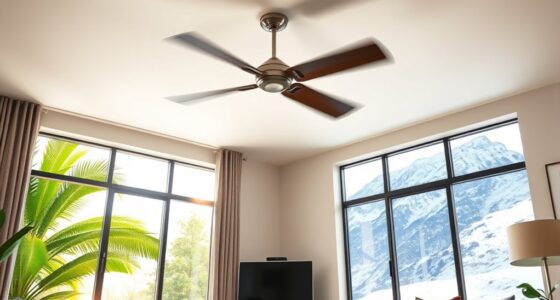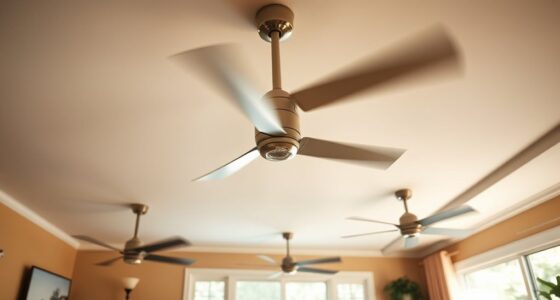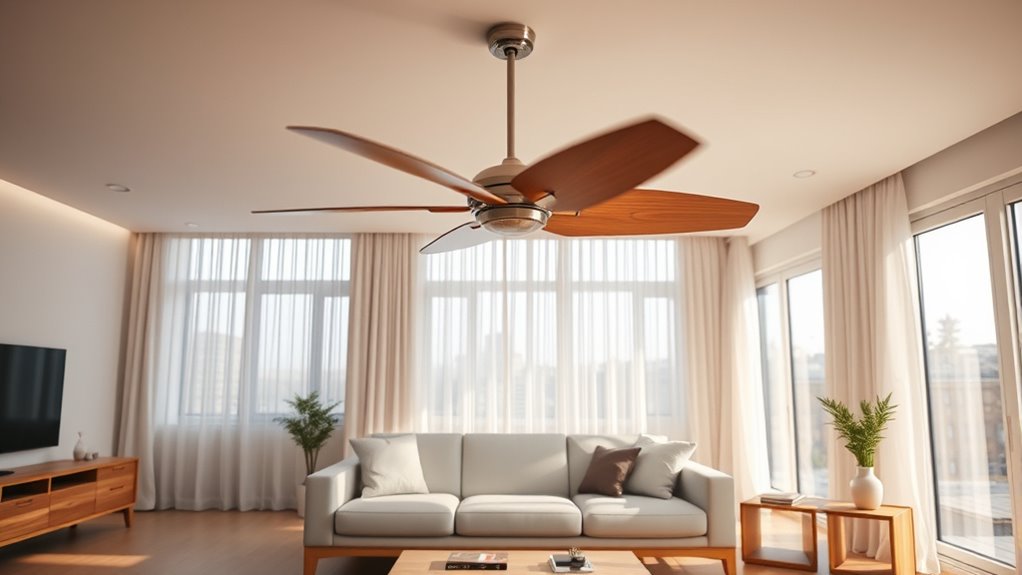

To maximize energy savings with ceiling fans, strategically position them to support natural cross-ventilation and optimize airflow patterns. Use fans to amplify prevailing breezes, promoting continuous air circulation and dissipating heat efficiently. Proper placement and orientation facilitate better air exchange, reducing reliance on mechanical cooling. Combining fans with smart controls and natural ventilation strategies enhances thermal comfort while lowering energy consumption. Exploring these techniques further reveals how to systematically improve indoor environments sustainably.
Key Takeaways
- Position ceiling fans to complement natural airflow and promote cross-ventilation for enhanced indoor air exchange.
- Use fans at low speeds during mild weather to conserve energy while maintaining thermal comfort.
- Combine fans with natural ventilation strategies like open windows and vents to maximize air circulation.
- Integrate smart controls and sensors for automated fan operation, reducing energy waste.
- Proper fan placement and orientation support prevailing winds, boosting ventilation efficiency and reducing reliance on mechanical cooling.
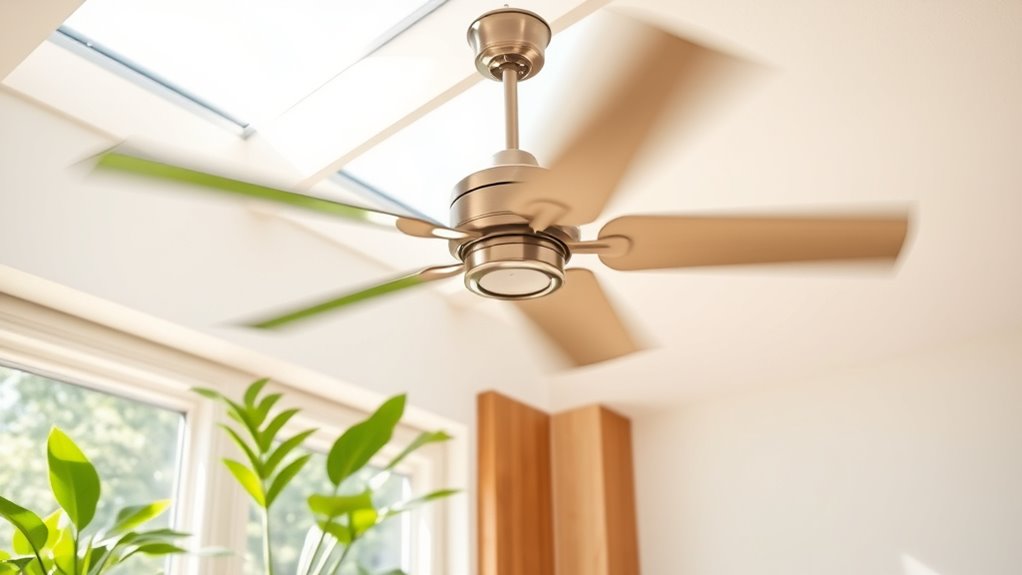
Ceiling fans play a crucial role in enhancing natural ventilation by promoting air circulation within indoor spaces. They act as mechanical agents that facilitate the movement of air, which can substantially influence indoor thermal comfort and energy efficiency. By creating a continuous flow of air, ceiling fans reduce the stagnation of indoor air, thereby improving the exchange between indoor and outdoor air when windows or vents are open. This process helps dissipate heat and humidity effectively, decreasing reliance on mechanical cooling systems and lowering energy consumption.
Ceiling fans enhance ventilation, improve comfort, and reduce energy use by promoting air circulation indoors.
From a technical perspective, the efficiency of ceiling fans in supporting natural ventilation hinges on their air movement capacity, typically measured in cubic feet per minute (CFM), and their ability to generate a consistent airflow pattern. Properly selected fans, with appropriate blade design and pitch, optimize airflow while minimizing energy use. When used in conjunction with natural ventilation strategies, such as cross-ventilation, the fans amplify the effectiveness of prevailing wind patterns, redistributing fresh air throughout the space. This synergy extends the period during which indoor temperatures remain comfortable, even during peak heat conditions, by enhancing convective heat transfer away from occupants.
Furthermore, the orientation and placement of ceiling fans are critical for maximizing their impact. Positioning fans to complement natural airflow routes ensures that they do not counteract prevailing breezes but instead direct air in a manner that promotes continuous circulation. For example, in spaces with open windows on opposite sides, fans should be set to encourage cross-flow, which accelerates air exchange. This targeted approach minimizes the need for mechanical cooling and reduces electrical energy consumption associated with air conditioning units.
Energy savings are achieved not only through the reduction of mechanical cooling but also by optimizing the operational parameters of ceiling fans. Using fans at lower speeds during mild weather conditions can maintain comfort levels without unnecessary energy expenditure. Additionally, integrating fans with smart controls that respond to indoor temperature sensors allows for dynamic adjustment, ensuring fans operate only when needed. This intelligent operation minimizes waste and maximizes the cooling effect derived from natural ventilation, creating a sustainable indoor environment. Incorporating advanced control systems can further enhance the energy efficiency of ventilation strategies by coordinating fan operation with other building systems.
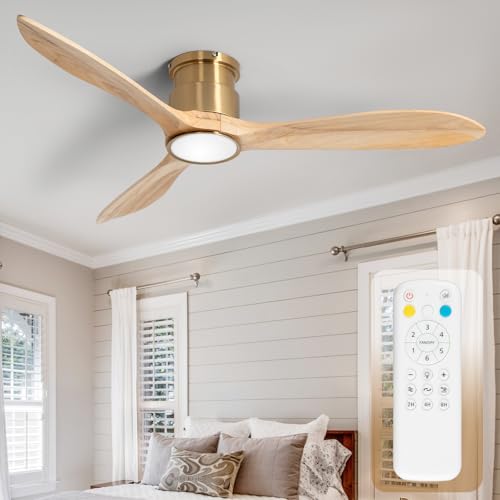
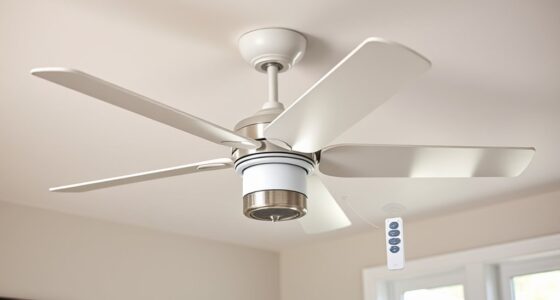
52inch Ceiling Fan with Lights,Wood Low Profile Ceiling Fans with Remote Control,Dimmable Light,3 CCT,6 Speeds,Noiseless DC Motor,Ceiling Fan for Bedroom,Living Room,Office,Indoor,Natural Wood Grain
Remote Control Ceiling Fan:All functions can be managed via the remote control, allowing you to adjust the fan…
As an affiliate, we earn on qualifying purchases.
As an affiliate, we earn on qualifying purchases.
Frequently Asked Questions
How Do Ceiling Fans Influence Indoor Air Quality?
Ceiling fans improve indoor air quality by promoting air circulation, which helps disperse airborne pollutants and reduce stagnant zones. They facilitate the movement of fresh air from natural ventilation sources, minimizing indoor pollutants’ concentration. Additionally, by enhancing airflow, ceiling fans can reduce humidity levels, preventing mold growth, and improving overall air freshness. Properly used, they contribute to healthier indoor environments without relying solely on mechanical ventilation systems.
Can Ceiling Fans Replace Mechanical Ventilation Systems Entirely?
Ceiling fans cannot fully replace mechanical ventilation systems because they primarily circulate air rather than remove or filter indoor pollutants. While they enhance airflow and help reduce indoor temperature, they lack the capabilities necessary for maintaining indoor air quality, such as controlling humidity or filtering contaminants. For ideal indoor air health and energy efficiency, ceiling fans should complement, not replace, dedicated ventilation systems designed to manage air exchange and filtration effectively.
Are There Specific Ceiling Fan Features That Enhance Natural Ventilation?
You should look for ceiling fans with adjustable airflow speeds, reversible motor functions, and optimized blade designs to enhance natural ventilation. These features increase airflow direction control, promote efficient air circulation, and improve indoor air quality. Additionally, fans equipped with night mode or timers can help optimize operation times, reducing energy consumption. Such technical specifications enable ceiling fans to work synergistically with natural ventilation, maximizing energy savings and indoor comfort.
How Do Climate Differences Affect Ceiling Fan Effectiveness?
Imagine a warm summer breeze gently stirring the leaves outside your window—that’s how climate influences your ceiling fan’s efficiency. In hot, humid environments, fans provide immediate relief by promoting evaporation and airflow, but in cooler or variable climates, their effectiveness diminishes unless paired with natural ventilation. You should select fan speeds and settings tailored to your local climate, optimizing energy use while maintaining comfort.
What Maintenance Is Required for Optimal Natural Ventilation?
You should regularly inspect and clean ventilation openings, ensuring they remain unobstructed by debris or dust. Lubricate moving parts of vents or louvers to prevent mechanical failure. Check for structural damage or corrosion and repair promptly to maintain airflow efficiency. Additionally, monitor humidity and temperature levels, adjusting ventilation controls as necessary to optimize indoor air quality and energy efficiency. Consistent maintenance prolongs system lifespan and maximizes natural ventilation benefits.

ZMISHIBO 52 Inch Smart Ceiling Fans with RGB Lights, Low Profile Flush Mount Ceiling Fan with Alexa/App/Remote Control, Dimmable 20W LED Light, Black Modern Fan for Living Room, Bedroom, Game Room
【Voice&APP&Remote Control】52 inch indoor smart ceiling fan supports voice control, easily compatible with Wi-Fi, Alexa and Google assistant,…
As an affiliate, we earn on qualifying purchases.
As an affiliate, we earn on qualifying purchases.
Conclusion
By combining ceiling fans with natural ventilation, you harness a powerful, cost-effective strategy to reduce energy consumption. Imagine your home as a gust of fresh air—each breeze working in harmony, like a well-orchestrated symphony, to optimize comfort and efficiency. Studies show that properly timed ventilation can cut cooling costs by up to 30%. When you embrace this approach, you’re not just saving energy; you’re creating a sustainable environment that benefits both your wallet and the planet.
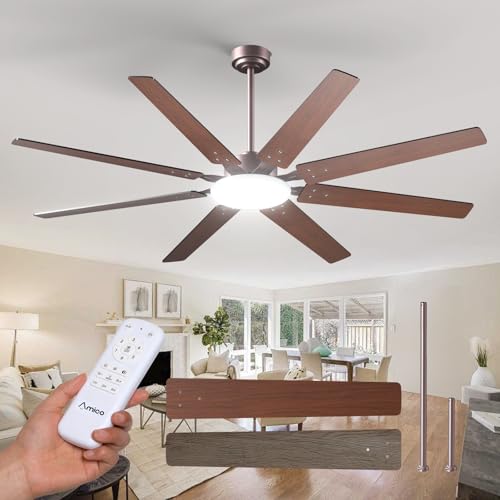
Amico 72 inch Farmhouse Bronze Ceiling Fan with Light, Large Energy Efficient Ceiling Fans with Remote, Reversible DC Motor, Dimmable 3CCT LED, Quiet Indoor/Outdoor for Living Room, Bedroom, Patio
Ceiling Fan with Light: Decorate your home with Amico ceiling fan! While bringing you coolness and comfort, it…
As an affiliate, we earn on qualifying purchases.
As an affiliate, we earn on qualifying purchases.

Broan-Nutone 682 Duct-Free Ventilation Fan, White Square Ceiling or Wall Exhaust Fan with Plastic Grille
VERSATILE FAN: Ventilation fan helps eliminate humidity, tobacco smoke, and cooking odors. Install the compact fan between ceiling…
As an affiliate, we earn on qualifying purchases.
As an affiliate, we earn on qualifying purchases.