Leaving your ceiling fan on in an empty room definitely wastes electricity and money. While ceiling fans use between 10 to 120 watts, air conditioning units consume much more, up to 3,500 watts per hour. Fans create a cool wind chill effect but don't actually lower the room temperature. To save energy and reduce costs, turn off the fan when you leave the room. Using fans effectively can enhance your comfort and lower your utility bills when paired with air conditioning. There are more tips that can help you maximize efficiency and savings.

Get home appliances delivered free with Prime
- Fast, free delivery on millions of items
- Prime Video, Amazon Music and more included
- Member-only deals all year
Key Takeaways
- Leaving ceiling fans on in unoccupied rooms wastes electricity and can lead to unnecessary costs, potentially exceeding $40 during summer months.
- Ceiling fans do not cool rooms; they only create a wind chill effect that enhances comfort while using minimal energy.
- Using ceiling fans strategically in occupied spaces can reduce energy consumption and lower utility bills compared to air conditioning.
- Turning off ceiling fans when leaving a room maximizes savings and prevents wasting electricity.
- Combining ceiling fans with air conditioning can save up to 12% on cooling costs, making them an efficient choice when used correctly.
As an affiliate, we earn on qualifying purchases.
Energy Consumption of Ceiling Fans

When you're looking to stay cool during warm months, ceiling fans offer an energy-efficient alternative to air conditioning. They typically consume between 10 to 120 watts per hour, a stark contrast to air conditioning units that can use 500 to 3500 watts.
By choosing to run a ceiling fan, you can considerably lower your energy consumption and potentially save energy on your utility bills.
To estimate the operating costs of running a ceiling fan, you can use the formula: (Wattage x Hours Used)/1000 = kWh. This makes it easy to understand how much you'll spend on your cooling solutions.
However, it's essential to recognize that keeping ceiling fans running in unoccupied rooms can waste energy. Ceiling fans don't actually lower the temperature; instead, they create a wind chill effect that cools people down. Additionally, using ceiling fans in conjunction with heat pumps can enhance overall energy efficiency by allowing for higher thermostat settings. This strategy is effective because energy-efficient technology can lead to substantial operational savings. Furthermore, using ceiling fans can complement the heating and cooling capabilities of heat pumps, making your home more comfortable year-round. Regular maintenance of heat pump systems can further improve their efficiency and effectiveness in conjunction with ceiling fans. Moreover, noise levels of modern heat pumps have been significantly reduced, which contributes to a more comfortable living environment when paired with ceiling fans.
To maximize your energy-saving potential, consider using ceiling fans in conjunction with higher thermostat settings. This approach allows you to enjoy comfort while effectively managing your energy consumption.
Cooling Effect of Ceiling Fans

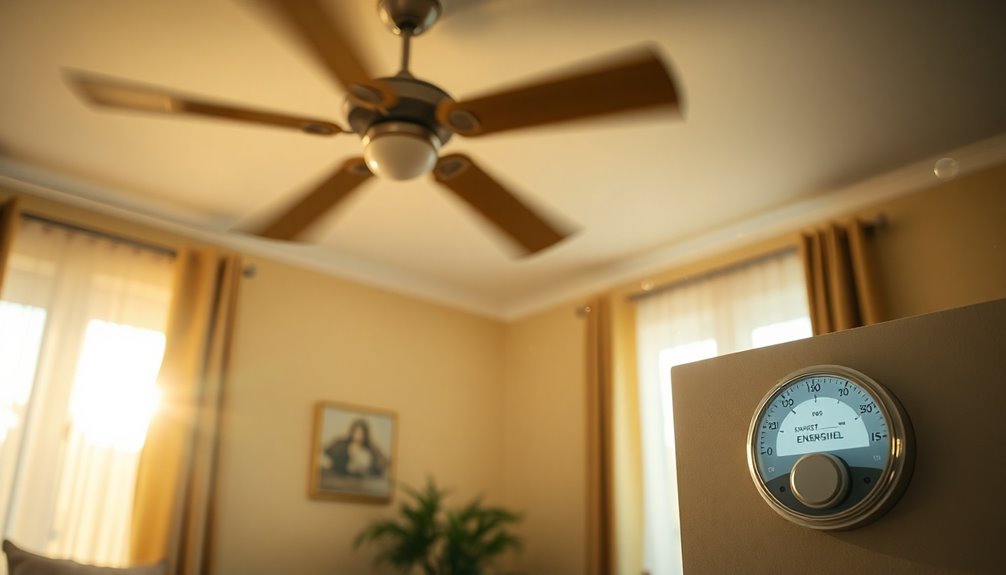
Ceiling fans are an effective way to enhance your comfort by creating a cooling sensation in your living space. They work by generating a wind chill effect, which cools you down by increasing the evaporation of moisture from your skin. This means that with a ceiling fan, the temperature can feel up to 4°F cooler, letting you raise your thermostat settings without sacrificing comfort.
To maximize energy efficiency, it's best to use ceiling fans in occupied rooms. Leaving them on in empty spaces leads to unnecessary energy waste, as the cooling effect doesn't lower the actual room temperature. When you leave a room, turn off the fan to save money on energy costs.
Using ceiling fans alongside air conditioning can create a more comfortable environment while reducing your overall cooling expenses. By strategically combining these methods, you'll enjoy a cooler space with less strain on your air conditioning system.
Cost of Operating Ceiling Fans

Operating a ceiling fan can be surprisingly economical, especially when compared to the hefty energy bills associated with air conditioning units. Ceiling fans typically consume between 10 to 120 watts of electricity, while air conditioning can use anywhere from 500 to 3500 watts per hour. This stark difference in energy use can greatly impact your monthly expenses.
To help you understand the cost of operating a ceiling fan, here's a simple breakdown:
| Appliance | Wattage | Hours Used | Monthly Cost (Approx.) |
|---|---|---|---|
| Ceiling Fan | 70 | 8 | $3.36 |
| Air Conditioning | 2000 | 8 | $96.00 |
While running a ceiling fan can help you maintain comfort and create a cooling effect, be mindful of unnecessary electricity waste. If you leave ceiling fans running in unoccupied rooms, it can lead to an estimated cost of $40 or more during summer months. To maximize savings, remember to turn off fans when you leave a room. Utilizing ceiling fans strategically allows you to save energy and keep your electric bills in check.
Myths About Ceiling Fans

Many people hold misconceptions about how ceiling fans function and their impact on room temperature. One common myth is that ceiling fans actually cool the air in a room.
In reality, these fans create a wind chill effect that makes you feel cooler, but they don't lower the room's temperature. Leaving your fan on in unoccupied spaces can waste energy and money.
Here are three important points to take into account:
- Ceiling fans don't cool rooms – They enhance your comfort by increasing evaporation from your skin, not by lowering the air temperature.
- Leaving the fan on wastes energy – Continuous use in empty rooms can waste over $40 during summer months.
- Use strategically – Operate your ceiling fan only when you're present. Turn it off when you leave to save on energy bills.
- Energy-efficient technology promotes sustainable living practices and can help reduce overall energy consumption when used correctly.
Tips for Efficient Fan Usage

Maximizing energy efficiency with your ceiling fan can lead to significant savings and enhanced comfort. When using ceiling fans, remember they cool people through airflow, not the room itself. So, always turn off ceiling fans when leaving a room to avoid wasting electricity.
You can improve your cooling strategy by pairing ceiling fans with your air conditioner. This combination allows you to raise the temperature on your thermostat, helping you save up to 12% on cooling costs.
During summer, set your ceiling fans to run counterclockwise to create a cool draft. In winter, switch them to clockwise to better circulate warm air, maintaining a comfortable environment year-round.
Choosing the right fan size for your space is essential. A larger fan can move more air, which helps improve efficiency and comfort.
Regularly assess your fan usage habits and only turn on ceiling fans when occupied, minimizing energy waste. Additionally, utilizing an air purifier can further enhance indoor comfort by improving air quality, complementing your cooling strategy. By implementing these tips, you'll enjoy a cooler space while using less energy, ultimately leading to lower electricity bills and a more sustainable lifestyle.
Frequently Asked Questions
Can Ceiling Fans Cause a High Electric Bill?
Ceiling fans can cause a high electric bill if you leave them running in unoccupied rooms.
While they consume less energy than air conditioning units, inefficient use can lead to unnecessary costs.
If you don't turn them off when you leave, you might find your bill higher than expected.
To manage expenses, run your fan only when you're in the room and consider using it with your AC to boost efficiency.
Do Ceiling Fans Use a Lot of Electricity?
Ceiling fans don't use a lot of electricity compared to air conditioning units.
Typically, they consume between 10 to 120 watts, which is much lower than the thousands of watts air conditioners require.
If you calculate the cost based on wattage and usage, you'll see that running a ceiling fan can actually save you money on your utility bills.
Just remember to turn it off when you leave a room to maximize efficiency!
How Much Does It Cost to Run a Ceiling Fan 24 Hours a Day?
Running a ceiling fan around the clock is like keeping a gentle breeze in your home, but it does come at a cost.
Depending on the fan's efficiency, you're looking at about $0.24 to $2.88 daily.
Over a month, that could add up to between $7.20 and $86.40.
Is It Energy-Efficient to Leave Ceiling Fans On?
Leaving ceiling fans on in unoccupied rooms isn't energy-efficient.
Fans work best when you're present, using the wind chill effect to keep you cool. When no one's around, they don't lower the room temperature, making their running pointless.
To save energy, turn them off when you leave.
Conclusion
To sum up, using a ceiling fan can actually save you money on energy bills. Did you know that running a ceiling fan can make you feel up to 4 degrees cooler, allowing you to set your thermostat higher? This means you could potentially save around 10% on your cooling costs. By using your ceiling fan wisely and debunking common myths, you can enjoy comfort without wasting electricity. So, keep that fan spinning and your wallet happy!
NFL season / tailgating Picks
team gear
As an affiliate, we earn on qualifying purchases.