
Cookware compatibility trips up new induction users because it’s not just about the exterior or coating; it depends on the core material’s magnetic properties. Many ceramic-coated or aluminum pans aren’t magnetic, so they won’t work even if they look suitable. The key is to test with a magnet—if it sticks, your cookware is likely compatible. To avoid frustration, understanding the core material is essential—keep going to learn how to easily identify the right options.

Get home appliances delivered free — and shop member deals
- Fast, free delivery on millions of items
- Access to Prime Big Deal Days deals on October 6–7
- Prime Video, Amazon Music and more included
Key Takeaways
- Many users assume ceramic coatings indicate induction compatibility, but core material determines if cookware works on induction.
- Non-magnetic materials like aluminum can be coated with ceramic but won’t heat on induction stoves.
- Relying solely on labels or appearance without testing can lead to selecting incompatible cookware.
- Magnetic responsiveness depends on the core material, not just exterior coating or design.
- A simple magnet test effectively verifies if cookware is suitable for induction cooking.
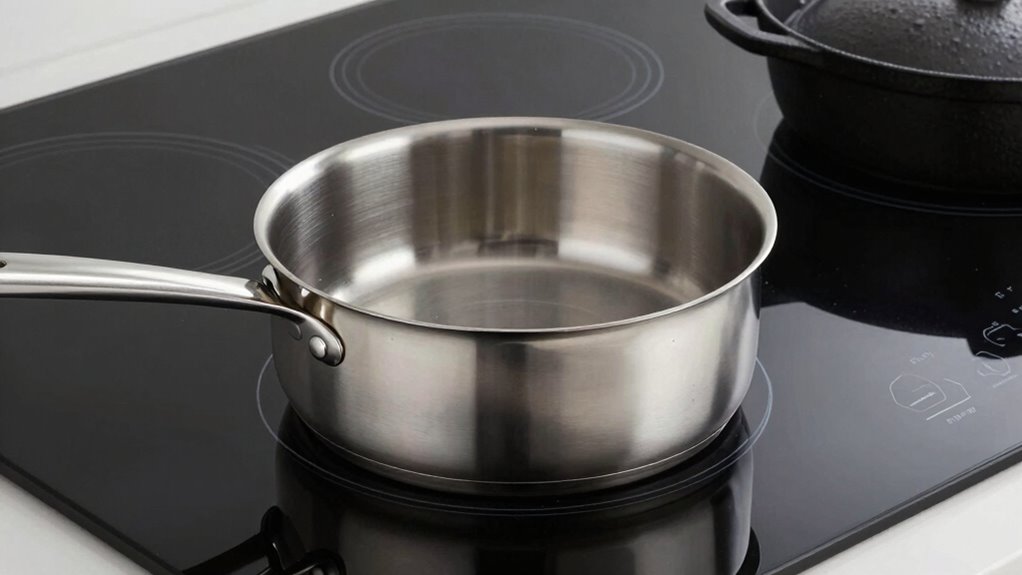
Are you wondering if your current cookware works with an induction stove? Many new users find themselves puzzled because their usual pots and pans don’t seem to work, even though they’ve used them on gas stoves or electric cooktops before. The main reason for this confusion is that induction cooking relies on a different mechanism—magnetic fields—so not all cookware is compatible. If you’re used to a gas stove, where heat transfer is straightforward and doesn’t depend on the material, it can be confusing to switch to induction, which requires specific cookware.
One common mistake is assuming that cookware with a ceramic coating, which is popular for its non-stick properties and easy cleaning, will work on induction. The ceramic coating itself isn’t the issue; rather, the underlying material of the cookware matters most. Many ceramic-coated pots and pans are made with aluminum or other non-magnetic materials that won’t interact with the induction stove’s magnetic field. So, even if your ceramic-coated pan heats up quickly on a gas stove, it might remain cold on an induction cooktop because it lacks the magnetic base needed to generate heat directly.
Ceramic-coated cookware often isn’t induction-compatible due to non-magnetic underlying materials like aluminum.
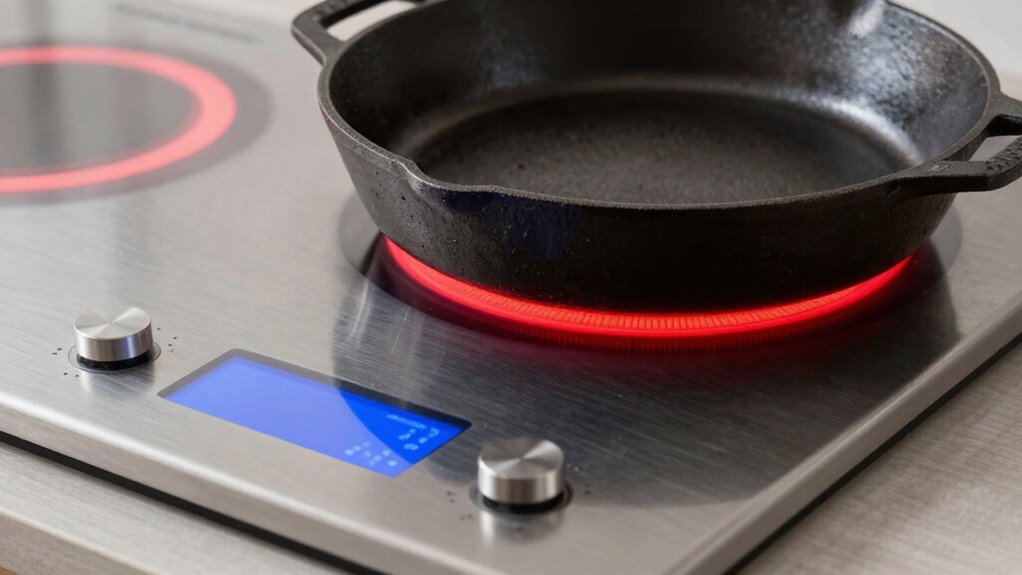
Furthermore, understanding the importance of magnetic properties can be tricky at first. You might see that your cookware heats up on your electric stove, which uses heating elements or radiant heat, but the same cookware fails on induction. That’s because induction requires the cookware to be ferromagnetic—meaning it has to contain iron or a similar magnetic metal. Without this, the induction stove can’t produce heat directly in the cookware, so it remains cool despite being on the burner.
Many new users overlook the importance of testing their cookware with a simple magnet. If the magnet sticks firmly to the bottom, it’s likely compatible with induction. If it doesn’t, then you’ll need to invest in new cookware designed for induction cooking. It’s also worth noting that some cookware labeled as “induction compatible” might still have a non-magnetic ceramic or glass exterior, so always check the base material rather than relying solely on labels. Knowing the magnetic properties of your cookware can save you time and frustration. Additionally, understanding magnetic compatibility can help prevent unnecessary purchases and ensure your cookware interacts properly with the induction system. Conducting a magnetic test is a quick and easy way to determine compatibility before making a new purchase, which can help you avoid wasted money and effort. Recognizing the core material of your cookware is essential for understanding its suitability for induction.
To further clarify, magnetic testing is a simple way to determine if your current cookware will work with an induction stove, removing guesswork from your purchases. Getting the right cookware for induction can be a learning curve, especially if you’re switching from a gas stove. You need to understand that the core material matters, not just the outer appearance or coating. Once you’ve recognized that, choosing compatible cookware becomes much easier. Remember, compatibility isn’t just about heating; it’s about ensuring your cookware interacts properly with the magnetic field to deliver even, efficient heat.
induction compatible cookware set
As an affiliate, we earn on qualifying purchases.
As an affiliate, we earn on qualifying purchases.
Frequently Asked Questions
Can I Use Glass Cookware on Induction Stoves?
You can use glass cookware on induction stoves if it’s made with a magnetic base. Since glass itself isn’t magnetic, heat transfer relies on the metal layer underneath. If your glass cookware has a ferromagnetic bottom, it’ll work efficiently, providing even heat transfer. Otherwise, it won’t heat up on induction because the stove’s magnetic field needs a compatible base to generate heat effectively.
Does Cookware Size Affect Induction Compatibility?
Yes, cookware size does affect induction compatibility. You need cookware made of magnetic material, like cast iron or stainless steel, for proper magnetic compatibility. If the cookware is too small or too large for the induction zone, it may not heat efficiently or at all. Make sure your cookware matches the size of your induction burner and is made of suitable magnetic material to get the best performance.
How Do I Test if My Cookware Works on Induction?
To test if your cookware works on induction, check its material compatibility—look for magnetic properties like stainless steel or cast iron. Place a magnet on the bottom; if it sticks firmly, your cookware is compatible. This guarantees good heat transfer efficiency, so your cookware heats quickly and evenly. If the magnet doesn’t stick, your cookware likely won’t work effectively on induction, and you might need to switch to compatible pieces.
Are There Any Safety Concerns With Incompatible Cookware?
Think of using incompatible cookware on induction like driving with mismatched tires—you risk safety hazards and potential damage. Incompatible pots can overheat, causing safety concerns like burns or fires, and might damage your cooktop. Always check for proper magnetic base before cooking; otherwise, you could face safety hazards and costly cookware damage. Ensuring compatibility keeps your kitchen safe and your appliances in top shape.
Can I Convert My Existing Cookware for Induction Use?
Yes, you can often convert your existing cookware for induction use. Check if your cookware is made of ferrous materials like cast iron or magnetic stainless steel, as these are induction-compatible. You can perform an induction compatibility test by seeing if a magnet sticks to the bottom. If it does, your cookware is suitable. If not, consider purchasing new cookware designed specifically for induction cooking.
Conclusion
So, next time your induction stove refuses to cooperate, remember it’s not just being picky. It’s demanding cookware that’s compatible, not just a fancy pot you found on sale. Don’t be that person who learns the hard way—check your pots before lighting the burner. After all, it’s 2023; your cookware should be smarter than your excuses. Keep the frustration at bay and cook like a pro—induction-compatible, of course!
Cold & flu season Picks
humidifiers
As an affiliate, we earn on qualifying purchases.