
When deciding between a shop vac and a dust extractor for ceiling dust, a dust extractor is your best bet. It has HEPA filters that trap tiny airborne particles and operate more quietly, making it ideal for fine dust like ceiling debris. Shop vacs are better for quick cleanup of larger bits but aren’t as effective for fine dust or air quality. Keep going to discover how each tool actually performs in real-world dust removal.
Key Takeaways
- Dust extractors with HEPA filters excel at trapping tiny ceiling dust particles before they become airborne.
- Shop vacs handle larger debris well but are less effective for fine ceiling dust removal.
- Dust extractors operate more quietly and are designed for continuous, fine dust extraction.
- Shop vacs are suitable for quick cleanup of bigger debris but not ideal for ceiling dust.
- For effective ceiling dust removal and air quality, dust extractors are the superior choice.
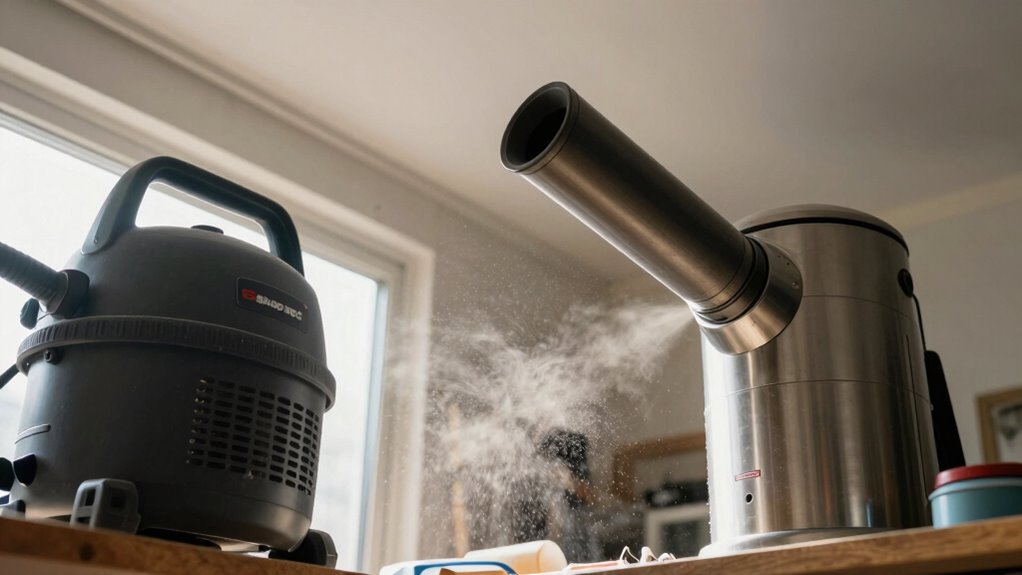
When choosing between a shop vac and a dust extractor, understanding their differences can help you make the right decision for your workspace. Both tools are designed to improve cleanliness and safety, but they do so in different ways. One key factor to contemplate is dust filtration. Dust extractors typically have higher-grade filters—often HEPA filters—that trap even microscopic particles, making them ideal for capturing ceiling dust and other fine debris. Shop vacs, on the other hand, usually have basic filters that can handle larger debris but may not effectively trap tiny dust particles. If your goal is to minimize airborne dust and improve air quality, a dust extractor offers superior dust filtration capabilities. This is especially important when working with ceiling dust, which can easily become airborne and settle in hard-to-reach places.
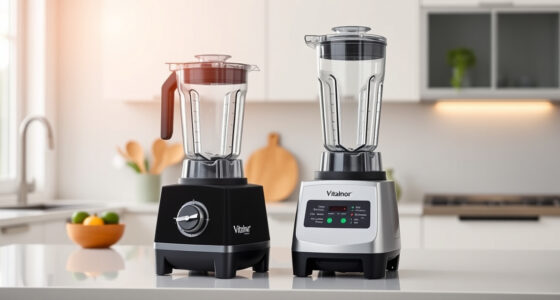
Dust extractors feature HEPA filters for superior dust capture, ideal for ceiling dust and fine debris.
Another important aspect is noise levels. Shop vacs tend to be louder because they are built for versatility and power, often featuring larger motors that generate significant noise. Dust extractors are generally designed with noise reduction in mind, incorporating sound dampening features that make them quieter during operation. This difference can be vital if you’re working in a shared space or need to maintain a quieter environment for safety or comfort. Using a dust extractor with lower noise levels allows you to work longer and more comfortably without the distraction or fatigue caused by loud equipment. Additionally, proper maintenance of filters and equipment ensures optimal performance and longevity of your dust removal system.
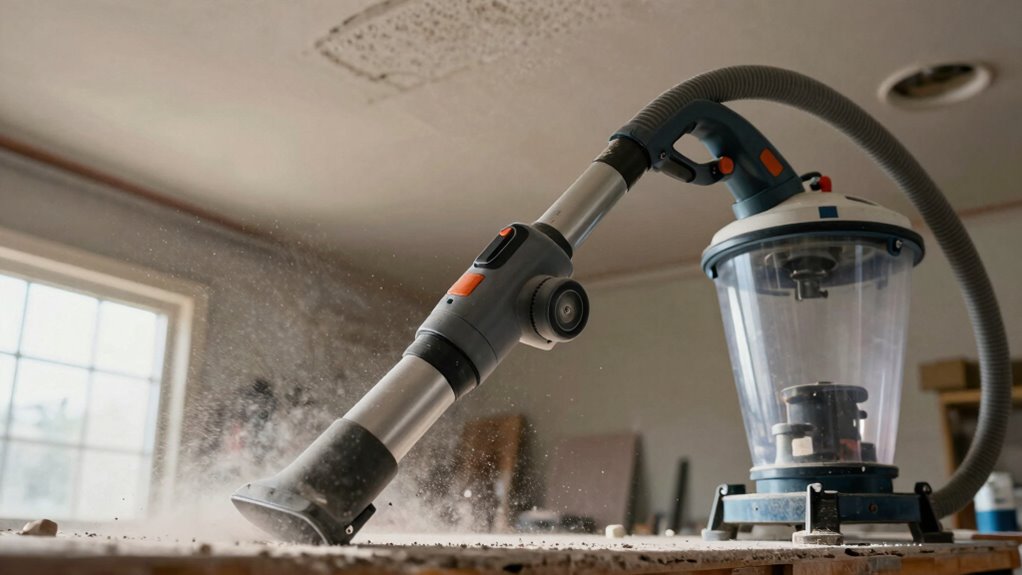
While a shop vac can quickly clean up larger debris and is handy for general cleanup, its dust filtration system may not be sufficient for ceiling dust, which is often fine and airborne. A dust extractor, with its specialized filtration, is better suited for this task because it can effectively trap tiny particles before they escape into the air, reducing the risk of inhalation or settling on surfaces. Plus, many dust extractors are portable and designed for continuous use, making them a practical choice for ongoing ceiling dust removal.
Ultimately, if your priority is effective dust removal with minimal airborne particles and quieter operation, a dust extractor is the better choice. It’s built specifically for dust filtration and quieter work environments, making it more suitable for ceiling dust and fine debris. Shop vacs excel in quick cleanup and larger debris collection but fall short when it comes to filtering out the smallest particles and operating quietly. Knowing these differences helps you pick the right tool for efficient, safe, and comfortable cleaning of ceiling dust.
Frequently Asked Questions
Can a Shop Vac Handle Fine Ceiling Dust Effectively?
A shop vac can handle fine ceiling dust to some extent, but it often struggles with air filtration of tiny particles. You might end up blowing dust back into the air instead of removing it effectively. For the best results, look for a vacuum specifically designed for fine dust, which offers better air filtration. This way, you’ll keep your space cleaner and reduce airborne dust particles.
Which Tool Is More Cost-Efficient Long-Term?
They say, “You get what you pay for.” When comparing long-term cost efficiency, a dust extractor often wins due to lower maintenance costs and better filtration, reducing replacement expenses. A shop vac might be cheaper upfront, but frequent filter replacements and less durability can add up. Consider the cost comparison carefully, factoring in initial investment and ongoing maintenance, to choose the tool that saves you money over time.
Are Dust Extractors Safer for Indoor Air Quality?
Yes, dust extractors are safer for indoor air quality because they’re designed for effective dust mitigation, trapping fine particles before they disperse into your environment. Unlike standard shop vacs, dust extractors often feature HEPA filters that markedly reduce airborne contaminants, protecting your respiratory health. By using a dust extractor, you minimize indoor air pollution, making your workspace safer and cleaner while ensuring ceiling dust doesn’t compromise your air quality.
How Often Should Filters Be Replaced in Each Device?
Did you know that filters in dust extractors typically last 3 to 6 months, while Shop Vac filters may need replacing every 1 to 3 months? You should follow the recommended replacement schedule for each device to maintain peak performance. Check the filter lifespan regularly, especially after heavy use, and replace filters promptly when they become clogged or damaged, ensuring your equipment operates efficiently and safely.
Can Both Tools Be Used for Other Household Cleaning Tasks?
Yes, both tools can handle other household cleaning tasks like vacuuming carpets, cleaning upholstery, or tidying up workshops. However, consider ventilation concerns, as some models might release dust or noise during operation. Also, noise levels vary; choose a quieter unit if noise is a concern. Using them for different chores helps maximize their value, but always check manufacturer guidelines to guarantee safe and effective use.
Conclusion
When it comes to removing ceiling dust, think of your shop vac as a trusty broom—quick and versatile but not always thorough. A dust extractor, on the other hand, is like a fine-tuned filter, capturing even the tiniest particles. If you want a clean ceiling without a cloud of dust settling behind you, investing in a dust extractor is your best bet. It’s the superhero cape for your cleaning arsenal, swooping in to save the day.