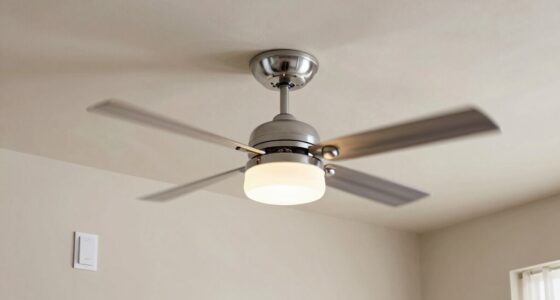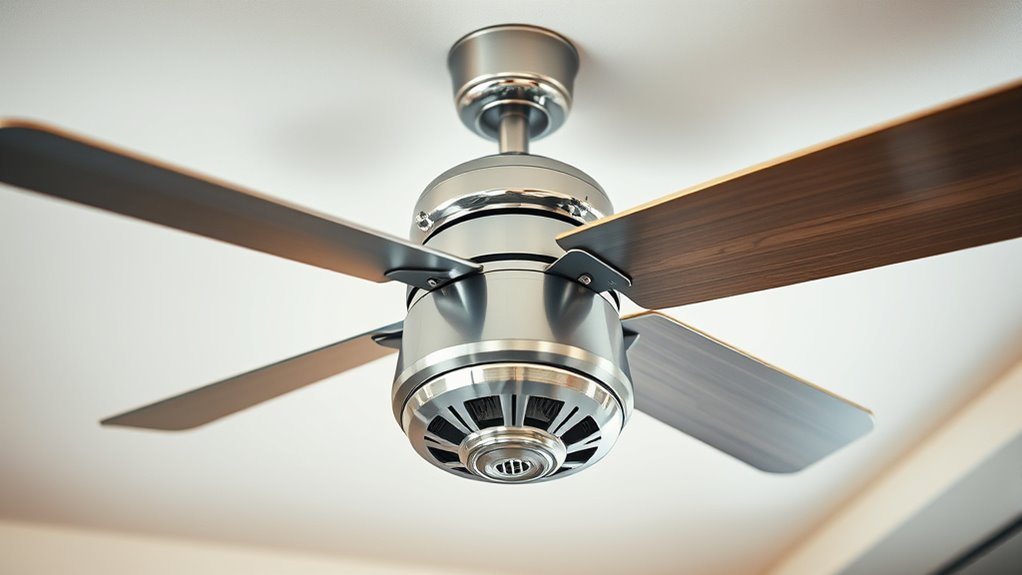

Ceiling fan installation costs typically range from $100 to over $500, depending on labor, materials, and electrical upgrades. Labor fees vary from $75 to $200 based on complexity and access. Material costs are around $50 to $300 for the fan itself, plus additional hardware. Electrical work, including wiring upgrades or circuit installation, can add $150 to $300. Understanding each component guarantees accurate budgeting—continue to explore details that can help you plan effectively.
Key Takeaways
- Labor costs typically range from $75 to $200, depending on complexity and location.
- Material expenses vary from $50 for basic fans to over $300 for premium models.
- Electrical upgrades or modifications can add $150 to $300 to the total cost.
- Additional expenses may include permit fees, ceiling reinforcement, or special safety measures.
- Overall installation costs generally fall between $100 for DIY projects and over $500 for professional setups.
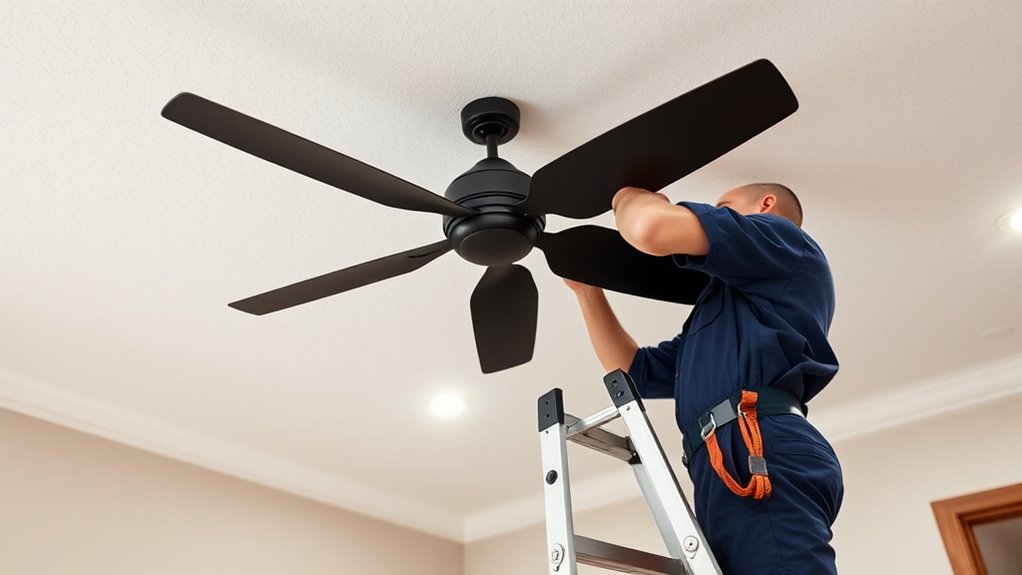
Installing a ceiling fan involves several cost components, primarily labor, materials, and any necessary electrical work. Understanding these elements helps you anticipate expenses and plan your budget effectively. The labor cost generally accounts for the technician’s time, which varies based on your location, the complexity of the installation, and the experience level of the professional. Standard installations in unobstructed ceilings typically require less time, resulting in lower labor charges, while ceiling fans that need additional modifications or are installed in difficult-to-access locations will increase labor costs. On average, expect labor fees to range between $75 and $200, but this can rise if electrical upgrades or structural modifications are necessary. Additionally, some installations may require proper safety precautions, especially when working with electrical components at height or in confined spaces. Materials encompass the ceiling fan unit itself, mounting hardware, and any supplementary components required for safe operation. The fan’s price point varies widely based on size, design, features, and brand. Basic models with minimal features may start around $50, while high-end fans with smart controls, integrated lighting, or specialized airflow technology can exceed $300. Additionally, mounting brackets, downrods, and switch components contribute to the overall material cost. If your existing fixture is incompatible or outdated, you might also need replacement electrical boxes or mounting plates, which can add to the total expense. Electrical work involves ensuring that the electrical system can support the new fan safely and efficiently. If your current wiring is outdated or lacks a dedicated circuit, upgrades may be necessary, substantially increasing costs. Electrical work may include installing new wiring, adding a dedicated circuit breaker, or upgrading the electrical box to meet safety standards. This process requires an electrician’s expertise and can cost between $150 and $300, depending on the scope. If there are existing electrical issues, such as loose connections or inadequate wiring, addressing these problems during installation will further increase the total cost. It’s also important to factor in potential additional expenses like ceiling reinforcement, especially if your ceiling is not designed to support the weight of a ceiling fan, or permits required by local building codes. While these are less common, neglecting them can lead to safety hazards or fines. Overall, the total cost of ceiling fan installation combines these elements, and costs can range from as low as $100 for simple DIY installations to over $500 when professional installation, electrical upgrades, and high-end materials are involved. Proper planning and understanding of each component ensure you allocate a realistic budget and achieve a safe, efficient installation.
As an affiliate, we earn on qualifying purchases.
Frequently Asked Questions
Do I Need a Permit to Install a Ceiling Fan?
Yes, you typically need a permit to install a ceiling fan, especially if electrical wiring or structural modifications are involved. Local building codes regulate electrical work, requiring permits to guarantee safety and compliance. You should check with your city or county building department before beginning installation. Failing to obtain necessary permits may result in fines and complications if inspections or future property sales occur. Always follow your local regulations for proper procedure.
How Long Does Ceiling Fan Installation Usually Take?
Installation typically takes between 1 to 3 hours, depending on your ceiling’s wiring complexity and fan type. You’ll need to turn off power at the breaker, remove the existing fixture, and securely mount the fan bracket. Connecting wiring follows standard electrical codes, guaranteeing safety. If your ceiling setup is complicated or involves modifications, the process may extend. Hiring a professional can ensure precise, code-compliant installation within this timeframe.
Can I Install a Ceiling Fan Myself?
Yes, you can install a ceiling fan yourself if you have electrical experience and basic handyman skills. First, turn off power at the circuit breaker. Then, follow manufacturer instructions, ensuring proper wiring, mounting, and balancing. Use a voltage tester to confirm no current flows. If you’re unfamiliar with electrical work or local codes, hiring a professional is safer to prevent damage or injury.
What Brands of Ceiling Fans Are Most Cost-Effective?
Like choosing a trusty sword in a medieval market, selecting cost-effective ceiling fan brands involves careful analysis. Brands such as Hunter, Westinghouse, and Harbor Breeze offer reliable, budget-friendly options with energy-efficient features and durable motors. These brands balance upfront cost with long-term savings, making them ideal for homeowners seeking affordability and performance. Always compare wattage, airflow, and warranty terms to guarantee you’re getting the best value for your investment.
Are There Additional Costs for Remote-Controlled Fans?
Yes, remote-controlled fans often incur additional costs. You should budget extra for the remote control unit itself, which can range from $20 to $50, and potential wiring or smart home integration if applicable. Installation complexity may increase if your existing wiring needs modification or if you require specialized mounting. Always factor in these potential expenses to accurately estimate your total ceiling fan installation costs.
Conclusion
In essence, understanding the cost of ceiling fan installation helps you plan effectively, much like assembling the pieces of a complex machine. While expenses vary based on factors like fan type and wiring, investing in professional installation ensures safety and ideal performance. Remember, a well-installed ceiling fan is the foundation of comfort—akin to the keystone in an arch—supporting your space with precision and reliability for years to come.