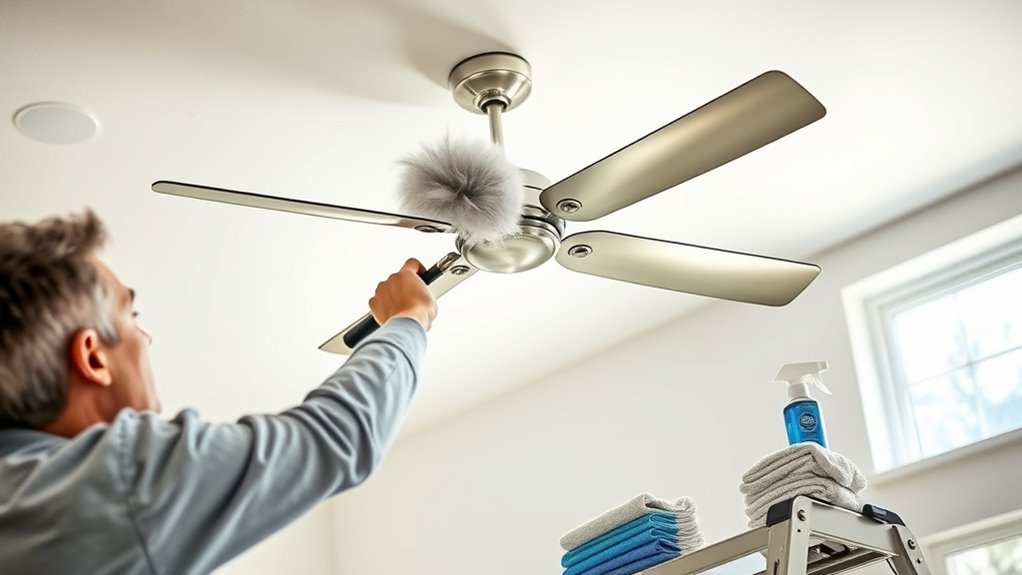

To clean ceiling fans without a ladder, use extendable microfiber tools or duster poles to reach blades safely from the ground. Turn off the fan and power to avoid accidents, then wipe each blade with a damp microfiber cloth, using gentle strokes. For stubborn grime, a mixture of mild soap and water or vinegar works well. Regular maintenance keeps your fan clean and efficient—continue with helpful tips to master this task safely and effectively.
Key Takeaways
- Use an extendable microfiber duster or cloth to reach and clean fan blades from the ground.
- Attach microfiber cloths to extendable poles to wipe blades safely without a ladder.
- Turn off power and wear gloves before cleaning to ensure safety and avoid injury.
- Dampen microfiber cloths with mild cleaner for greasy or stubborn grime on blades.
- Regularly inspect and tighten fan components from the ground to maintain stability and performance.

Ceiling fans can accumulate dust, dirt, and grease over time, which can reduce airflow and affect indoor air quality. Cleaning these fans without a ladder might seem challenging, but with the right tools and techniques, you can do it efficiently and safely. The key is to minimize the need for reaching high, unstable positions while ensuring a thorough clean.
Start by turning off the fan and cutting power at the circuit breaker or switch to prevent accidents. Wear a pair of lightweight, long-sleeved gloves to protect your hands from dust and debris. To reach the blades comfortably, consider using an extendable tool designed specifically for ceiling fan cleaning. These tools typically have microfiber pads or duster heads at the end of a long handle, allowing you to clean the blades while staying on the ground. If you don’t have a specialized tool, a sturdy, telescoping duster or a microfiber cloth attached to an extendable pole works just as well.
Turn off the fan, wear gloves, and use extendable tools or microfiber cloths for easy ground-level cleaning.
Before cleaning, lay a drop cloth or old sheet underneath the fan to catch dust and debris that may fall. If your fan blades are particularly greasy or sticky, dampen your microfiber cloth with a mixture of water and a few drops of mild dish soap or a gentle cleaner. Wring out excess liquid to avoid drips. Starting at one end of the blade, wipe in a straight line across the surface, applying gentle pressure to remove dust, dirt, and grease. Use a clean section of the cloth or a new microfiber pad for each blade to prevent spreading dirt.
For stubborn grime, switch to a damp cloth with a small amount of vinegar or a specialized fan cleaner. Avoid harsh chemicals that could damage the finish or create fumes. Make sure to clean both sides of each blade, especially if they’re angled or layered. Once all blades are cleaned, use a dry microfiber cloth or extendable duster to remove any remaining moisture or streaks, ensuring a streak-free finish. Additionally, regular cleaning can help prevent the buildup of dust and debris that can impact your fan’s performance.
After cleaning, inspect the fan for any loose screws or wobbling parts, tightening as necessary. Turn the power back on and test the fan to confirm it’s spinning smoothly. Regular maintenance, about every few months, prevents excessive buildup and keeps your fan operating at excellent efficiency. By utilizing extendable tools and careful cleaning techniques, you can maintain a clean, healthy ceiling fan without ever needing a ladder, ensuring your space stays fresh and well-ventilated.

DRQ Ceiling Fan Cleaner Duster, Reusable Microfiber Duster with Extension Pole, 13 to 48 Inch Fan Blade Cleaner, Removable Dusters for Cleaning Walls Bookshelves Door Window Top (Blue)
- Easy to Store: Hanging hole for convenient storage and drying
- Adjustable Length: Extends from 13 to 48 inches
- High-Quality Materials: Soft microfiber yarn for effective dusting
As an affiliate, we earn on qualifying purchases.
As an affiliate, we earn on qualifying purchases.
Frequently Asked Questions
Can I Use a Vacuum Cleaner to Clean Ceiling Fans?
Yes, you can use a vacuum cleaner to clean ceiling fans. Attach a microfiber or dusting brush to the hose or wand, then gently vacuum the blades to remove dust and debris. This method is effective and minimizes the need for ladders or step stools. Be sure to turn off the fan before cleaning, and hold the blades steady while vacuuming to prevent damage or wobbling.
What Household Items Are Best for Cleaning Ceiling Fans?
Think of household items as your secret cleaning weapons. Microfiber cloths work wonders for trapping dust without spreading it. A pillowcase is excellent for removing dirt from blades; slip it over and gently wipe, trapping debris inside. Dusters with extendable handles help reach high spots effortlessly. For stubborn grime, a slightly damp cloth with a mild detergent does the trick. Use these tools smartly to keep your ceiling fans spotless and fresh.
How Often Should I Clean My Ceiling Fan?
You should clean your ceiling fan every 1 to 2 months, especially during peak dust seasons or if you notice visible dirt or grease buildup. Regular cleaning prevents dust accumulation, improves air quality, and keeps the fan operating efficiently. Use a microfiber cloth or an extendable duster to reach and wipe down blades thoroughly. Consistent cleaning reduces the need for deep scrubbing, saves energy, and prolongs your fan’s lifespan.
Is It Safe to Clean Ceiling Fans While They Are On?
Cleaning your ceiling fan while it’s on is unsafe. Think of it like trying to fix a spinning bicycle wheel—dangerous and unpredictable. You risk injury from blades that can rotate unexpectedly or debris flying off. Always turn off the fan and disconnect the power before cleaning. This guarantees safety and allows you to clean thoroughly without the risk of injury or damage.
How Can I Prevent Dust Buildup on Ceiling Fans?
You can prevent dust buildup on ceiling fans by regularly dusting them with a microfiber cloth or a duster. Consider installing fan blades with a protective coating that repels dust. Use ceiling fan covers during heavy dust seasons, and set a cleaning schedule—at least once a month—to keep dust from accumulating. These proactive steps guarantee your fan stays clean, maintains efficiency, and reduces the need for deep cleaning.
Conclusion
Cleaning your ceiling fan without a ladder might seem intimidating, but with the right tools and techniques, you can keep it spotless from the ground. Ironically, avoiding ladders often means risking a fall or missing spots, but careful approaches can save you both. Remember, staying safe and thorough guarantees your fan stays dust-free and your home air quality improves—no tall tales needed. Proper cleaning is simple, just like avoiding the ladder altogether.