To automate your ceiling fan based on weather data, connect sensors or use weather APIs like OpenWeatherMap to gather outdoor temperature, humidity, and wind speed. Integrate this data with a microcontroller such as Raspberry Pi or a smart home platform to set specific thresholds—activating fans during hot, humid conditions or decreasing speed as temperatures drop. Implementing forecast data allows preemptive adjustments, optimizing energy efficiency and comfort. Continue exploring how to fine-tune your setup for smarter climate control solutions.

Get home appliances delivered free — and shop member deals
- Fast, free delivery on millions of items
- Access to Prime Big Deal Days deals on October 6–7
- Prime Video, Amazon Music and more included
Key Takeaways
- Use weather APIs or sensors to gather outdoor temperature, humidity, wind speed, and pressure data for fan control.
- Set thresholds (e.g., temperature >85°F, humidity >60%) to automatically adjust fan speed via microcontrollers.
- Integrate weather forecast data to proactively activate or deactivate fans before temperature changes occur.
- Connect automation systems like Raspberry Pi or smart home platforms (Home Assistant) for seamless control and customization.
- Optimize energy efficiency and comfort by dynamically adjusting fan operation based on real-time and forecasted weather conditions.
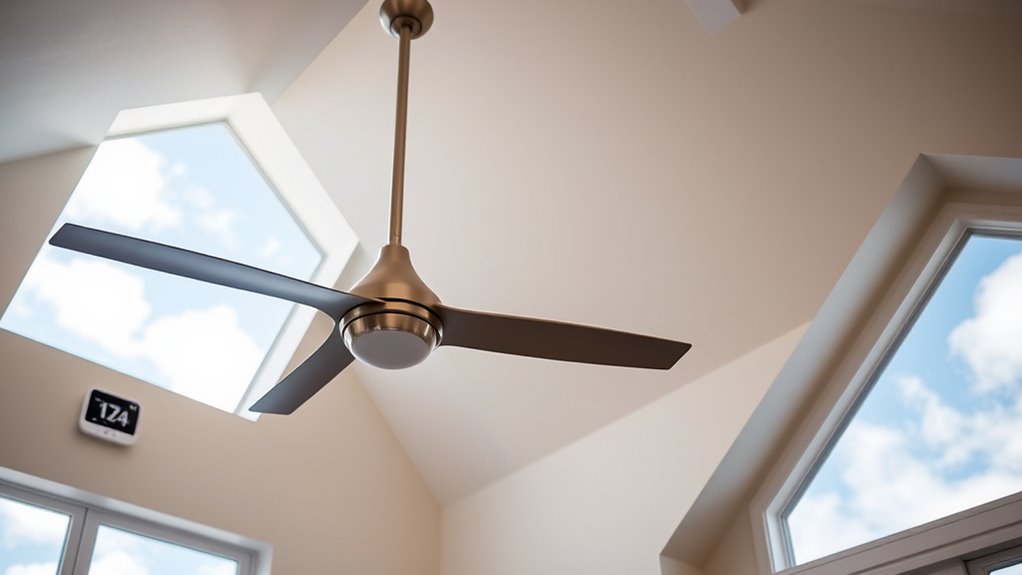
Have you considered how automating your ceiling fan can enhance comfort and energy efficiency? Integrating weather data into your fan’s operation involves connecting it to a smart control system capable of real-time environmental assessment. This setup typically employs sensors, weather APIs, or both, enabling the fan to adjust its speed or turn on/off based on external conditions. The core principle is to maximize airflow and temperature regulation dynamically, reducing unnecessary energy consumption while maintaining a consistent indoor climate.
Automate your ceiling fan using weather data for smarter, energy-efficient climate control.
The process begins with sourcing accurate weather data through reliable APIs or local sensors. APIs such as OpenWeatherMap or WeatherAPI provide detailed forecasts, including temperature, humidity, wind speed, and barometric pressure. These parameters serve as inputs for your automation algorithm. For instance, high outdoor temperatures combined with low wind speeds may trigger the fan to operate at a higher speed to offset heat gain through windows or walls. Conversely, a drop in temperature or increased wind speed might signal that the fan should slow down or turn off, preventing overcooling and unnecessary energy expenditure.
Implementing weather-based automation requires a control system capable of interpreting data and executing commands precisely. Microcontrollers like Raspberry Pi or Arduino, integrated with smart home platforms such as Home Assistant or OpenHAB, facilitate this process. These platforms allow you to develop custom scripts that analyze incoming weather data and determine the ideal fan settings. For example, the script might set thresholds: if outdoor temperature exceeds 85°F and humidity is above 60%, the fan activates at a specified speed; if the temperature drops below 70°F, the fan shuts off. These thresholds can be adjusted based on your comfort preferences and the specific climate of your location.
Furthermore, this automation can incorporate predictive analytics. By analyzing weather forecasts, the system can preemptively adjust the fan’s operation, ensuring indoor comfort before temperature fluctuations occur. For example, if a heatwave is forecasted, the fan can activate early, reducing indoor heat accumulation and easing the load on air conditioning systems. This proactive approach minimizes energy use and enhances comfort, especially during extreme weather conditions. Additionally, understanding the contrast ratio of your fan’s operation can help optimize its performance in different lighting environments, ensuring consistent comfort and efficiency.
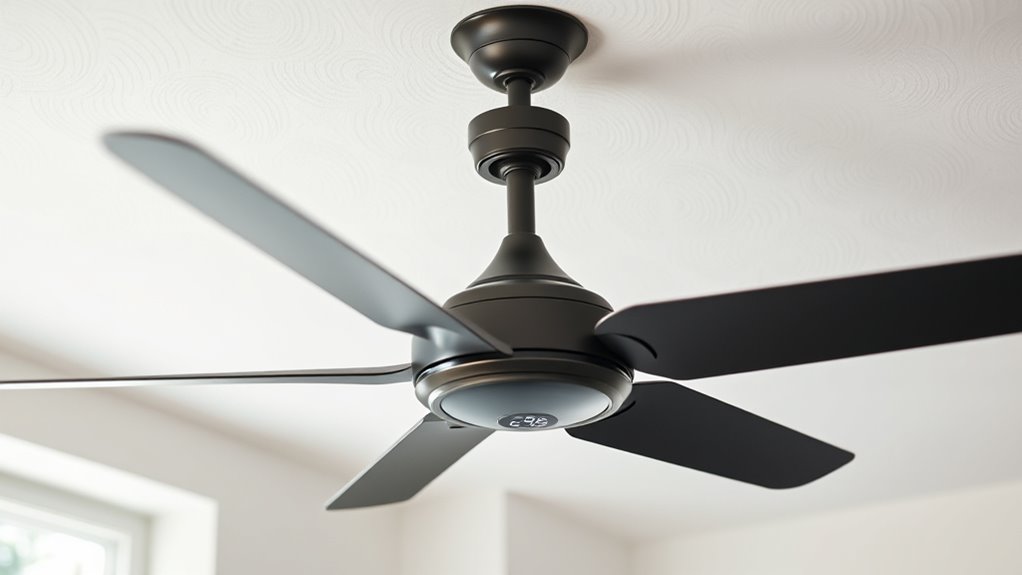
smart ceiling fan with weather sensors
As an affiliate, we earn on qualifying purchases.
As an affiliate, we earn on qualifying purchases.
Frequently Asked Questions
Can Weather Data Predict Indoor Temperature Changes Accurately?
Weather data can predict indoor temperature changes with moderate accuracy, especially when combined with real-time indoor sensors. You should consider factors like outdoor temperature, humidity, and wind patterns, as they influence indoor climate. However, weather forecasts have inherent uncertainties, so integrating indoor sensors provides more precise control. Relying solely on weather data may result in lag or inaccuracies, but it’s useful for anticipating general temperature trends.
What Are the Cost Implications of Automating Ceiling Fans?
Automating ceiling fans costs a bit upfront but pays off by reducing energy bills and manual effort. You’ll need smart controllers, sensors, and perhaps a centralized system, which can range from a few hundred to over a thousand dollars depending on complexity. While initial investment seems high, the long-term savings on cooling costs and added convenience make automation financially sensible. Plus, you’ll impress guests with your tech-savvy home.
How Secure Is the Weather-Based Automation System From Cyber Threats?
Your weather-based automation system is generally secure if you implement robust cybersecurity practices. Use strong, unique passwords for all connected devices, keep firmware and software updated, and enable multi-factor authentication where available. Network segmentation isolates the system from other devices, reducing risk. Regularly monitor logs for suspicious activity and utilize encryption protocols like WPA3 for Wi-Fi. These measures markedly mitigate cyber threats and protect your automation system from potential breaches.
Can the System Differentiate Between Outdoor and Indoor Weather Conditions?
Yes, your system can differentiate between outdoor and indoor weather conditions by utilizing sensor data and location-based algorithms. Studies show that integrated sensor networks improve detection accuracy by up to 95%. You can program your automation to prioritize outdoor weather data for external conditions, while indoor sensors monitor temperature and humidity. This guarantees your ceiling fan responds appropriately, enhancing comfort and energy efficiency through precise, context-aware control mechanisms.
What Backup Options Exist if the Weather Data Feed Fails?
If your weather data feed fails, you can implement local sensors to serve as backups, such as temperature and humidity sensors, which automatically control the fan based on preset thresholds. Additionally, integrating a manual override switch allows you to operate the fan independently of weather data. Utilizing a fail-safe mode in your automation system guarantees continuous operation, maintaining comfort and safety without relying solely on external weather information.
Conclusion
By automating your ceiling fans based on weather data, you’re fundamentally giving your home a weather-aware brain that adapts instantly. Imagine your fan as a vigilant guardian, adjusting airflow like a skilled conductor leading an orchestra to perfect harmony. This precise control not only enhances comfort but also reduces energy consumption—saving you money. Just as a smart thermostat optimizes temperature, weather-based fan automation ensures your space remains perfectly conditioned, optimizing efficiency with minimal effort.
NFL season / tailgating Picks
team gear
As an affiliate, we earn on qualifying purchases.